
Shannon Boakes
Investment & Wealth Advisor, Financial Planner
May 14, 2026
There’s a unique position many couples find themselves in today: two incomes, no children, and more flexibility than most.
On paper, it looks like an advantage, and in many ways, it is. However, without the traditional milestones that often shape financial planning (such as raising children, saving for education, building toward a fixed retirement timeline), the path forward isn’t always clear.
Instead, the questions tend to be more open-ended:
“Are we actually building wealth, or just living comfortably?”
“Should we be doing more, or enjoying more?”
“What does our future look like?”
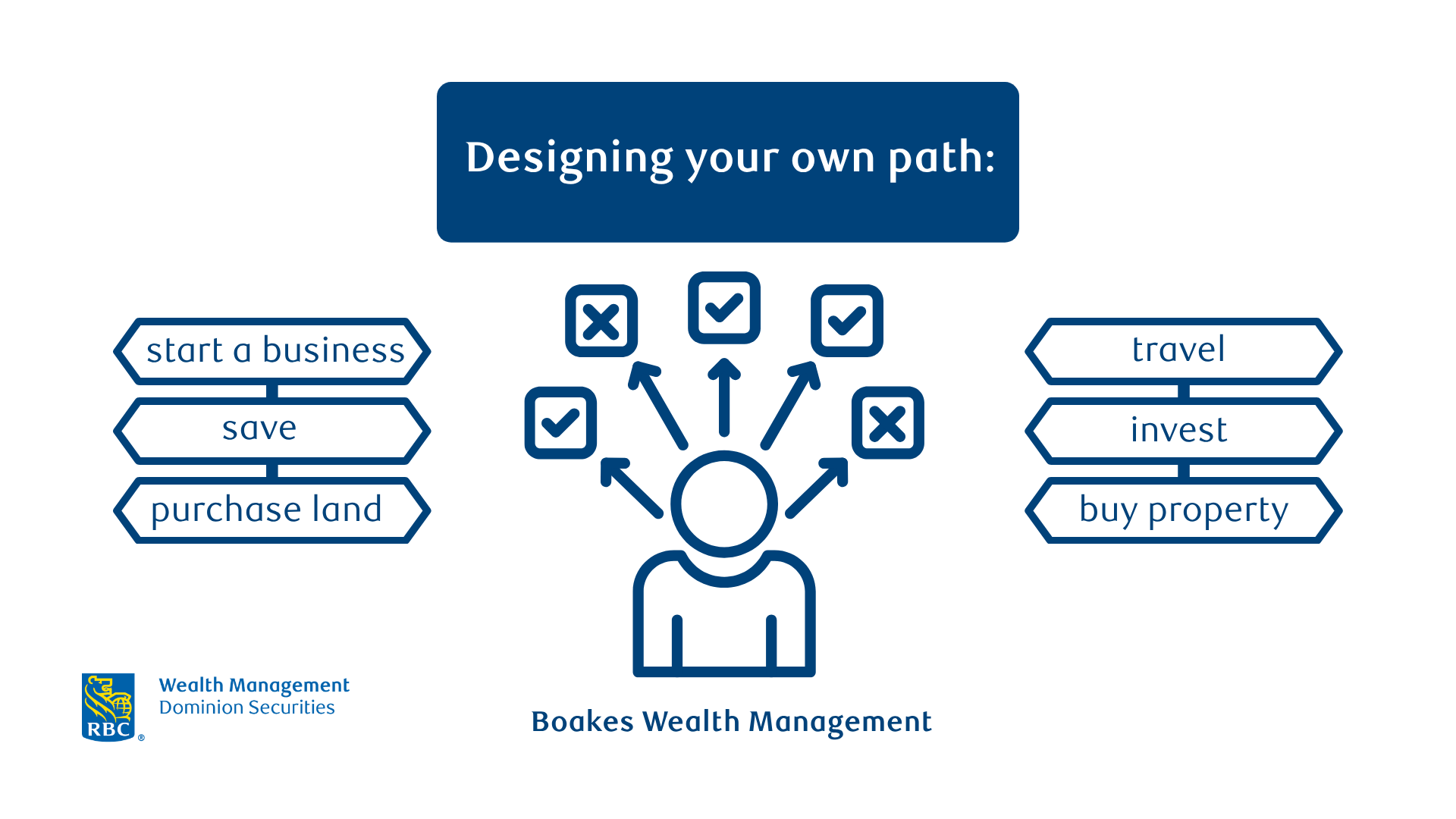
For most of our lives, things are mapped out for us. School for the first 15-20+ years of our lives (give or take a few, depending on your studies), with the standard path generally leading to finding a job, a partner, marriage, kids, etc. But in recent years, there has been a shift, where people are choosing their own paths rather than choosing what’s always been done. I firmly believe whichever path you choose is the correct path for you - traditional or less so - in the end, it should be your decision. And I’m here to support you and your goals and ensure your financial plan is structured for success.
When there’s no default path, everything is a decision
Although the freedom this offers is empowering, because there’s no set path, everything is a decision, and for many dual-income couples with no kids, financial success doesn’t come from earning more; it comes from being intentional.
When speaking to individuals with dual incomes and no kids, I encounter many different scenarios, like:
"We're both 60, still working, and earning well. No kids, no debt outside of our mortgage, and we've built up a mix of RRSPs, TFSAs, and some non-registered investments. Lately, we've started asking ourselves a few things all at once:
Are we actually on track to retire when we want, or are we just assuming we are?
How do we turn what we've saved into income without worrying about running out?
Should we be paying down the mortgage faster or investing instead?
And since we don't have children, what should we be thinking about in terms of estate planning.Where does everything go, and how do we do that in a tax-efficient way?
It feels like we've done the 'right’ things, but now we're not sure what matters most in the next 5 to 10 years."
If while reading that, you saw yourself in this couple, I’m here to tell you that you're asking all the right questions. And at the right time, too, as this is the stage of life where the focus shifts from building wealth to making sure it actually works for you.
The first step is to move beyond general assumptions and map out a clear retirement income plan based on your lifestyle, timing, and all income sources, such as CPP and OAS, so you can see whether you're truly on track. From there, the real value comes in how you draw from your savings, deciding which accounts to use and when, so you can effectively manage taxes and create a steady, reliable income.
The mortgage decision fits into that same conversation, balancing the numbers with how important it is for you to be debt-free versus maintaining flexibility. And without children, your estate plan becomes more intentional. This allows you to decide exactly where your assets go, who is responsible for carrying out your wishes, and how to do it in a tax-efficient way. At this point, it's less about doing more and more about bringing everything together into a plan that reflects how you want to live and what you want your wealth to support, both now and later.
Or, perhaps, you’re a couple in your 40s with dual incomes and no children, trying to figure out your goals and priorities, which might look something like:
“We’re both in our 40s, working full-time and earning good income. We don’t have any kids or debt aside from our mortgage, and we’ve built up a mix of RRSPs, TFSAs, and investments along the way. On paper, everything looks like it’s on track, but lately, we’ve found ourselves asking a few bigger questions:
Are we actually building wealth, or just living comfortably and assuming we are?
We don’t have kids, so what should we actually be planning for in the long term? Does that mean we can retire earlier? Should we be approaching things differently?
And overall, how do we make sure we’re not closing doors for ourselves later?
We don’t have one fixed goal; we just want to know we’re making smart decisions now that give us flexibility in the future.”
Without the financial commitments that come with raising children, you have more disposable income, more control over your timeline, and more options in how and where you live.
The questions become:
“Are you saving strategically or just consistently?”
“Is your money working efficiently across accounts?”
“Are you building toward something, or just accumulating?”
Although high income creates potential, structure is what creates results. At Boakes Wealth Management, we help ensure priorities and goals are considered to establish one’s path with intention and clarity.
Traditional planning focuses heavily on retirement. However, during this stage of life, the bigger opportunity is to create options for yourself before retirement. From lifestyle shifts, like moving, travelling, etc., to optional career changes and more, it’s wise to get clear on the best ways your money can work for you.
Without the built-in structure of expenses like childcare or education savings, it’s important to be deliberate about building wealth through consistent investing, tax-efficient strategies, and clear goal-setting. This includes balancing lifestyle spending with long-term planning, ensuring you’re not overly reliant on two incomes, and maintaining liquidity rather than tying everything up in long-term assets. It’s also a key time to define what financial independence looks like for you, while keeping an eye on risk management, estate planning, and creating a plan that gives you options, rather than limitations, in the future.
Changing times: Looking beyond traditional succession for farming families
There’s another side to this conversation, and it’s one that often shows up in agriculture.
For many farming families, the expectation has traditionally been that the next generation will take over. The farm isn’t just a business; it’s a legacy, built over decades, sometimes generations. But increasingly, that path is becoming less certain, whether couples have no children, fewer children, or their children want to pursue different careers or lifestyles outside of the family business.
More families are finding themselves in conversations where children aren’t sure they want to return to the farm, or are choosing entirely different routes. And while that can be difficult to navigate emotionally, it also introduces a new layer of financial complexity that can’t be ignored.
This shift doesn’t mean something has gone wrong; it simply means the plan needs to evolve. When succession isn’t straightforward, questions arise like:
“What happens to the operation in the long term?”
“Should the focus shift toward a future sale, a partnership, or a transition outside the family?”
“How do you balance fairness if one child is involved and another is not, or if none are?”
And a really important one, “how does the value of the farm translate into retirement income if it’s no longer being passed down in the way you originally envisioned?”
This is where the idea of “a different kind of opportunity” becomes important. Just as dual-income couples without children have the flexibility to design a path that isn’t predefined, farming families may need to reframe what legacy looks like to them. That could mean creating options for children who don’t want to farm, exploring gradual transitions in ownership, or structuring the business so it can be sold or sustained in a way that supports your long-term financial goals.
These are not easy conversations, but they are necessary. Whether the farm's future stays within the family or takes a different direction, it’s imperative to have a clear, intentional plan to protect both the business and your personal financial future. And at Boakes Wealth Management, we work directly with farming families to provide clarity for all these questions and more.
Final thoughts
Having two incomes and no dependents creates opportunity, but it also creates a different kind of responsibility. Because without a predefined path, it’s easy to move forward without ever fully deciding where you’re going. In our ever-evolving world, where there are more opportunities for individuals to create their own path, it only makes sense that life may look less ‘traditional’ than it has in the past. And when navigating new territory, it’s imperative to have an expert by your side to support you in figuring out where to go from here.
When it’s all said and done, the advantage of this freedom isn’t just in what you earn, it’s in what you choose to build with it. And whether that future includes travel, early retirement, a shift in lifestyle, or even a move toward land and agriculture, the most important step is making sure it’s intentional.
And that’s exactly where we can help.
Shannon
Shannon Boakes, CFP, FMA, CIWM, FCSI | Investment amp; Wealth Advisor, Financial Planner, RBC Wealth Management | RBC Dominion Securities | T. 519-758-1270 | C. 226-208-0357 | 22 Colborne Street, 2nd Floor Brantford, ON N3T 2G2 | www.boakeswealthmanagement.com
This community extends beyond one conversation. It’s built through shared ideas, thoughtful planning, and staying connected over time.
Follow along on LinkedIn and Facebook, or reach out if you’d like to talk through your own situation or refer someone who could use support.