
Shannon Boakes
Investment & Wealth Advisor, Financial Planner
June 30, 2026
For many women, the word “legacy” can feel surprisingly heavy, like there’s more weight on our shoulders to carry through life, and what our lasting mark on the world will be. Our legacy is often our children, the people we’ve impacted, the businesses we’ve built and the communities we’ve nurtured. But as everyone’s path looks different in life, the way we view our legacies will, too.
Perhaps thoughts of family wealth or inheritances come to mind, or maybe we consider the women in our own lives, whose names and what they did within their lifetimes are all we have left of them now.
We never truly know what our legacy will look like once we’re gone, but it’s important to remember that what we do now will play a role in shaping the future. So we ask ourselves, what if legacy isn't simply about what we leave behind, but in how we choose to live today?
As women continue to build wealth, lead businesses, support families, care for aging parents, raise children, mentor others, and contribute to communities, many are beginning to ask deeper questions about what lasting impact really means. This shift is important because legacy isn't reserved for one group; it belongs to all of us.
Whether you're building a financial portfolio, creating family traditions, supporting a cause you care about, or simply living your values every day, you're already shaping your legacy.
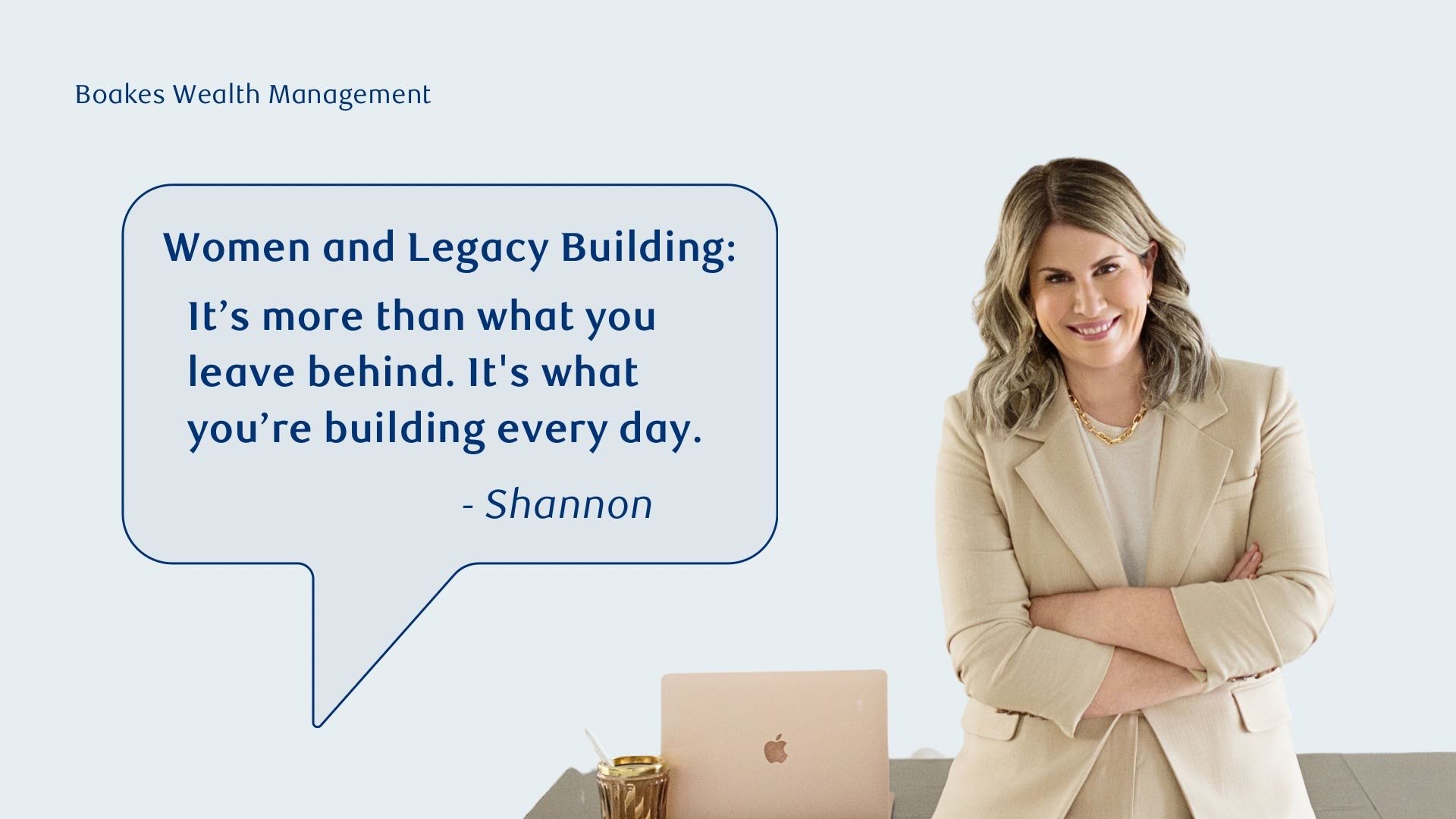
Rethinking What Legacy Means to You
Historically, discussions around legacy have often been about money. We discuss who inherits what, how assets are divided, and how wealth is transferred from one generation to the next. And although these conversations are important, they're only part of the story.
When many women think about legacy, of course, it differs from person to person; however, many consider how it revolves around the values passed down, the people helped along the way, the traditions created, and the relationships nurtured.
Do women define legacy differently?
There is no single answer, but many studies suggest women tend to view wealth through more of a holistic lens. While financial security remains important, women often connect money to purpose, family, community, and their long-term well-being. Rather than asking, "How much will I leave behind?" Many women will ask questions instead like: “Who will be impacted by the choices I make?" “What values will continue after I'm gone?" Or “What am I building that matters beyond me?"
For many women, alternative words like impact, purpose, values, and wisdom come to mind when thinking about what we will leave behind.
And so the question becomes “How do I want to be remembered?”
This may be one of the most powerful financial planning questions a woman can ask, not because it focuses on the end of life, but because it aims to clarify what matters most right now.
As you’re reading this, I implore you to reflect on the following questions:
- What values guide my decisions?
- What lessons do I hope others learn from me?
- What relationships have mattered most?
- What would I like future generations to know about my life?
- What impact am I most proud of today?
The answers to these questions often reveal that legacy is already taking shape long before any plan is finalized. It’s taking shape in the way you show up authentically in life; for yourself, for your loved ones and for others you may never meet. It’s apparent in how you move through life with the intention of making an impact that extends past your lifetime alone, whether through what you create, share, or teach.

From Meaning to Action: Planning a Legacy on Your Own Terms
Once we understand what legacy means to each of us personally, the next step is to bring those values into our financial decisions. Because when it comes down to it, money can help support the legacy we want to create.
For instance, generational wealth is sometimes discussed as though it's only available to a select few, but in reality, it begins with intentional choices that may look like:
- Consistently saving and investing
- Teaching children and grandchildren about money
- Protecting assets through proper planning
- Supporting education and future opportunities
- Creating financial stability that reduces burdens on future generations
The size of an inheritance does not always measure generational wealth. Sometimes, it’s measured by the opportunities, knowledge, and values passed down for generations to come.
Why do women need their own financial plan?
As we know, women face unique financial realities, such as career interruptions, caregiving responsibilities, longer average lifespans and more. As a result, women benefit from financial plans that reflect their individual goals, values, and life experiences.
For instance, as more women choose not to have children or are marrying later in life (or not at all), the way they view their legacy may be different from women with children. Oftentimes, women are expected to be everything to everyone - but what about the women who are redefining what the natural path forward looks like?
I recently spoke to a woman in her 40s who is newly married and mentioned they do not want children. And for her, “legacy” looks like the business she is building and the way the money she earns provides her with a comfortable life and the opportunity to donate to multiple charities. Part of her legacy will be her philanthropic work, in which she has created a financial plan where she feels reassured she can continue to do so through her lifetime and long after, too.
A personalized financial plan can help answer important questions like “What kind of future am I building?” “How do I protect the people and causes I care about?” Or “What role does philanthropy play in my legacy?”
Financial planning is ultimately about aligning our resources with our priorities in life to achieve a greater overall impact.
What is values-based estate planning?
Values-based estate planning moves beyond legal documents and financial accounts and asks what we want our wealth to represent.
This can look like many different things to each woman, like supporting future generations, charitable giving, community involvement, education, entrepreneurship, or creating opportunities for others. And the reality is that most effective legacy plans often combine both financial assets and personal values.
Final thoughts
How do you leave a legacy that reflects what matters to you?
Ask yourself:
- What matters most to me?
- Who do I want to support?
- What values do I hope continue?
- What conversations do I need to have with loved ones?
- What role does my wealth play in that vision?
Your financial choices and how you move through life play a role in how you can influence generations to come. This summer, as you spend time outdoors soaking up the sun or with family and friends, I’d recommend setting aside some time to reflect on what legacy means to you and whether your plans currently align.
At Boakes Wealth Management, we can work together to create a plan that reflects not only your wealth but also your values, priorities, and vision for the future. Let’s connect today to ensure you’re building your life and legacy with intentionality and purpose.
Shannon
Shannon Boakes, CFP, FMA, CIWM, FCSI | Investment amp; Wealth Advisor, Financial Planner, RBC Wealth Management | RBC Dominion Securities | T. 519-758-1270 | C. 226-208-0357 | 22 Colborne Street, 2nd Floor Brantford, ON N3T 2G2 | www.boakeswealthmanagement.com
This community extends beyond one conversation. It’s built through shared ideas, thoughtful planning, and staying connected over time.
Follow along on LinkedIn and Facebook, or reach out if you’d like to talk through your own situation or refer someone who could use support.
Boakes Wealth Management is welcoming a few new clients, especially business owners and families approaching retirement. Know someone who'd be a good fit? Let’s connect!
RBC Wealth Management is a business segment of Royal Bank of Canada. For further information on the entities that are member companies of RBC Wealth Management, click here. The content in this publication is provided for general information only and is not intended to provide any advice or endorse/recommend the content contained in the publication.
® / ™ Trademark(s) of Royal Bank of Canada. Used under licence. © Royal Bank of Canada 2026. All rights reserved.