
Shannon Boakes
Investment & Wealth Advisor, Financial Planner
August 11, 2026
Are you saving your money, or simply holding onto what’s left over?
Different seasons bring different spending habits, and summertime is a perfect example of this, as many of us may be left wondering how our bills are higher than expected at the end of each month.
When most people think about saving, they often picture what’s left over after bills are paid and all other expenses are covered. And those things are, of course, a priority, but is your common practice simply putting whatever remains into a savings account? Or do you have a more strategic approach?
Making the Most of Your Money
While this approach is commonplace and can work for some, it often means saving becomes something that happens by default rather than by design. And the reality is, building meaningful wealth rarely comes down to simply saving more, but about being intentional with where your money goes, how it can grow, and whether it’s aligned with your personal long-term goals.
For some, maximizing savings may mean investing excess cash rather than leaving it untouched. For others, it may mean creating a more strategic plan around taxes, retirement, or business growth. When it comes to farming families, for example, savings may look very different altogether, as they’re often found in land, equipment, and the operation itself. This is one of the reasons why it’s so important to establish a plan.
At the forefront of what we do at Boakes Wealth Management is ensuring that clients can build with intention and purpose, so their money works for them.
So the question becomes not just “how much can I save?” But rather, “How can I make the money I save work harder for me?”

Strategies commonly overlooked when maximizing savings
It’s safe to say we all want to have the freedom and peace of mind that comes with money in our savings. And what that ideal number looks like for one person can be vastly different from what it looks like for another. But, regardless, the truth is the people who are the best savers don’t just save more. They give every dollar a job.
For many high-income individuals and families, the challenge is often not the ability to save but ensuring savings are positioned effectively. As one’s income grows, accumulating wealth may come more easily, but without a clear strategy, that money isn’t working as hard as it can in the long term.
One of the most commonly asked questions I hear is “How much cash should I keep in savings versus investing it?”
And the truth of the matter is, there’s no one answer because everyone’s circumstances are different. And while having cash available is an important part of financial security (providing flexibility, protecting against unexpected expenses, and allowing you to feel confident navigating uncertainty), holding onto too much cash for too long can create its own challenges. Inflation can gradually reduce purchasing power, and excess cash may miss opportunities for long-term growth. Which is exactly why the right balance for you and your family depends on your personal circumstances, upcoming needs, risk tolerance, and financial goals, and all of those factors come into play when creating a plan that feels most aligned to you.
How do high earners save more money?
For many successful individuals, the biggest opportunity is not simply earning more but creating systems that allow wealth to accumulate intentionally. This is the secret to many wealthy people’s success, and with the right tools and information at our disposal, anyone can learn the best ways to make their money work harder for them.
This can include things like:
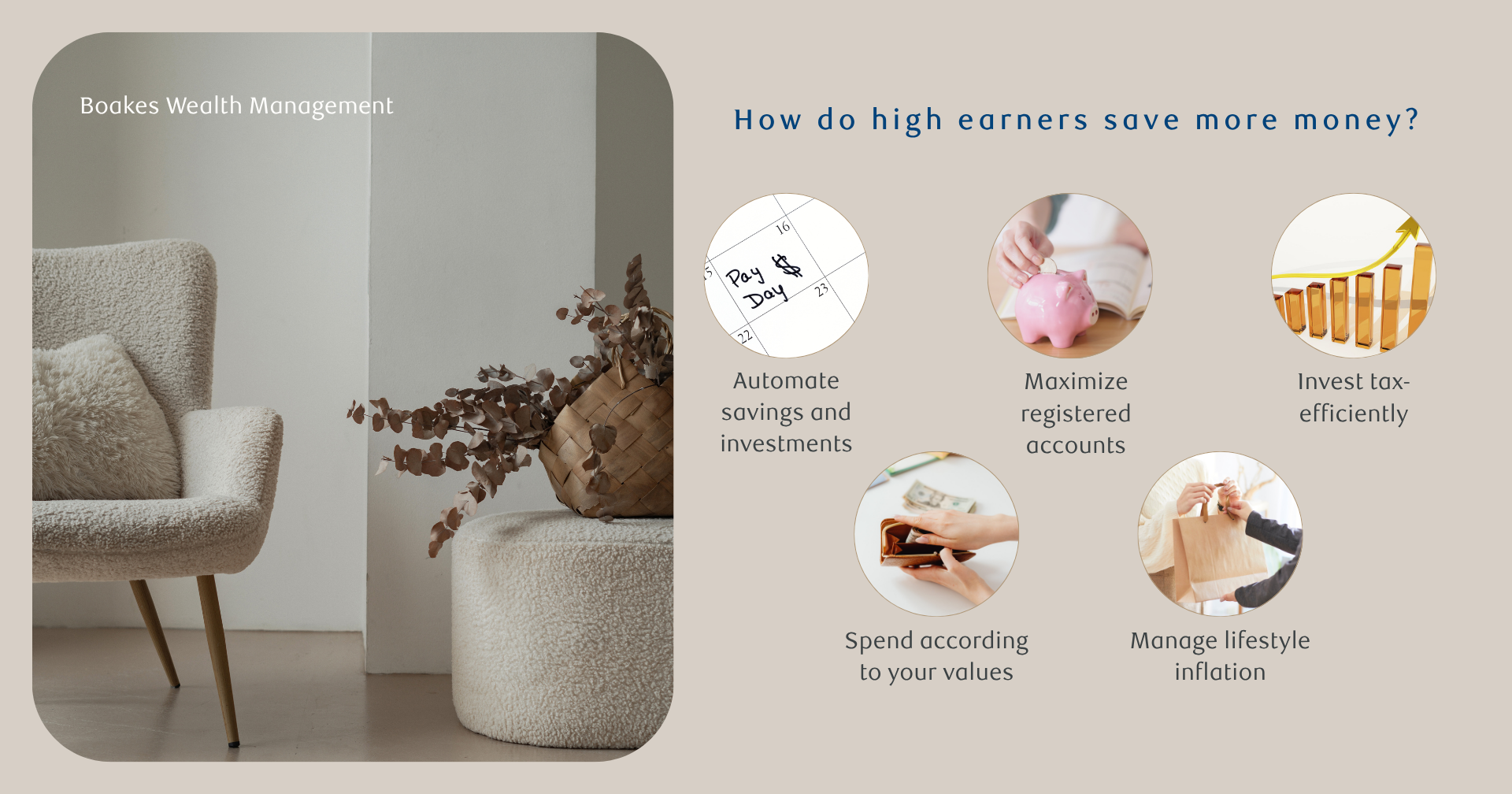
- Automating savings and investment contributions
- Maximizing registered accounts where appropriate
- Building tax-efficient investment strategies
- Aligning spending with personal values
- Avoiding unnecessary lifestyle inflation
For many people, a common challenge is lifestyle creep, where the more money you make, the more you spend, too. Now, lifestyle growth is not inherently negative. Personally, I’m a big believer in achieving a healthy balance in life, and naturally, as people work hard and achieve success, it’s fair that they want to enjoy the benefits.
However, from what I’ve seen, the challenge comes when every increase in income is immediately matched with an increase in spending, and a helpful question to ask is: “Am I spending more because it reflects my priorities, or because my spending has quietly expanded over time?”
Intentional wealth-building is about finding the balance between enjoying today and protecting tomorrow. With the right plan in place for your savings and investments, you can ensure your money quietly works in the background to help you achieve your goals.
Redefining What Saving Looks Like for Farmers
I’ve worked closely with many farm families, so we understand that their savings look different from those in traditional savings accounts. Farmers have many aspects of the business to consider, including the ongoing costs of building and protecting it. This may look like:
- Purchasing new equipment
- Improving land
- Expanding acreage
- Growing livestock
- Investing back into the operation
These investments are meaningful and often essential to long-term success; however, they can also pose unique challenges. For example, if much of a farm family’s wealth is tied up in the operation itself, it can create what is often called a liquidity blind spot. While a farm may be highly valuable on paper, quickly accessing that wealth can be difficult without disrupting the operation.
Additionally, agricultural income naturally moves through cycles, and there may be years of strong production and favourable markets, followed by seasons where expenses rise, commodity prices shift, or unexpected challenges occur.
One of the most important savings strategies for farm families is learning how to manage the strong years. Rather than allowing higher-income years to flow back into expansion automatically, I often suggest building emergency reserves, creating retirement savings outside the farm, preparing for future tax obligations, and investing strategically during profitable years.
The goal for many farming families becomes building enough resilience to ensure peace of mind and be prepared for all seasons of life.
Saving Outside the Farm is Actually Protection for the Farm
A common misconception I hear is that investing outside the operation means taking money away from the farm. But in reality, building wealth outside the farm can actually strengthen the operation, as diversified savings can provide flexibility during difficult years, retirement security, and protection against unexpected events.
While a family’s farm may be the foundation of their wealth, having additional financial resources creates stability for both the family and the business in the long run.
Tax-Advantaged Saving Strategies for Farm Families
Farm income can vary significantly from year to year, which makes tax planning an essential part of maximizing savings.
When working with my clients, we consider strategies such as:
- Using registered investment accounts where appropriate
- Planning contributions during higher-income years
- Exploring available income-smoothing opportunities
- Building investment assets outside the farm operation
What we want to ensure is that a strong financial year is treated as an opportunity rather than a larger tax bill. There are so many ways to invest that money with purpose and intention, ensuring it continues working for your family for generations to come.
Final Thoughts
Whether you’re a business owner, professional, retiree, or farm family, maximizing savings comes down to the fact that your money should have a purpose.
Because saving isn’t just about accumulating more, but about creating flexibility, protecting your future, and ensuring your wealth supports the life and legacy you want to build.
I’ll leave you with a few questions worth asking yourself:
- Is my savings strategy intentional, or is it simply whatever’s left over?
- Do I have the right balance between cash, investments, and other assets?
- Am I using strategies that could improve tax efficiency?
- Does my current plan support my future goals?
The most successful financial strategies are not built on a single decision, but are built over time, through thoughtful choices and consistent planning.
If you’re looking to review your savings strategy, investment approach, or long-term financial plan, now is as good a time as ever to do just that. Because maximizing savings isn’t just about having more, it’s about making sure what you have works harder for you, so you can enjoy more of life while your money continues to work for you in the background.
Shannon
Shannon Boakes, CFP, FMA, CIWM, FCSI | Investment amp; Wealth Advisor, Financial Planner, RBC Wealth Management | RBC Dominion Securities | T. 519-758-1270 | C. 226-208-0357 | 22 Colborne Street, 2nd Floor Brantford, ON N3T 2G2 | www.boakeswealthmanagement.com
This community extends beyond one conversation. It’s built through shared ideas, thoughtful planning, and staying connected over time.
Follow along on LinkedIn and Facebook, or reach out if you’d like to talk through your own situation or refer someone who could use support.
Boakes Wealth Management is welcoming a few new clients, especially business owners and families approaching retirement. Know someone who'd be a good fit? Let’s connect!
RBC Wealth Management is a business segment of Royal Bank of Canada. For further information on the entities that are member companies of RBC Wealth Management, click here. The content in this publication is provided for general information only and is not intended to provide any advice or endorse/recommend the content contained in the publication.
® / ™ Trademark(s) of Royal Bank of Canada. Used under licence. © Royal Bank of Canada 2026. All rights reserved.