
Shannon Boakes
Investment & Wealth Advisor, Financial Planner
October 7, 2026
Most financial advice skips the most important part of every decision. It talks about rates, returns, contribution room and tax brackets, as if the numbers decide on their own. They don't. People make decisions, and people feel things about money, often more strongly than they'd like to admit.
Everyone brings emotion to money, men and women alike. But women often face a stereotype: that feelings about money make them too cautious, too anxious, or too emotional to be taken seriously. So many women learn to keep those feelings to themselves, even though they're there. The caution learned from a parent who stretched every dollar. The guilt that shows up when spending on herself, even when the budget clearly allows it. The discomfort of asking for more, whether it's a raise, a better rate, or a straight answer from a professional. None of this shows up on a statement, but all of it shapes what happens to the money.
That's why my team and I don't leave emotions out of the conversation. We make room for them, because a plan built without them is a plan built on half the story.
So this month's post isn't about removing emotion from your finances. That isn't possible, and it isn't the goal. It's about understanding those feelings well enough that they stop running the show from the background.
Here's the idea I want to leave you with before we go further: the goal isn't to feel nothing about money. It's to feel clearly. Once you can name what you're actually feeling, whether that's fear, guilt, pride or relief, the decision sitting underneath it becomes much easier to make well.
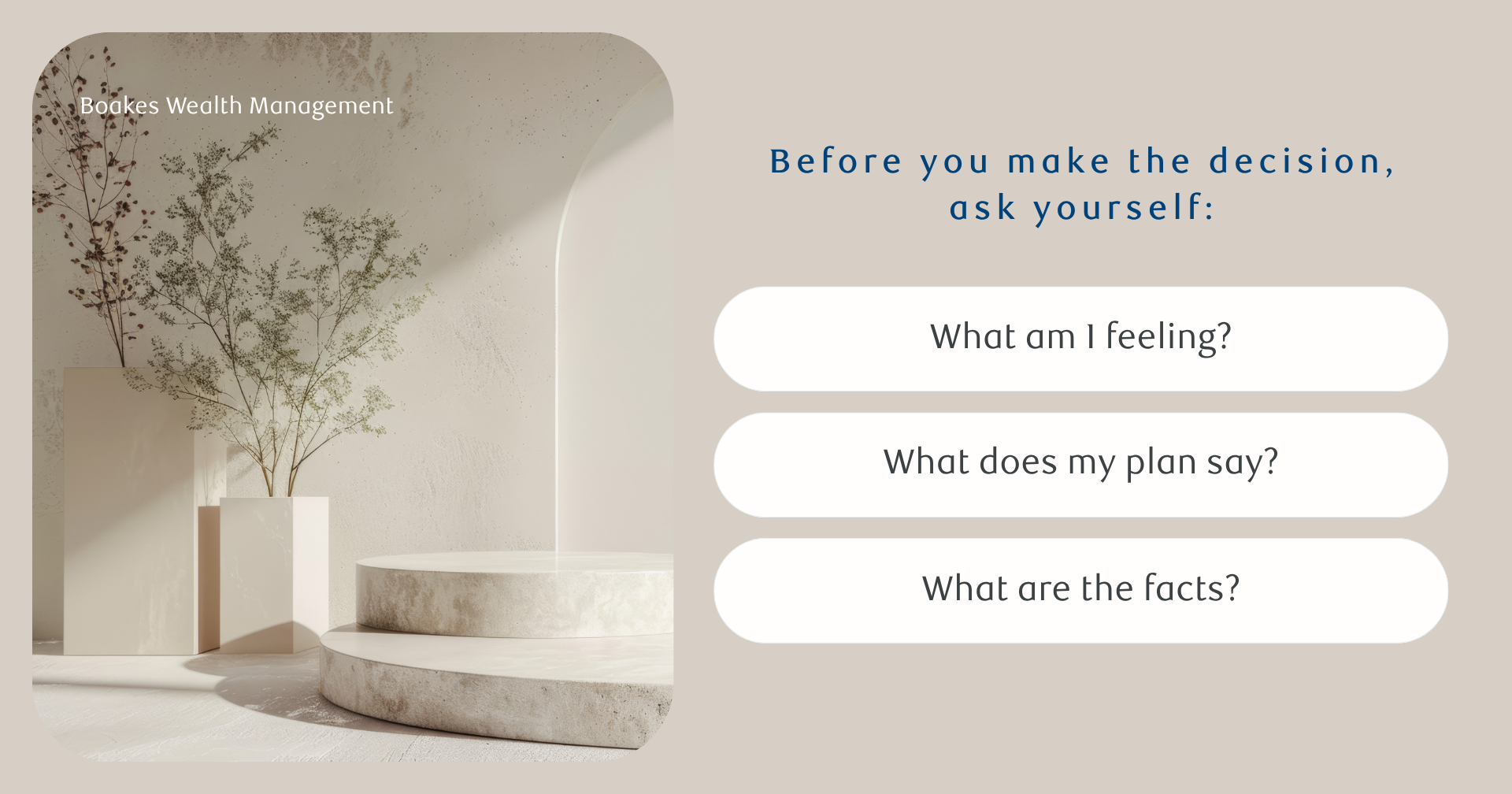
Naming What's Really Driving the Decision
You're not alone if money weighs on you. In FP Canada's 2026 Financial Stress Index, money was once again the top source of stress for Canadians, named by 43% of respondents. In the 2025 edition, women were more likely than men to define financial well-being as simply "not worrying about money day-to-day" (71% compared with 64%), and less likely to feel hopeful about their financial future (49% compared with 56%).
That tells me something important. For many women, peace of mind matters as much as the number itself. And you can't get there without first being honest about what's creating the noise.
Here are the questions I hear most often when we start having that conversation.
"Why do I feel guilty spending money on myself, even when I can afford it?"
This is one of the most common things women tell me, and it rarely has anything to do with the balance in the account. Many of us grew up watching a parent, often a mother, put themselves last: the family's needs first, then the household, and whatever was left over, if anything, for them. That pattern gets absorbed long before we earn our own paycheque.
The guilt is usually a leftover rule, not a current fact. A useful test is to ask: if my plan says this is affordable, whose voice is telling me it isn't? Often it isn't yours. When spending on yourself is built into the plan, with a clear amount and a clear purpose, it stops feeling like a lapse and starts feeling like what it is: a decision you made on purpose.
"Why does talking about money with my family feel harder than it should?"
Because in most families, money is never just money. It's tied to fairness, to who helped whom, to old expectations about who "handles the finances," and sometimes to disagreements that were never fully resolved. A simple question about an inheritance or a loan to an adult child can suddenly carry decades of history.
It helps to separate the conversation into two parts. First, the facts: what exists, what the plan is, who's responsible for what. Then, separately, the feelings: what matters to each person and why. When families try to do both at once, the emotion tends to swallow the facts. A neutral third party, like an advisor, can also help keep a family meeting grounded.
"Is it normal to feel anxious about money even when things are going well?"
Yes, and it's far more common than people admit. Anxiety about money doesn't always track your actual situation. Some of the most financially secure women I work with carry a quiet worry that it could all disappear, often because they lived through a time when it nearly did, or watched someone they love go through it. This isn't unique to women; plenty of successful people carry the same worry, whatever their gender.
There's also a well-documented confidence gap. Researchers at Carleton University, drawing on Canadian Financial Capability Survey data, found that among Canadians with high actual financial knowledge, only 19% of women rated their own knowledge in the top range, compared with 29% of men. In other words, many women know more than they give themselves credit for, and that underconfidence can show up as anxiety, even when the numbers are strong.
The answer isn't to talk yourself out of the feeling. It's to check it against the plan. If the plan holds up under stress testing, the anxiety is information about your history, not a warning about your future.
"How do I separate how I feel about a decision from whether it's the right one?"
Start by naming the feeling specifically. "I'm nervous" is vague. "I'm afraid that if I sell this investment and it goes up, I'll feel foolish" is something you can actually work with. Once the feeling has a name, you can ask whether it's pointing at a real risk or at an old fear.
Then ask the practical questions separately: Does this decision support my goals? Does it fit my timeline? What happens if I'm wrong, and can I live with that outcome? A decision can feel uncomfortable and still be the right one. Equally, a decision can feel great and still be the wrong one. Feelings are worth listening to. They just shouldn't be the only voice in the room.
Making Calmer, Clearer Decisions
Once you can name what's driving you, the next step is building a way of deciding that holds up when emotions run high: after a market drop, a loss in the family, a job change, or a windfall. The aim is a process you can trust, so you don't have to rely on how you happen to feel on a given day.
There's good evidence that support makes a difference here. In FP Canada's 2026 Financial Stress Index, 34% of Canadians who work with a financial professional said money was their top source of stress, compared with 48% of those who don't. And 41% of those with a professional reported losing sleep over money worries, compared with 55% of those without one.
"How do I make a big financial decision without it being driven by fear?"
Fear makes us want to act fast: sell now, lock it in, get out. Or it freezes us completely. Both responses feel protective in the moment, and both can be expensive.
A few habits help. Give yourself time; very few financial decisions need to be made the same day. Write down what you're trying to protect, whether that's income, a home, your independence, or a legacy. Then look at the worst realistic outcome of each option, not the worst imaginable one. When fear is measured against a plan that already accounts for bad years, it usually shrinks to a size you can manage.
"What does it look like to feel confident in a financial decision, not just resigned to it?"
Resignation sounds like "I guess this is fine" or "I'll just go with what they recommend." Confidence sounds different: "I understand why we're doing this, I know what could go wrong, and I'm comfortable with it."
The difference is understanding. You don't need to know every technical detail, but you should be able to explain the decision in your own words, including the trade-offs. If you can't, that's not a failing on your part. It's a sign the conversation isn't finished yet. Ask again, ask differently, and keep asking until it makes sense.
"How do I build a financial relationship with my advisor where I can say how I actually feel?"
This matters more than most people think. If you don't feel you can say "that makes me nervous" or "I don't understand this" or "I want to spend some of this on myself," your plan is being built on incomplete information.
A good advisory relationship should make room for those conversations. Your advisor should be asking about your concerns and your history with money, not just your risk tolerance score. You should be spoken to directly, not through a spouse or partner. And you should leave meetings feeling clearer, not smaller. If that isn't your experience, it's worth saying so, and it's worth expecting better.
The Emotions of Finance for Farm Women
If money is emotional in general, farm money is emotional several times over. The farm is a business, a home, a family history and, for many, a big part of who they are, all at the same time.
The Land Carries More Than Its Market Value
A spreadsheet can tell you what the land is worth. It can't tell you that a grandparent cleared that back field by hand, or that your children learned to drive a truck in the laneway. Decisions about selling, renting, expanding or passing on the farm can feel like decisions about loyalty to the people who built it, rather than decisions about dollars.
Those decisions are coming for many families. According to Statistics Canada's 2021 Census of Agriculture, the average farm operator is 56 years old, and 60.5% of operators are 55 or older. Yet only 12.0% of farms reported having a written succession plan. That gap often isn't about a lack of information. It's about how hard these conversations feel.
The Financial Work That Often Goes Unnamed
Women make up 30.4% of Canada's farm operators, according to the same census. That figure doesn't capture the full picture. On many farms, the woman managing the books, the payroll, the program paperwork and the bank meetings isn't the person the community thinks of as "running the farm."
That's rarely anyone's intention. It's an old assumption about who does what on a farm, and it's worth retiring. The numbers tell a different story. In a 2023 national survey of 1,025 farm women by Farm Management Canada, 69% said they were deeply involved in or solely responsible for financial bookkeeping, 61% for financial planning and analysis, and 48% for succession or transition planning. That's real financial leadership, and it deserves to be named as such.
"How do I separate my emotional connection to the land from a clear-eyed financial decision?"
You don't have to choose between the two. The connection is real, and it's a legitimate factor in the decision. The goal is to be honest about which parts of the decision are about feelings and which are about finances, so each one gets the right weight.
It can help to run the numbers first as though it were any other business asset: what the land earns, what it's worth, what your retirement needs, and what's fair to each of your children. Then bring the family history back in and ask what it's worth to you to honour it, and what that would actually cost. When those two pictures sit side by side, the choice often becomes clearer, and far less likely to become a source of regret or resentment down the road.
"How do I make sure my financial role on the farm is recognized, not just assumed?"
Start by making it visible. Write down what you actually do: the reporting, the cash flow management, the lender relationships, the tax preparation, the government program applications. Seeing it on paper is often eye-opening for everyone, including you.
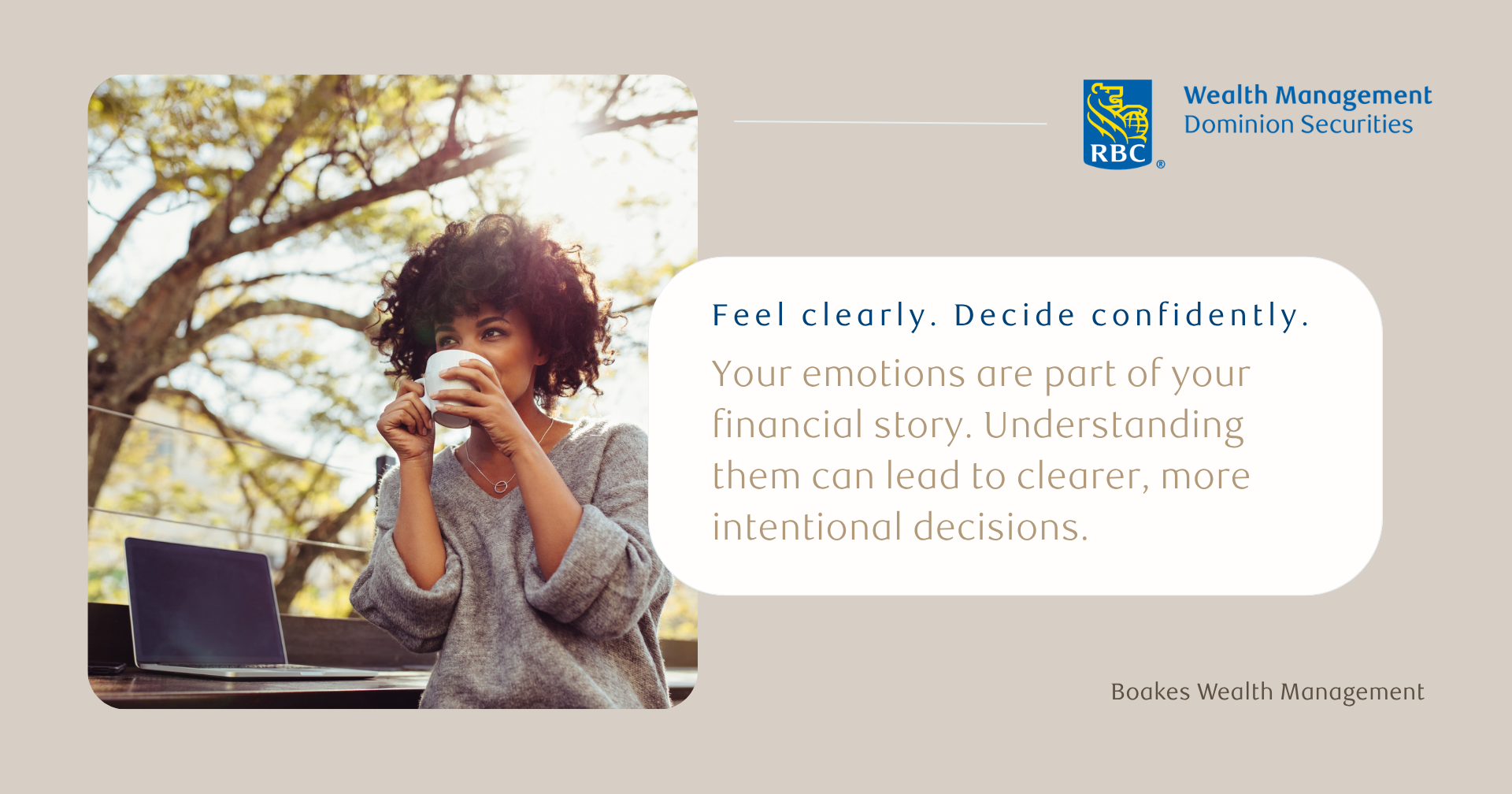
Then make sure that role is reflected where it counts: in ownership structures, in how you're paid, in succession discussions, and in who is in the room when advisors, accountants and lenders meet. If you're doing the work of a financial manager, you should have a seat at the table as one. Your knowledge of how the farm actually runs financially is one of its most valuable assets, and a sound plan for the farm's future depends on it.
Final Thoughts:
Every financial decision you make has a feeling attached to it. That isn't a weakness to overcome. It's information, often reflecting your values, your history and what you most want to protect. The trouble only starts when those feelings work in the background, unnamed, steering choices you never quite chose.
The women I work with don't need to become less emotional about money. They deserve the space, the clarity and the support to feel clearly, and then to decide with confidence.
So here's where I'd invite you to start, with a few honest questions:
- When I think about my money right now, what's the first feeling that comes up, and where did I learn it?
- Is there a decision I've been putting off because it feels uncomfortable, not because it's unclear?
- When I feel guilty spending on myself, does my plan back that feeling up, or contradict it?
- Can I explain my current financial plan, including its trade-offs, in my own words?
- Do I feel heard, not just informed, in conversations with my advisor, my partner or my family?
- If I'm part of a farm family, is my financial role named, recognized and reflected in our plans for the future?
If any of those gave you pause, that's worth acting on. At Boakes Wealth Management, we believe financial planning should make room for the whole person, including the parts that don't fit on a spreadsheet. Let's talk about what's really driving your decisions, and build a plan you feel good about, not just one you've accepted.
Because the best financial decisions aren't the ones made without feeling. They're the ones made with clarity, and on your terms.
Shannon
Shannon Boakes, CFP, FMA, CIWM, FCSI | Investment amp; Wealth Advisor, Financial Planner, RBC Wealth Management | RBC Dominion Securities | T. 519-758-1270 | C. 226-208-0357 | 22 Colborne Street, 2nd Floor Brantford, ON N3T 2G2 | www.boakeswealthmanagement.com
This community extends beyond one conversation. It’s built through shared ideas, thoughtful planning, and staying connected over time. Follow along on LinkedIn and Facebook, or reach out if you’d like to talk through your own situation or refer someone who could use support.
Boakes Wealth Management is welcoming a few new clients, especially business owners and families approaching retirement. Know someone who'd be a good fit? Let’s connect!
RBC Wealth Management is a business segment of Royal Bank of Canada. For further information on the entities that are member companies of RBC Wealth Management, click here. The content in this publication is provided for general information only and is not intended to provide any advice or endorse/recommend the content contained in the publication.
® / ™ Trademark(s) of Royal Bank of Canada. Used under licence. © Royal Bank of Canada 2026. All rights reserved.
References
- FP Canada. FP Canada 2026 Financial Stress Index.
- FP Canada. 2025 Financial Stress Index Results Deck
- Peetz, J., Howard, A. L., Hollingshead, S., and Soliman, M. Increasing financial confidence in Canadian women. Journal of Financial Literacy and Wellbeing, 2026.
- Statistics Canada. Canada's 2021 Census of Agriculture. The Daily, May 11, 2022.
- Farm Management Canada and CentricEngine. Expanding Opportunities for Canadian Agriculture by Understanding the Experience of Farm Women. October 2023 (survey of 1,025 farm women).