
Shannon Boakes
Investment & Wealth Advisor, Financial Planner
September 15, 2026
What if retirement isn't something you have to earn one last sprint to deserve?
Somewhere along the way, retirement turned into a performance. The bucket list. The around-the-world trip. The five new hobbies you're supposed to take up all at once, as if the years still ahead need to justify themselves by being exciting enough. And underneath all that ambition, if I'm honest, there's often a quieter feeling running the opposite direction: a low dread of aging, of slowing down, of what the word “retired” signals about where you are in life.
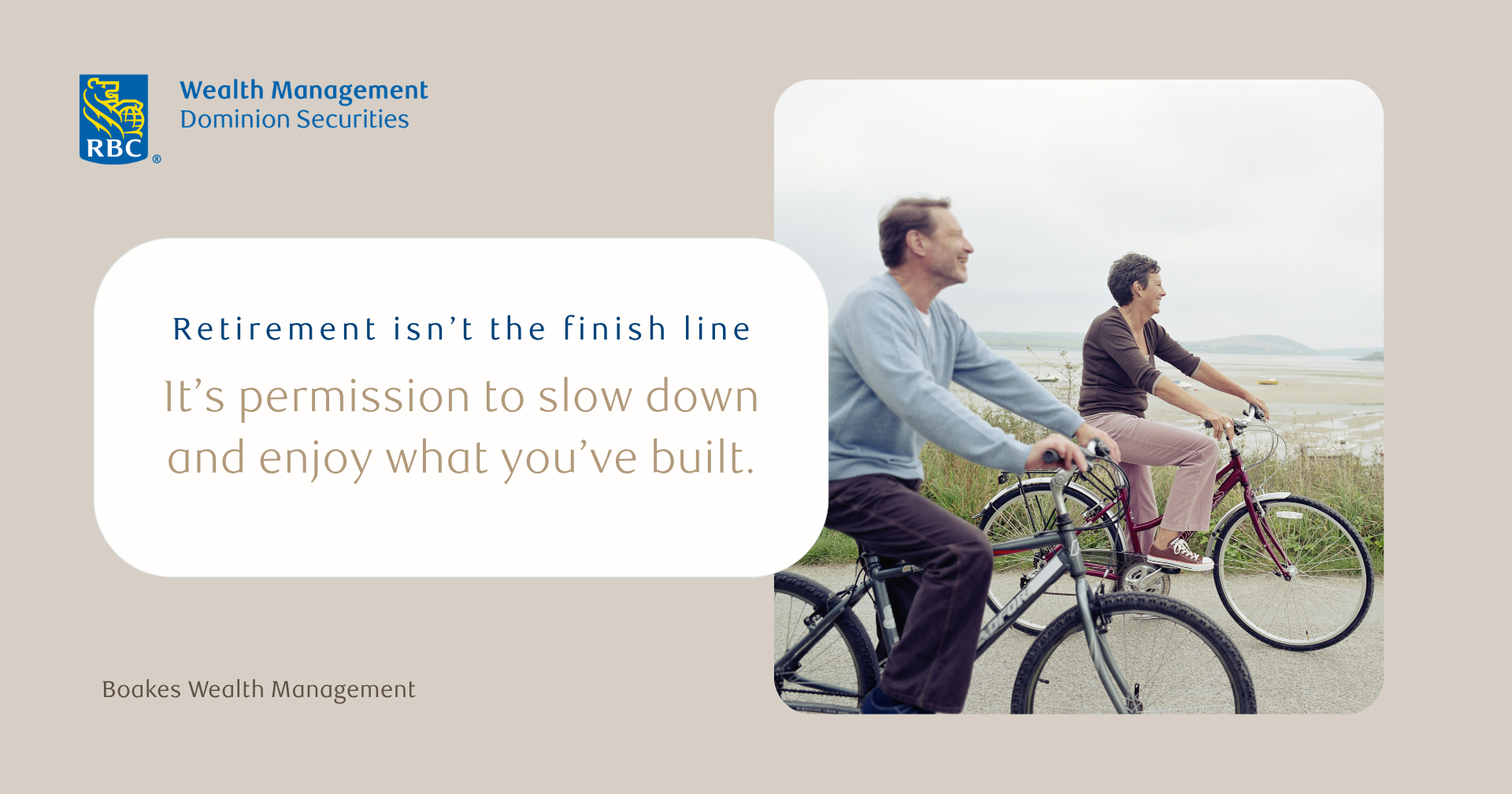
I want to offer a different way to think about it. What if retirement isn't a frantic last chapter to cram living into before it's too late, and it isn't something to be afraid of either? What if it's permission, finally, to slow down, to do what's actually good for you, and to appreciate time instead of racing it?
Longevity has changed the math on this. Retirement isn't a short coda tacked onto the end of a working life anymore. For a lot of the people I work with, it could reasonably be a third of it. That's not a stretch of life to survive anxiously. It's a stretch of life that deserves to be lived well.
Funding a Long Life, Lived on Your Terms
Retirement planning for someone with real assets isn't really about whether you'll be okay. In most cases, that question has already been answered. It's about something more specific: whether the plan behind that money is actually built for the length and shape of the life you want to live, not just the milestone of getting there.
Plan for Length, Not Just a Finish Line
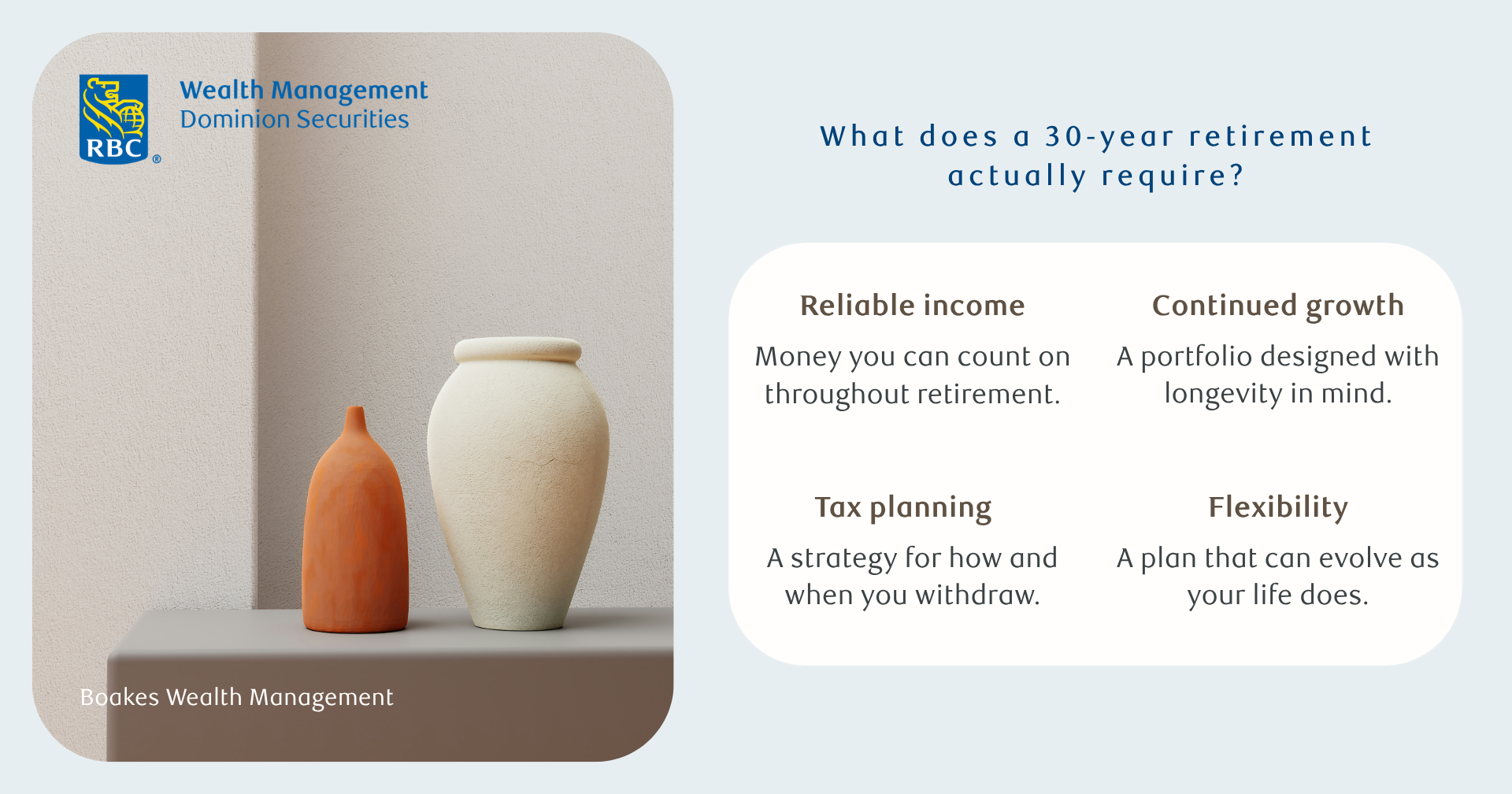
Longevity is the real game-changer in how I think about this with clients. A retirement that lasts fifteen years and one that lasts thirty are entirely different planning problems, and increasingly, thirty is the more realistic number. That reframes the whole question. It's no longer, “do I have enough to coast?” It's “do I have enough to live well, slowly, for decades?” Those are very different plans, and I've found that a lot of the fear people carry about aging is actually a real, fixable financial question hiding underneath, one that just hasn't been asked directly yet.
From Accumulation to Income: Where Peace of Mind Comes From
For most of your working life, the goal was growth. Add to the portfolio, let it compound, watch the number climb. Retirement asks something different of that same money: reliability. Turning a portfolio into a stream of income you can actually count on is what lets you stop white-knuckling every market headline and genuinely relax into this stage of life. The freedom to slow down doesn't come from the size of the number alone. It comes from knowing the money itself won't slow down when you do.
You Don't Have to “Go Big” to Retire Well
I think there's a quiet pressure attached to retirement that doesn't get talked about enough: the assumption that it has to be expensive to be good. That a meaningful retirement means the big trip, the second home, the constantly full calendar. For a lot of people, the truer version is smaller and quieter than that, more time at home, more time with people they love, more time doing very little on purpose. A good plan should be built around the retirement you actually want, not the one you feel like you're supposed to want.
These are the questions I hear most often from clients thinking seriously about this stage of life:
“Will my money last if I live to 90 or 100?”
“How do I plan for a long retirement?”
“What's the most tax-efficient way to withdraw money in retirement?”
“How do I enjoy retirement without worrying about money?”
None of these are small questions, and none of them have a one-size answer. But they're exactly the right ones to be asking, and having real answers to them is what turns retirement from something to brace for into something to actually look forward to.
Retirement Planning for Farm Families: Slowing Down When the Land Never Does
Retirement looks different when the business is also the land, the home, and often the identity you've carried your whole adult life. I've sat across the table from enough farm families to know that the resistance to slowing down here rarely comes from stubbornness. It comes from something much harder to plan around on paper.
“I’ll Farm Until I Die” Is Often Fear Dressed Up as Identity
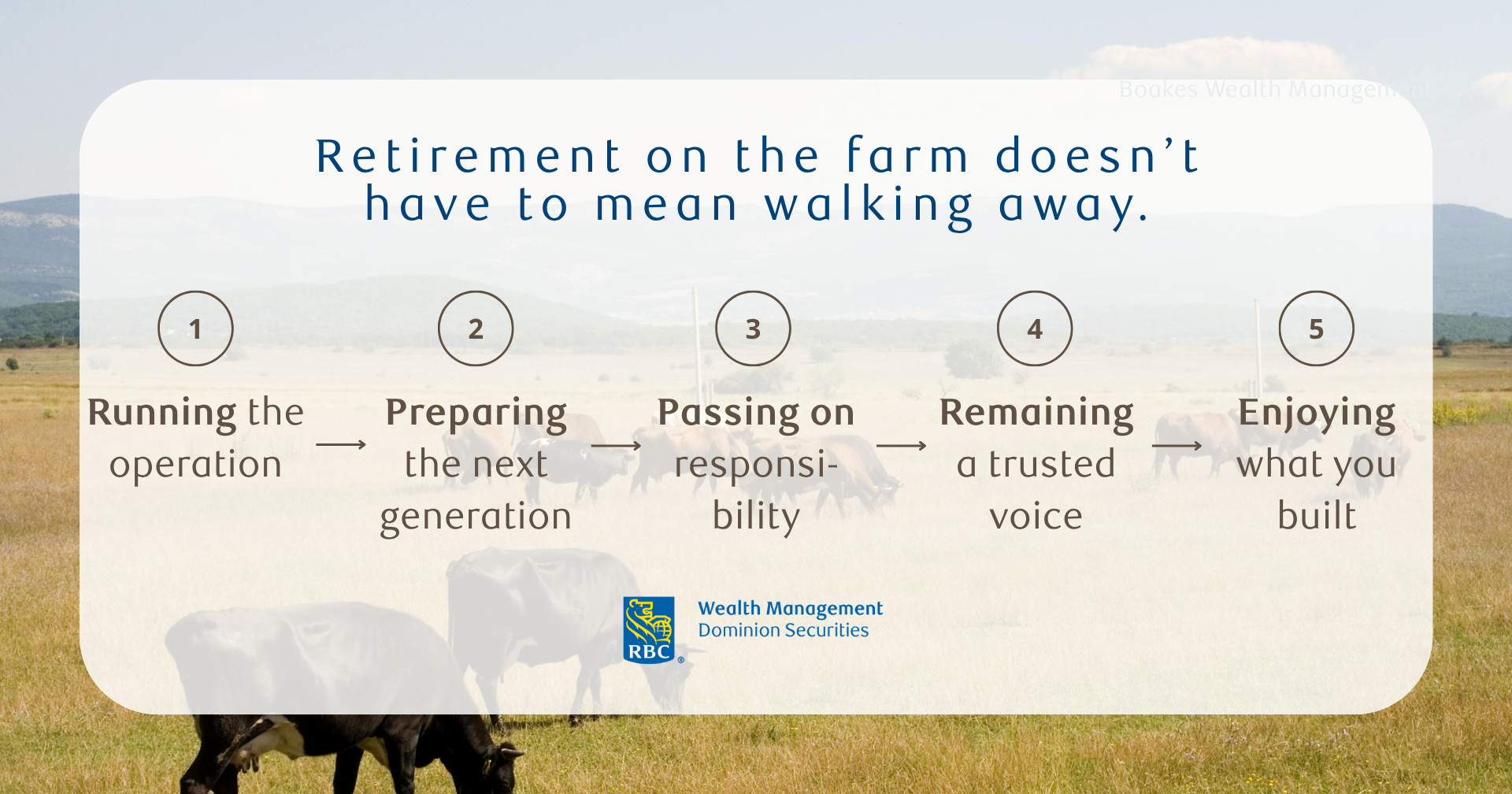
For many farmers, the resistance to retiring isn't really financial. It's existential. Who am I if I'm not out there every morning? That question deserves real weight, not a dismissal. But I'd offer a reframe: retirement doesn't have to mean disappearing from the operation entirely. It can mean the role evolves, from doing the work to guiding it, from carrying every decision to being the person whose judgment still matters most. That's not stepping away from an identity. It's letting it grow into its next form.
Retirement and Succession Are the Same Conversation
On a farm, you can't really talk about slowing down without also talking about who takes over and how you get paid out for the years you put in. These aren't two separate plans, they're one conversation, and treating them that way from the start makes both of them easier. Done well, succession planning lets the older generation stay meaningfully involved, respected for what they built, without carrying the full weight of running things day to day. Done poorly, or not at all, it tends to create exactly the kind of stress that makes people dig in and refuse to retire at all.
A Long Life After Farming Is Something to Plan For, Not Fear
The years after handing over the reins deserve to be restful, not anxious, and that requires building genuine stability outside the value of the land and the operation itself. A farm can be worth a great deal on paper and still leave a family without accessible income in retirement if nothing has been set aside off the farm along the way. Planning for that ahead of time is what allows those later years to feel like what they actually are: the harvest of a life's work, not a question mark hanging over it.
These are the questions I hear most often from farm families thinking about this stage:
“How do farmers retire if all their money is in land?”
“How do I create retirement income from my farm?”
“What do farmers do after they retire?”
“How do I step back from the farm without losing my purpose?”
These questions come up again and again for good reason, because for a farm family, retirement isn't just a financial transition. It's a transition of role, of identity, and of what a full day looks like. A good plan makes room for all of it.
Final Thoughts
Whether your wealth is built through a career, a business, or generations of working the same land, retirement planning ultimately comes down to the same question: does the plan actually match the life you want to live with the time you have left? Not the life you think you're supposed to want. The one that's actually yours.
I'll leave you with a few questions worth sitting with:
- Am I planning for a retirement that could realistically last 30 years, or one that assumes far less?
- Is my portfolio built to grow, to generate reliable income, or both, and does that match this stage of my life?
- Am I holding onto an assumption about what retirement should look like that doesn't actually fit what I want?
- If I'm part of a farm or family business, have succession and retirement been planned as one conversation, or two separate ones that never quite happen?
The most successful retirement plans aren't built in a single meeting. They're built over time, through honest conversations and thoughtful adjustments as life actually unfolds.
If you're starting to think seriously about what the next chapter looks like, whether that's five years away or already here, now is a good time to have that conversation. Because retirement well-funded is retirement well-lived, slowly, on your own terms, for as long as it lasts.
Because the goal was never just to stop working. It was always to finally have the time, and the peace of mind, to enjoy what you built.
Shannon
Shannon Boakes, CFP, FMA, CIWM, FCSI | Investment amp; Wealth Advisor, Financial Planner, RBC Wealth Management | RBC Dominion Securities | T. 519-758-1270 | C. 226-208-0357 | 22 Colborne Street, 2nd Floor Brantford, ON N3T 2G2 | www.boakeswealthmanagement.com
This community extends beyond one conversation. It’s built through shared ideas, thoughtful planning, and staying connected over time.
Follow along on LinkedIn and Facebook, or reach out if you’d like to talk through your own situation or refer someone who could use support.
Boakes Wealth Management is welcoming a few new clients, especially business owners and families approaching retirement. Know someone who'd be a good fit? Let’s connect!
RBC Wealth Management is a business segment of Royal Bank of Canada. For further information on the entities that are member companies of RBC Wealth Management, click here. The content in this publication is provided for general information only and is not intended to provide any advice or endorse/recommend the content contained in the publication.
® / ™ Trademark(s) of Royal Bank of Canada. Used under licence. © Royal Bank of Canada 2026. All rights reserved.