
Shannon Boakes
Investment & Wealth Advisor, Financial Planner
May 31, 2026
For many women, financial planning is no longer just about retirement, career growth, or raising children, but has increasingly become about managing multiple generations at once.
The sandwich generation consists of adults who typically balance the financial, emotional, and logistical responsibilities of children, aging parents, and, sometimes, grandchildren. This has become a reality for many, and women often carry a disproportionate share of that responsibility.
For many women, this creates a unique kind of financial pressure: one in which income may be relatively high as they continue to work, but cash flow, long-term planning, and personal financial goals begin to compete with the needs of everyone around them.
This stage of life can look different for each woman, depending on family dynamics, cultural norms, and finances, from helping aging parents navigate healthcare, housing decisions and daily life to supporting children financially with their activities, education, or future plans. In addition to the financial aspects worth noting, many women in this sandwich generation also struggle to balance emotional, physical, and mental support across generations. Being pulled in so many different directions would surely take its toll on anyone, and at Boakes Wealth Management, we work closely with women of many ages and have seen it firsthand.
From women in their 40s and 50s juggling careers, marriage, children, and aging parents, all while trying to find the time necessary for themselves, too. To women 60+ navigating their new “normal” through retirement, all those previous responsibilities, plus potential grandchildren that may enter their lives. Although it is a privilege to have so many people in our lives to love and care for, it is also important to note the weight of caregiving and support that many women carry.
Although the sandwich generation begins to take effect in midlife for many women, it changes and evolves as they enter their retirement years. Their children may be grown, and many may assume the responsibilities should ease, but in actuality, the increasing need to care for aging parents (physically, emotionally, and financially) while also caring for one’s own health is worth noting.
Often, we imagine retirement through the lens of endless free time, when in reality, for many, more demands may arise. This is why it’s important to consider all aspects when creating a financial plan for the future, and to do so as early as possible to set yourself and your family up for success. For example, hiring help for aging parents can lift the physical, mental and emotional toll, but for many, it may be impossible to add on an expense like this.
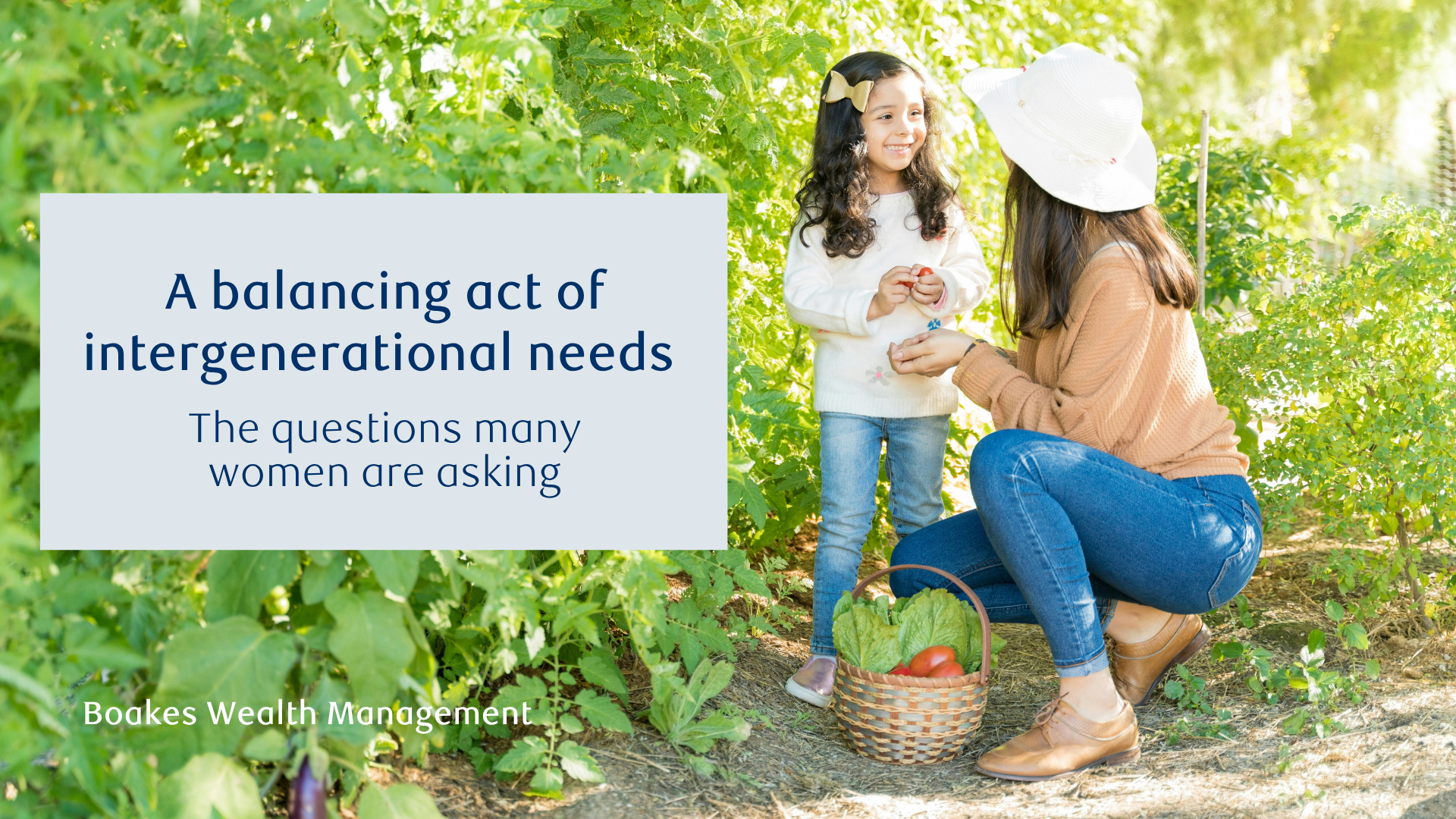
Questions from Women in the Sandwich Generation
“How do I support my parents without compromising my own retirement?”
This is one of the most common and emotionally difficult questions women face during this stage of life. While many women want to help aging parents financially, whether through direct support, caregiving costs, housing assistance, or healthcare expenses, there is often tension between helping family today and protecting long-term financial independence tomorrow.
The reality is that retirement planning can quietly slow down during these years. Contributions may decrease while expenses increase. Women may also reduce work hours, turn down promotions, or prioritize flexibility over income growth to accommodate caregiving responsibilities.
The challenge is finding a balance between supporting loved ones without unintentionally creating future financial strain for yourself.
“Should I be prioritizing my children’s future or my own financial security?”
Many women feel pressure to do many things simultaneously, such as:
- Save for children’s education
- Help adult children financially
- Support aging parents
- Maintain household stability
- Continue retirement planning
You may be asking yourself - why do so many responsibilities fall on women? In many families, there is an unspoken “rule” that mothers and daughters are the ones who make sacrifices to care for those around them. When it comes to aging parents, oftentimes, regardless of how many siblings there may be, it is often the women who take on the brunt of the responsibilities. Of course, this is dependent on generations, cultures, and familial expectations, but if you’re a woman reading this who resonates, I am here to support you through this. And if it’s possible, I implore you to have these conversations with the men in your lives, and seek their support where you can.
Trying to optimize every financial goal at once, especially alone, can be incredibly stressful. In many cases, financial planning during this stage of life becomes less about perfection and more about intentional prioritization. Sometimes the most important question is not: “How do I do everything?” But rather: “What needs the most support right now, and what can wait?”
“What happens if I need to step back from work?”
Caregiving responsibilities can have real career implications, particularly for women in leadership positions or high-demand professions.
Some women move into more flexible roles. Others reduce hours, decline advancement opportunities, or temporarily step away altogether. While these decisions are often made thoughtfully and out of necessity, they can have long-term effects on factors such as lifetime earnings, pension accumulation, CPP contributions, investment growth, and financial independence later in life.
This is why proactive planning matters as much as it does. Building flexibility into financial plans before a crisis occurs can help reduce the pressure of having to make reactive decisions later.
“How do I continue building wealth while everyone depends on me?”
Many women in the sandwich generation are highly capable, financially responsible, and deeply committed to the people around them. But over time, consistently placing everyone else’s needs first can lead to delayed personal goals, burnout, health issues, or financial fatigue.
Financial planning during this phase of life often becomes less about aggressive growth and more about creating resilience. This may include: maintaining liquidity and emergency savings, protecting retirement contributions where possible, and reviewing insurance and estate plans.
Most importantly, it means recognizing that protecting your own long-term financial stability isn’t selfish, but necessary to protect your own health and future in a sustainable way, which will ultimately help others who depend on you long-term.
A Different Kind of Wealth Planning
The sandwich generation is reshaping financial planning for many women.
It’s no longer just about accumulation of wealth, but about coordination, flexibility, caregiving, responsibility, and navigating competing priorities with intention. And while this in-between can feel financially and emotionally complex, it can also be an opportunity to create greater clarity about what matters most to your family and your own future, too.
Long-term financial security is not built solely through income or investment returns. Often, it is built through discussions about how life may change, what additional responsibilities and associated costs may arise, and how you can best prepare for it.
Final thoughts
If you find yourself nearing or right there in the in-between of caring for multiple generations at once, may this be your reminder that others are here to help you, just as you help others. Whether it’s having tough conversations with the people in your life or working with me to get a financial plan in place, this weight isn’t yours alone to carry.
As you think about your own situation, here are a few questions to sit with:
- Am I supporting others in a way that’s still sustainable for my own long-term financial future?
- If my caregiving responsibilities increase unexpectedly, would our financial plan be flexible enough to absorb the added costs?
- Do I fully understand the financial needs and plans of my aging parents?
- Are my partner and I aligned on caregiving expectations, financial responsibilities, and future support for family members?
- Am I making financial decisions from pressure and guilt or from a place of intention?
Shannon Boakes
Investment & Wealth Advisor, Financial Planner
Boakes Wealth Management
Phone: 519-758-1270
This community extends beyond one conversation. It’s built through shared ideas, thoughtful planning, and staying connected over time.
Follow along on LinkedIn and Facebook, or reach out if you’d like to talk through your own situation or refer someone who could use support.