Economic update: trade breakdown and muted market response
The seemingly abrupt end to Canada-U.S. trade talks have increased trade and cultural tensions and escalated rhetoric since the end of negotiations. In this economic update, we assess the latest developments and their potential implications for the Canadian economy and financial markets.
The seemingly abrupt end to Canada-U.S. trade talks have increased trade and cultural tensions and escalated rhetoric since the end of negotiations. In this economic update, we assess the latest developments and their potential implications for the Canadian economy and financial markets.
Elinesky Schuett Private Wealth
August 31, 2026
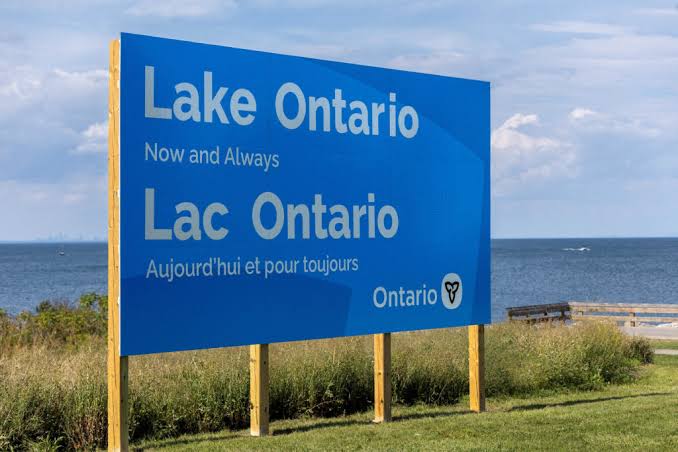
The seemingly abrupt end to Canada-U.S. trade talks have increased trade tensions, cultural sensitivities,and escalated rhetoric since. This has included the launching of new tariffs by the U.S. Administration, Canadian counter-tariffs, and the threat of further retaliation as both sides begin to dig in (not to mention other antagonistic efforts, such as the renaming of Lake Ontario). All of these actions have contributed towards domestic economic uncertainty - at the moment, economic impact looks reasonably contained but this masks the headwinds these tariffs will create for specific sectors.
In this economic update, we assess the latest developments and their potential implications for the Canadian economy and financial markets.
Lastly, our summer office hours are ending this week. Our offices will be closed at 4:00pm this Friday, with regular Friday hours being re-established on September 11th when we will be closed at 4:30pm. Thank you for your understanding.
Economic Update

Trade Talks Break Down
Canada-U.S. trade negotiations broke down despite earlier signs of meaningful progress. The two sides reportedly failed to agree on auto sector tariffs, while U.S. demands around Canada’s ability to pursue trade agreements with other countries and protections around Canadian culture and sovereignty also proved difficult to reconcile. As a result, the U.S. imposed a new 50% tariff on roughly $28 billion of Canadian goods, with Canada announcing retaliatory tariffs effective September 8.
At first glance, the economic impact looks reasonably contained. The newly tariffed goods account for around 5% of Canadian exports to the U.S., while more than 80% of exports should continue to flow tariff-free under CUSMA. Meanwhile, RBC Economics estimates that these duties affect approximately 0.4% of Canadian GDP and employment, adding that the latest developments have not materially changed their annualized economic growth forecast of 1.3% to 1.8% over the next four quarters.
The aggregate numbers, however, mask considerable challenges for affected industries and regions. Electrical equipment, plastics, furniture and wood products are among the more exposed sectors, with the impact concentrated in Quebec, British Columbia and Ontario.
To help cushion the initial impact, the federal government has announced $7.5 billion in support for affected workers and businesses, on top of nearly $25 billion introduced since the trade dispute began in early 2025. Canada’s relatively modest government debt level compared to other developed economies should provide policymakers with some flexibility to support the economy if needed.
Over the past year, the Canadian economy has also demonstrated some ability to adapt to changing trade conditions. In 2025, exports to the U.S. fell by roughly $35 billion, but a $29 billion increase in exports to other countries provided a substantial offset. Much of that increase, however, reflected higher gold prices rather than a broad-based expansion into new markets, highlighting that diversifying Canada’s trade relationships remains a longer-term process.
Looking ahead, public support may also give the federal government some latitude to remain patient in negotiations. Recent surveys suggest most Canadians supported walking away from the table rather than accepting an unfavourable deal. Although this could strengthen Canada’s position over the coming months, entrenched positions on both sides may complicate the path toward an eventual agreement.
For the economy, the most relevant questions are how long the tariffs will remain in place and whether current tariff measures will broaden further. The longer tariffs persist, the greater the risk of a potential drag on household spending, business investment and hiring.
The Economy is Not the Equity Market
Financial market reactions to the trade negotiations breakdown have so far been relatively muted. The Canadian dollar edged lower following the end of talks, while government bond yields declined as investors assessed somewhat greater downside risks to growth and pared back expectations for Bank of Canada rate hikes in the quarters ahead.
Canadian equities, meanwhile, are slightly higher this week – a potent reminder that Canada’s stock market may be more insulated from the impact of tariffs than the economy. The Financials, Energy, and Materials sectors together account for close to 70% of the S&P/TSX Composite. Slower domestic growth could pressure Financials through household and business sentiment channels, but the sector has limited direct exposure to tariffs. Energy and Materials, meanwhile, are influenced more heavily by global commodity prices, particularly energy and precious metals.
Recent Canadian bank results have also offered a reasonably constructive read on the economy. Management teams acknowledged both the fluid trade environment and some of the progress Canada has made diversifying trade. More importantly, bank earnings generally exceeded expectations, with solid domestic business results and strong capital-markets activity providing an important contribution to growth. The broader fundamental outlook is similarly encouraging. S&P/TSX Composite profits are expected to grow by roughly 25% this year and another 10% in 2027.
Summary
The current environment is a useful reminder that uncertainty is an inevitable part of investing. Today’s “wall of worry” includes greater scrutiny of the durability of the AI investment cycle, higher long-term bond yields, volatile energy prices amid an unresolved Middle East conflict and, specific to Canada, renewed trade frictions with the U.S. that has increased downside economic risks.
At the same time, the global economy remains on a firm footing, keeping corporate earnings on an upward trajectory. This doesn’t mean markets will avoid bouts of volatility, but it underscores the importance of keeping short-term uncertainty in perspective and maintaining disciplined portfolio diversification to navigate a range of economic outcomes.
Summer Hours ending September 11th

A quick reminder that our offices are now observing Summer Hours until September 4th. Starting on September 11th, our offices will be closing at 4:30pm on Fridays. Thank you for your understanding!
As always, we are available to connect with you personally. Please don’t hesitate to contact us at 519-822-2024 or elineskyschuett@rbc.com.