
Kevin Deckert, CFA
Portfolio Analyst, RBC GAM
August 11, 2026
Do you ever find yourself constantly overthinking? You’re not alone. This state of always being on guard is called hypervigilance. Psychologists often say that it’s a built-in survival mechanism, as the human brain is naturally designed to forecast outcomes, avoid threats, and seek certainty. Today, this ancient habit easily translates into over-analyzing every situation, like your outfit, or how you should phrase your next email to your boss.
While many small day-to-day decisions are trivial in the grand scheme of things, some decisions carry far greater weight. When it comes to high-stakes outcomes like what to do with your life savings, confidence in your decision makes all the difference.
Let the tree grow
Conviction; that strong, unshakable belief, is the foundation for confident decision making. Without conviction, without truly believing in your decision, cracks start to form, and confidence shatters. This is especially true in markets, where sentiment can shift in an instant.
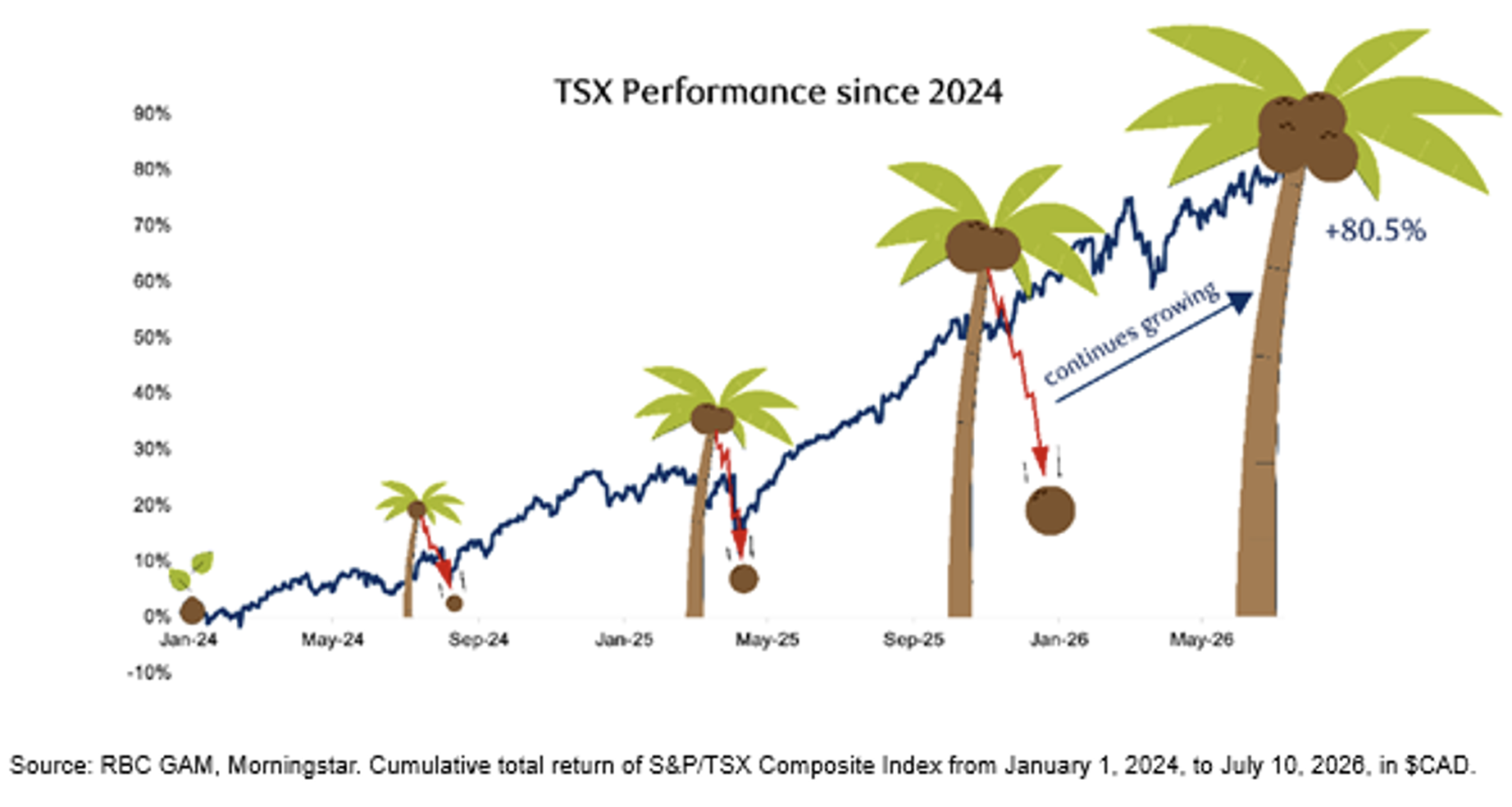
If there’s one line to remember from today’s note: Investor confidence grows like a coconut tree, but falls like a coconut.
Take the daily returns of the TSX over the past 50 years, for example. If we break the returns into four buckets, we get something like this:
- Large daily drops of -2% or more
- Small daily drops between -2% to 0%
- Small daily gains between 0% to +2%
- Large daily gains of +2% or more
Here’s the distribution of these return buckets dating back to 1977.
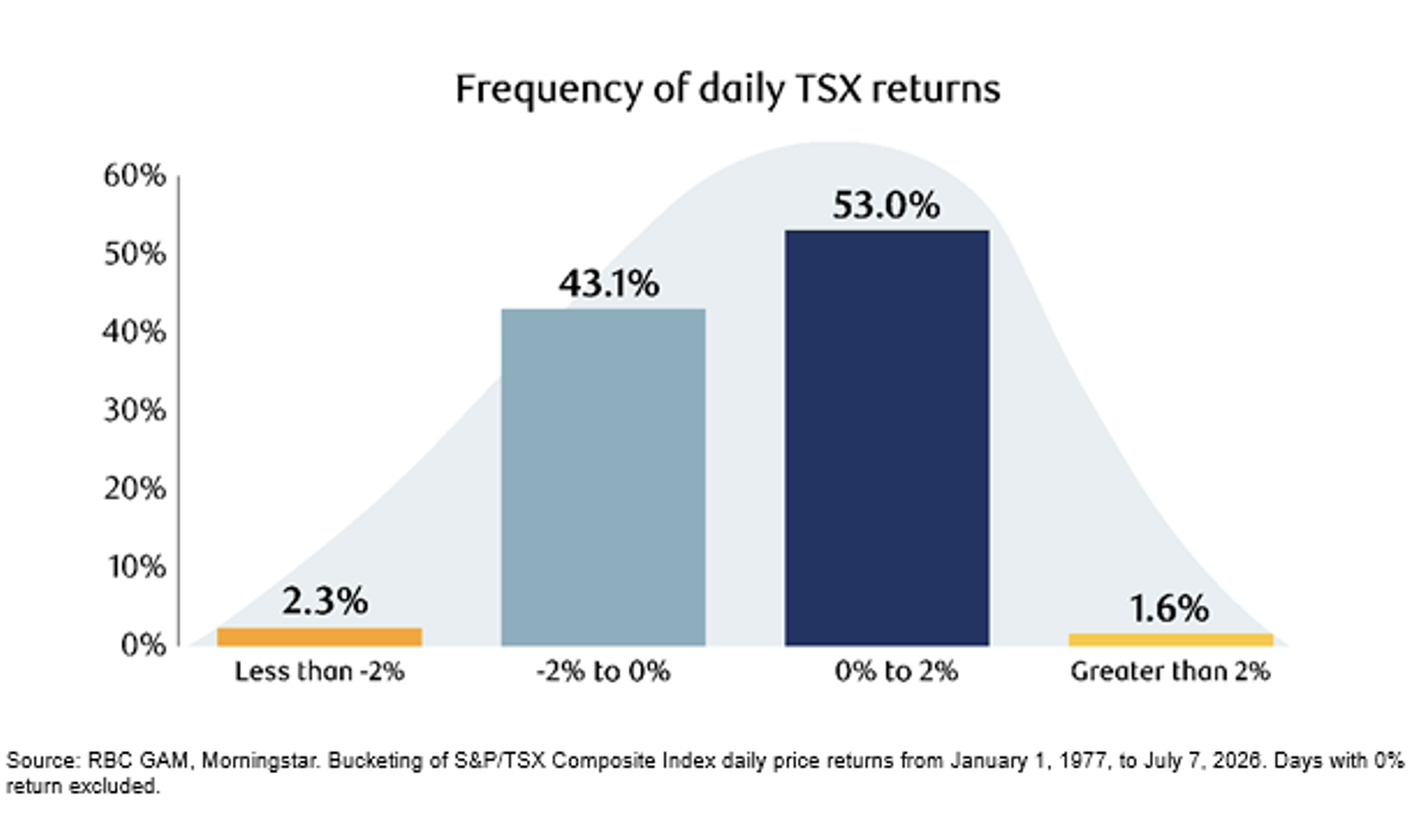
Three observations stand out:
1. Large drops outpace large gains
When the market makes a big move, it’s more likely to be a down day. The frequency of large daily drops, while infrequent, outweighs the frequency of large daily gains. This is the coconut falling fast. Sudden, dramatic, and attention-grabbing.
2. Most days are relatively calm
Perhaps more notably, over 96% of daily returns fall within the smaller -2% to +2% range. Extreme movements, while memorable, are the exception rather than the rule.
3. Positive days significantly outnumber negative days
Here’s the most important finding: Within that -2% to +2% range, small positive days (53%) heavily outweigh small negative days (43.1%). This is the coconut tree steadily growing upward.
Why it feels worse than it is
So, if positive days outnumber negative days, why do markets feel so scary? The answer lies in a powerful behavioural bias called loss aversion. This is where the emotional pain of a loss feels about twice as intense as the joy of an equivalent gain.
This explains why the less frequent negative days feel like they dominate the year, even though positive days actually outnumber them. Our brains are wired to overweight the pain of down days and underweight the satisfaction of up days. The falling coconuts capture our attention far more than the growing tree.
The solution: Global diversification
For investors who want to reduce those large daily swings, diversification provides a proven path forward. Let’s look at the same analysis for a globally diversified portfolio.
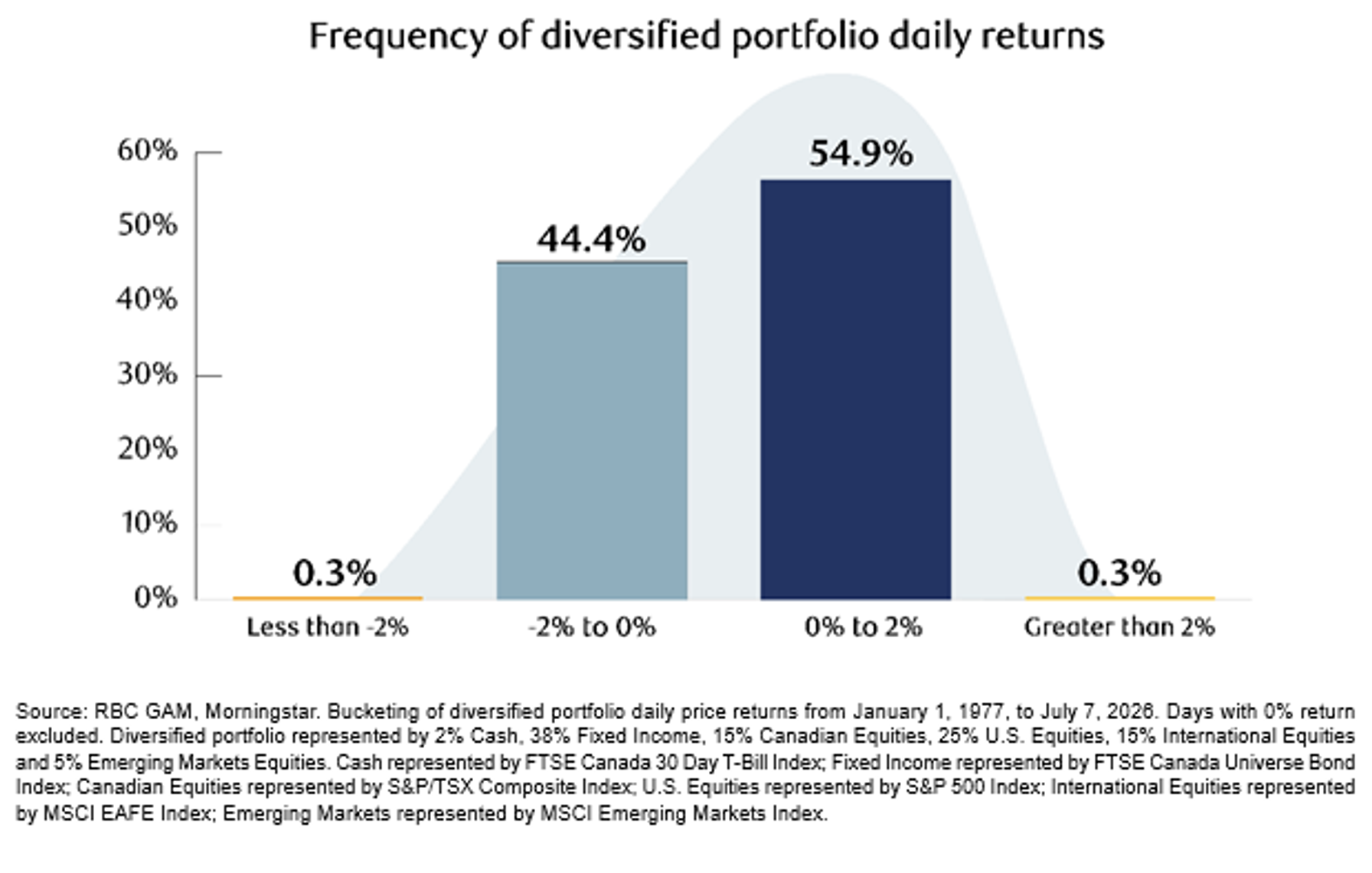
The difference is noticeable. By spreading risk across asset classes, regions, and strategies, this diversified portfolio significantly minimized the large daily swings.
Specifically:
- Large daily drops (-2% or more) were significantly reduced
- The proportion of days within the calmer -2% to +2% range increased
- The portfolio still captured market growth while providing a smoother ride
A diversified portfolio provides a stabler growth path, resulting in fewer sleepless nights and greater ability to stay the course during market turbulence.
Final thoughts
Markets generally move up slowly and occasionally drop fast. However, over time, the number of positive days significantly overpowers the number of negative days. The key is staying on track, avoiding rash decisions, and maintaining that original conviction that their portfolio will continue growing toward their goals. Keep your eyes on the ever-growing tree, and not the falling coconuts.