
Claudia Humbert, CFA
July 28, 2026
The U.S. and Iran paused their attacks over the weekend, offering some near-term relief after almost two weeks of renewed escalation. However, this has not produced a broader agreement. Iran has said that it is not seeking new talks with Washington and maintained that it controls access through the Strait of Hormuz. The unresolved dispute leaves the risk of renewed hostilities and further supply disruptions elevated, although oil prices moved sharply lower this morning, with Brent Crude down ~7% at the time of writing to US$89.77 and WTI Crude down ~6.5% to US$83.35 as markets priced in less of an immediate threat.
In a recent report, J.P. Morgan (JPM) examined why the oil price has remained relatively low despite shipping remaining well below normal in the Strait (see chart below). At current levels, Brent Crude is close to JPM’s estimate of fair value, which had assumed that shipping flows were mostly resumed (up to 73% of pre-war levels versus 50% or 11.1 million barrels per day currently).
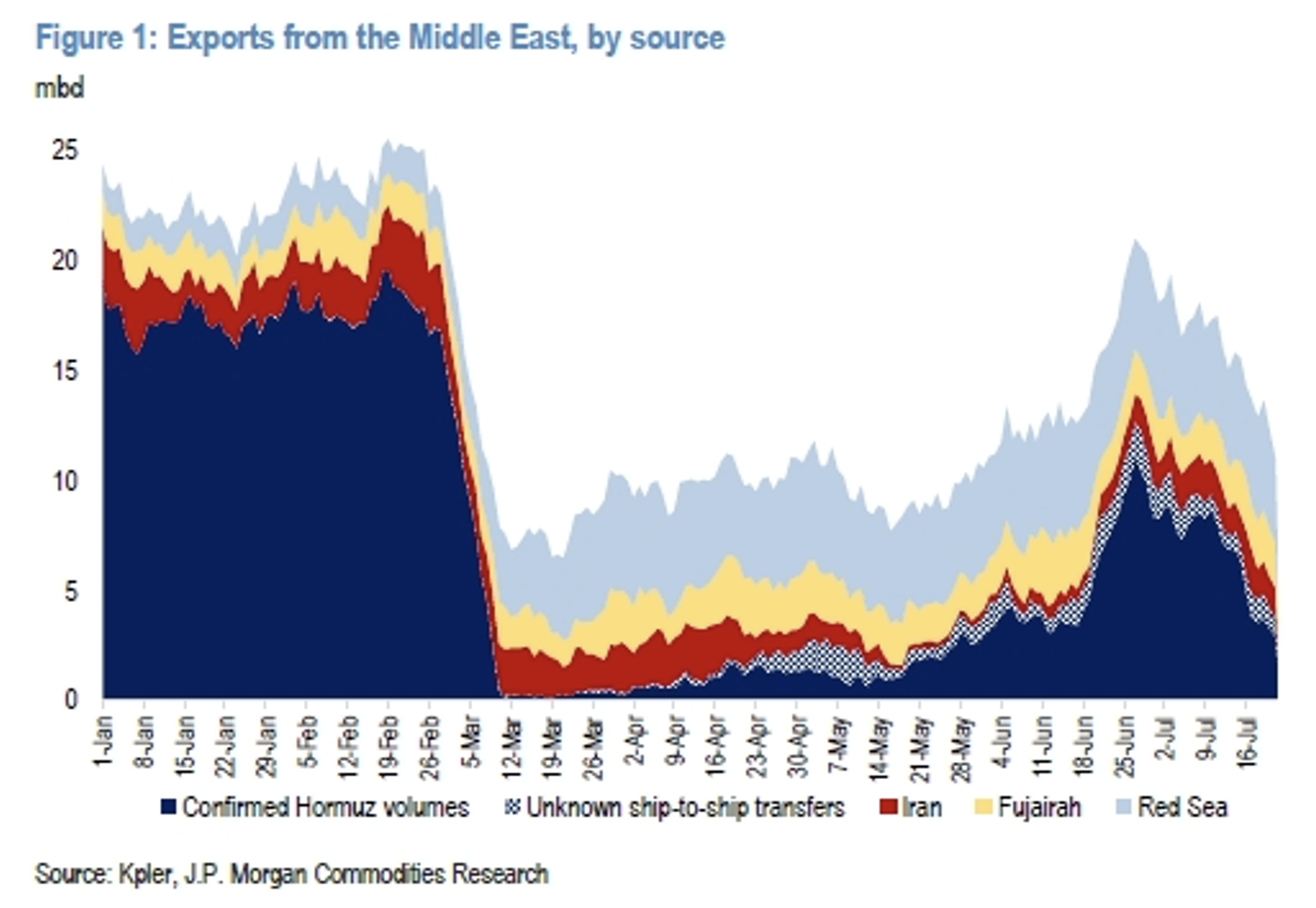
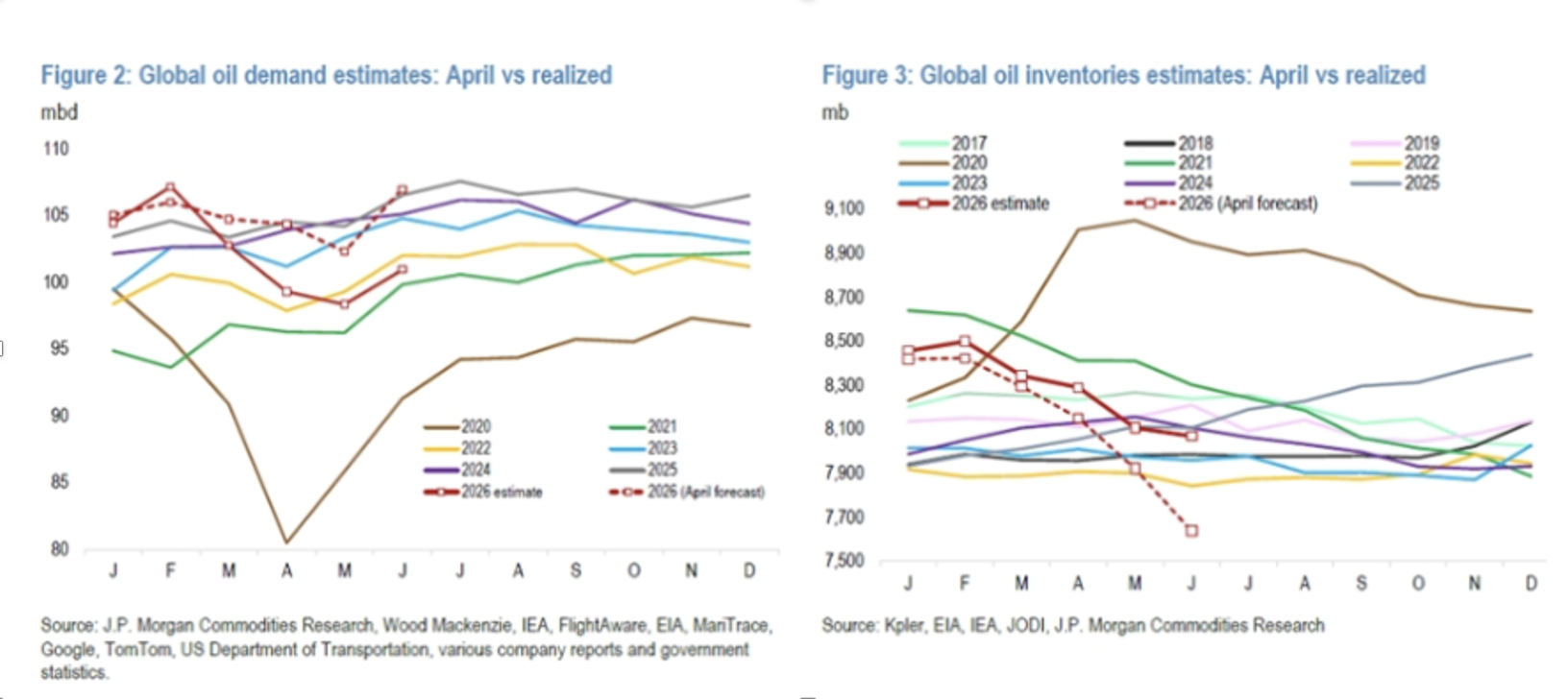
According to JPM, the answer to why oil prices have not moved higher lies in how the market has rebalanced. Global demand has fallen by an estimated 5.1 million barrels per day, offsetting nearly half of the supply loss (see chart to the left below). Inventory releases contributed a smaller 3.6 million barrels per day (see chart to the right below), while a surplus that existed before the conflict absorbed much of the remainder.
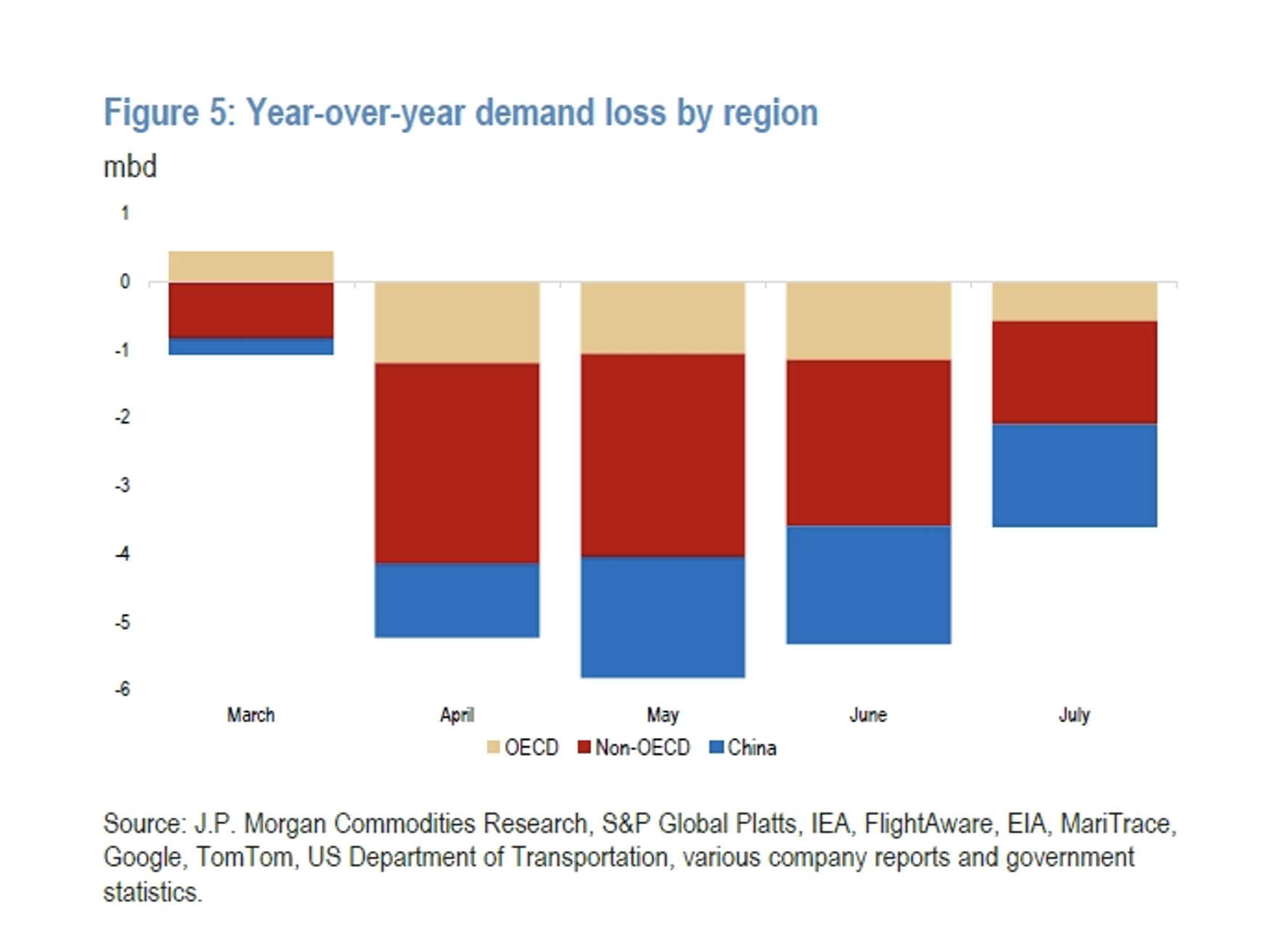
This has important implications for prices, because when a supply shock is absorbed primarily through inventory draws, prices generally rise until demand weakens. In this case, physical shortages and rationing have reduced consumption, particularly in China and other non-OECD economies due to their “limited access to alternative barrels and smaller inventory buffers” (see chart below). That adjustment has kept the market broadly balanced.
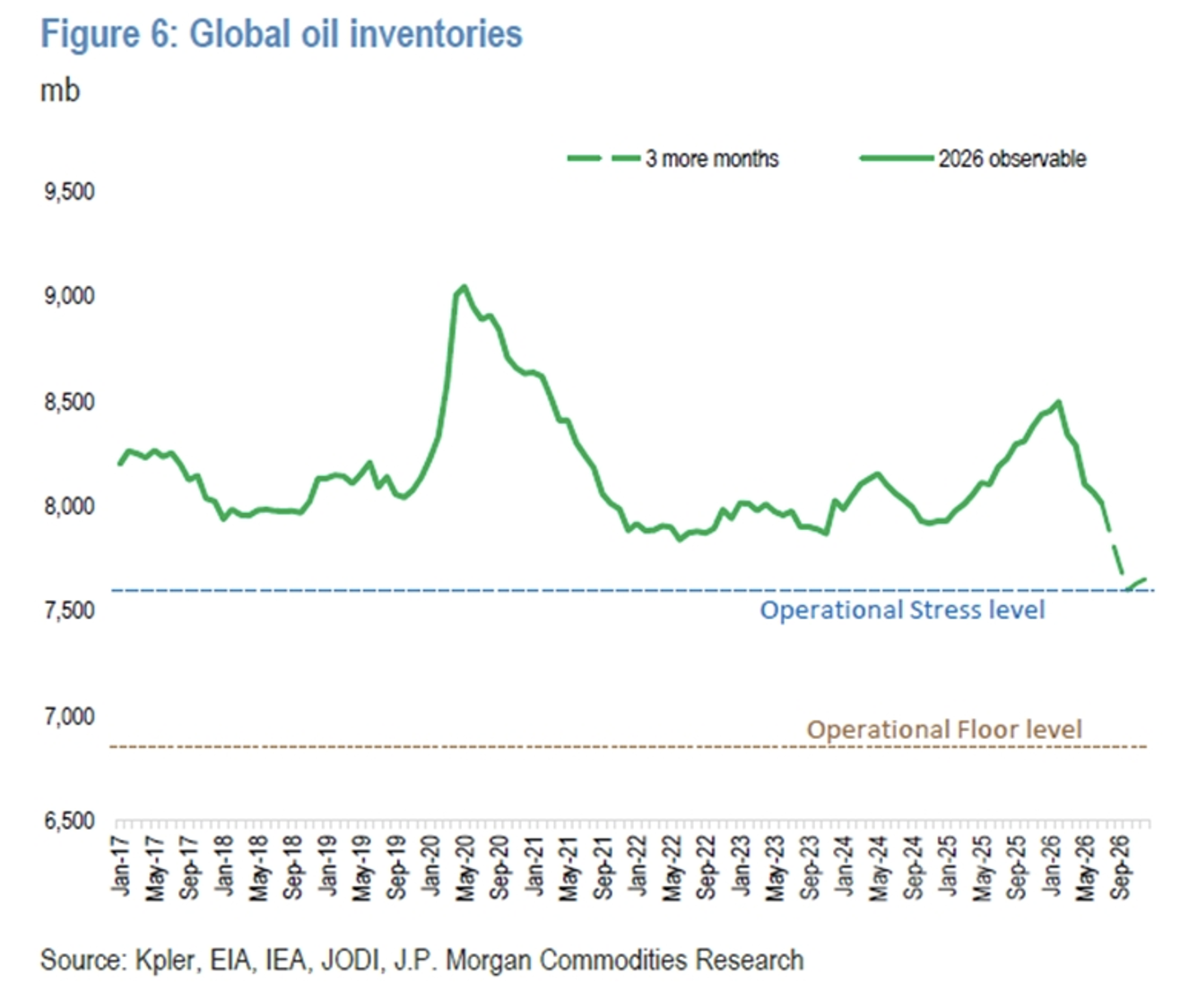
JPM also considered when these disruptions may turn into a genuine global supply shortage that could push prices sustainably above US$100.
JPM believes that China may be able to operate with crude imports roughly four million barrels per day below normal for another three months, continuing to provide a buffer for the global market. Even so, inventories would still have to carry more of the adjustment. The chart below shows global inventories approaching J.P. Morgan’s estimated operational stress level. The firm estimates that each additional month of disruption could add roughly US$7 to US$8 per barrel to Brent, with a three-month extension lifting the monthly average toward US$114.
JPM stated that, “Under our base case—Brent averaging $86 in 3Q26 and $80 in 4Q26—we expect US gasoline prices to hold just below $4 per gallon through August before gradually declining toward $3.30 by year-end. If disruptions persist for another month, the national average would likely rebound to around $4.20. If the conflict extends to two months, prices would likely move back above $4.50.”