Royal Bank of Canada
July 21, 2026
TLDR
- Everyday travel decisions – like using public Wi-Fi, charging at a public port or sharing your location – can expose your data without you realizing it.
- A handful of small steps, before you go and while you’re away, can go a long way to protecting your financial and physical safety.
- Integrating a few cyber security checks into your pre-trip planning keeps you covered without extra hassle.
- When in doubt, stick to your own devices, your own network connection and your own charging gear.
Have summer travel plans? Maybe you’re taking in an out-of-town concert, vacationing with the family or just getting away because it’s… summer.
Whatever’s on your itinerary, a good trip takes a bit of planning. During the busy summer season, the trips that go smoothly tend to be the ones where the flights, accommodations and essentials are sorted out ahead of time.
The same goes for your cyber safety. Knowing what to do, and what not to do, can keep your data and privacy protected while you’re away. Before you pack your bags, here are the do’s and don’ts worth adding to your list.
Why cyber security matters when you travel
Travel has a way of lowering our guard. We’re in unfamiliar places, juggling boarding passes and bookings, hopping onto whatever Wi-Fi is handy and pairing our phones with rental cars and hotel systems. That mix of distraction, public networks and unfamiliar connections is the kind of opening scammers look for.
So, what are they after? In most cases, it comes down to your money and your personal information – and here’s what they can do with it:
- Intercepted logins or card details can lead to unauthorized charges or compromised accounts.
- Personal information in the wrong hands can be used to open accounts or impersonate you.
- Broadcasting your real-time location or an empty home can put your belongings at risk.
Common travel traps
You don’t need to be a security expert to stay safe, but it helps to know what some of the more common tricks look like:
- Tampered USB charging stations: Those charging ports you find at airport gates and in hotel lobbies can be tampered with to install malware or copy data from devices that plug in. The cable that looks so convenient when your battery is at 4% may not be as innocent as it seems.
- Fake public Wi-Fi: Scammers set up fake hotspots with names that look very close to the real thing – like “Airport_Free_WiFi” or a look-alike of your hotel’s network. If you connect to one, the person who set it up can potentially see what you’re doing online.
- Lost or stolen devices: In busy airports, train stations and tourist spots, an unattended phone or laptop is an easy target. If it isn’t locked, whoever picks it up may be able to access the accounts and apps you’re still signed in to.
- Travel-themed phishing: During busy travel times, fraudsters send fake booking confirmations, refund offers and delay notices designed to look urgent. A tap on the wrong link can hand over password or payment credentials before you’ve had a chance to think twice.
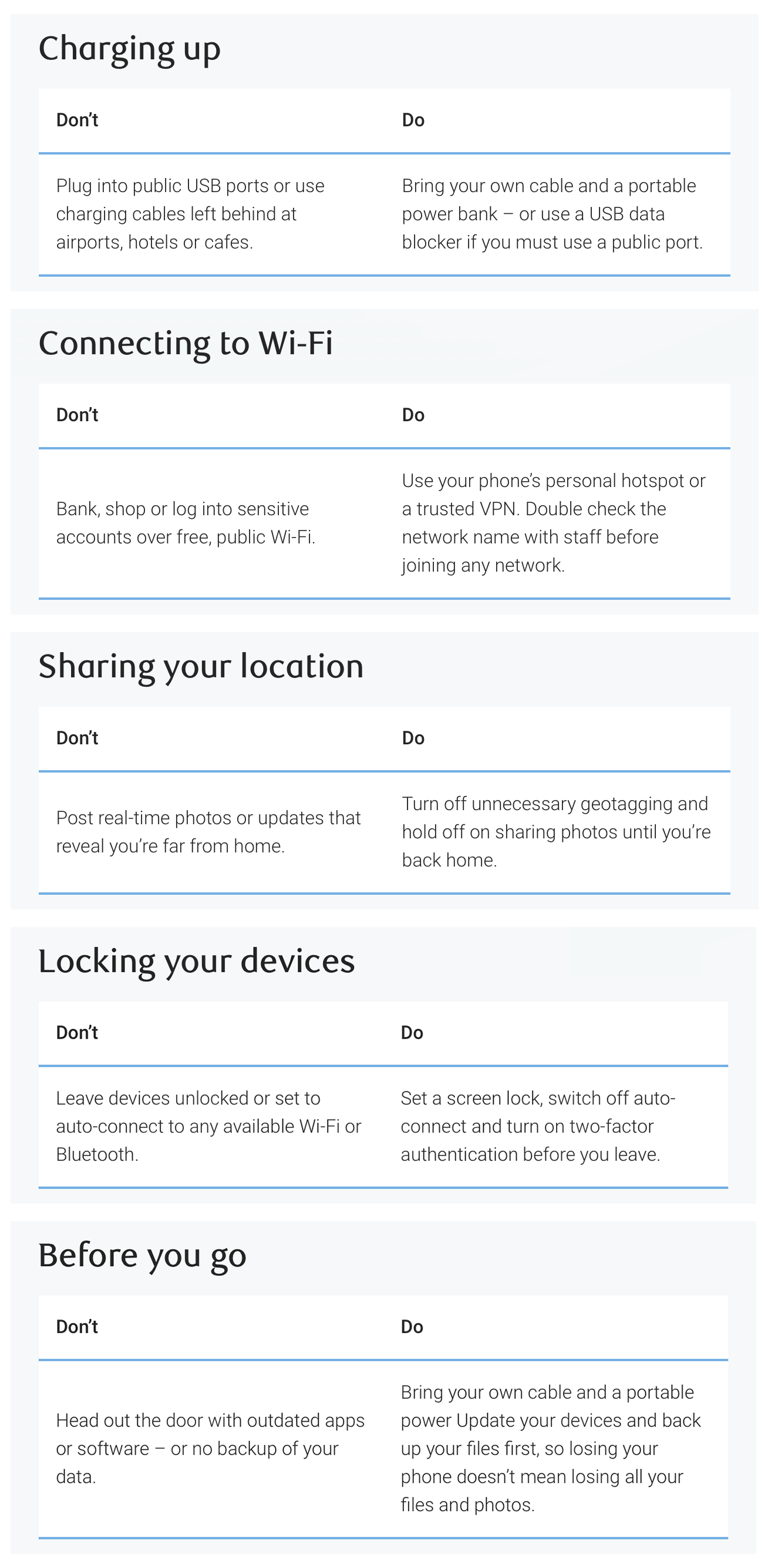
10 travel cyber safety do’s and don’ts
The good news is that a little awareness goes a long way. This pre-trip checklist can guide you on some do’s and don’ts to run through before and during your travels.
Enjoy the trip – and the peace of mind
These steps don’t need to slow you down or take the fun out of getting away. A few small cyber safety habits, packed alongside your sunscreen and travel adapter, can keep your data and privacy protected so you’re free to enjoy every moment of the trip.