
Christian Chiera, CFA
Portfolio Specialist, RBC GAM
September 16, 2026
A rising oil price has taken centre stage in 2026. Conflict in the Middle East has disrupted the supply of oil and refined products, which has in turn pressured prices higher.
For investors, the implications are far-reaching: companies in the energy sector face the opportunity to expand margins and grow profits. Companies in other industries are faced with rising input costs that pressure profitability. Meanwhile, central banks are grappling with the risk that higher energy costs pressure inflation, which in turn is pressuring interest rates higher. And governments are wrestling with questions around energy security and geopolitical response to the conflict.
While forecasting the trajectory of any commodity price is challenging, one area we look at is the interplay between crude oil markets and gasoline prices. Often the relationship between the price of fuel at your neighbourhood gas station and the price of the crude oil from which it's refined can seem disconnected. That’s because there are several other factors at play.
Let’s examine each of them:
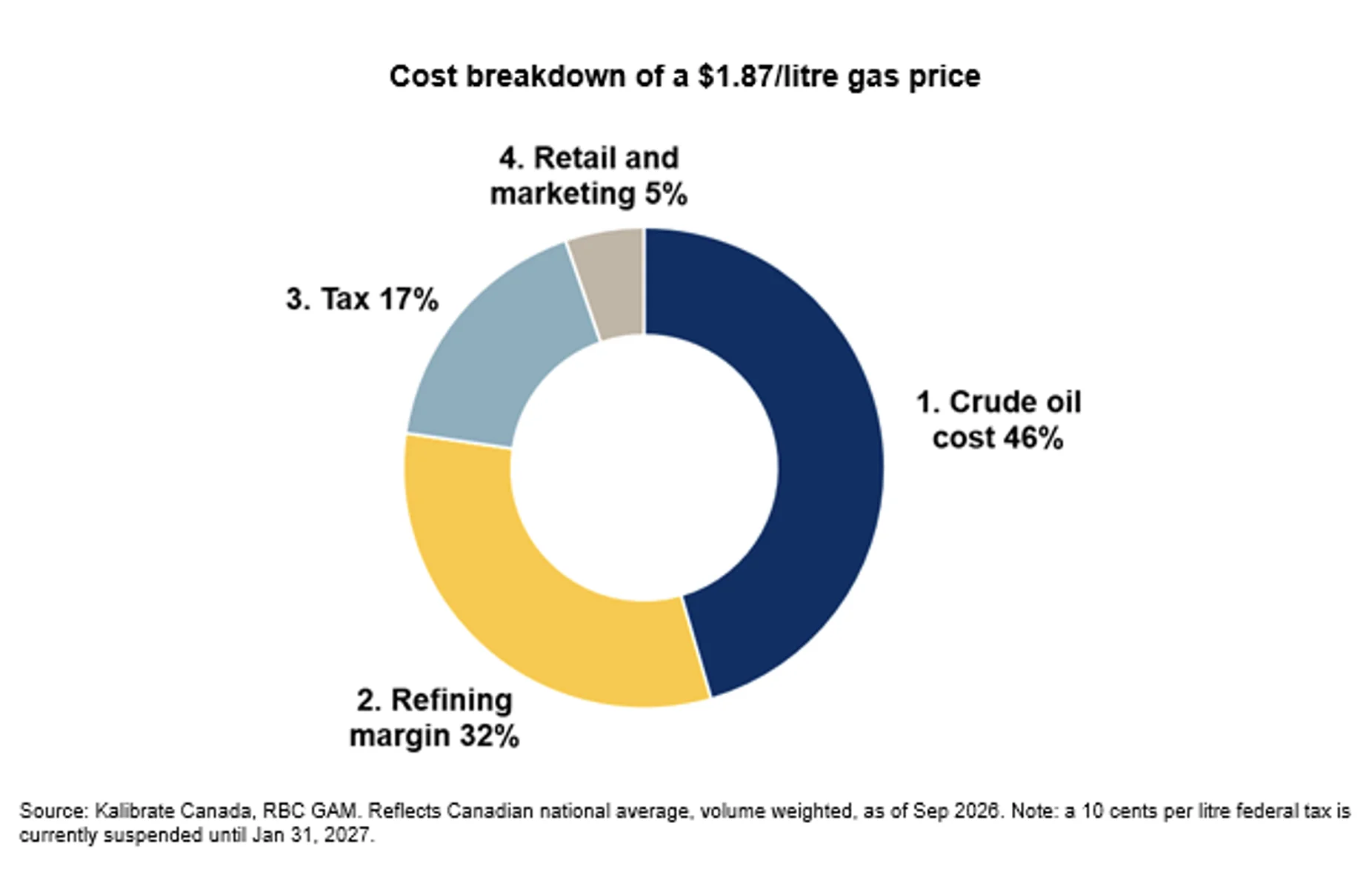
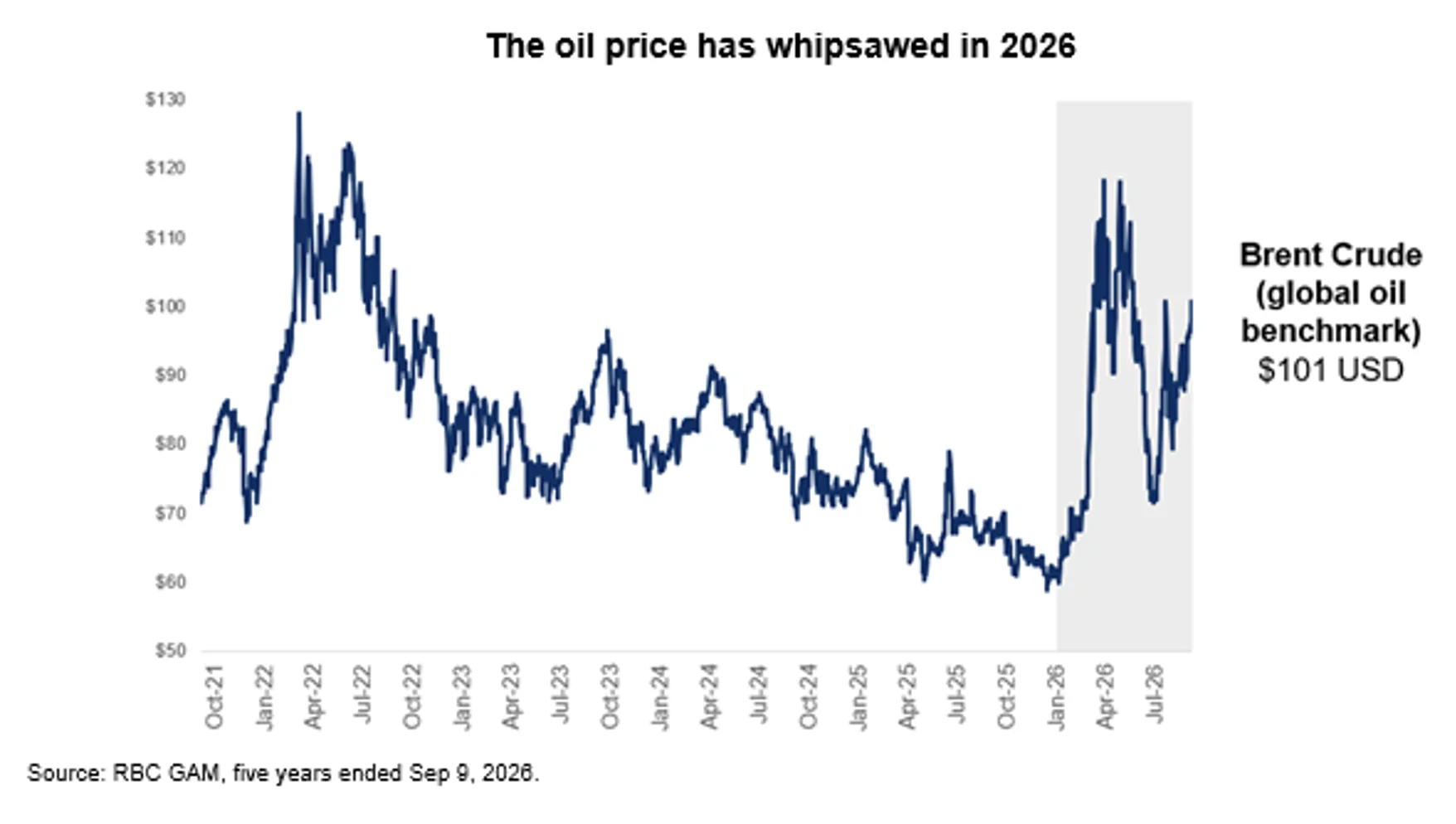
- Crude oil cost: Crude oil is the single largest component of the gasoline price. Since oil is a globally traded commodity, it’s influenced by international supply/demand dynamics. That’s been on display this year, where even though Canadian oil supply is located far from the war in the Middle East, the global oil price has been whipsawed.
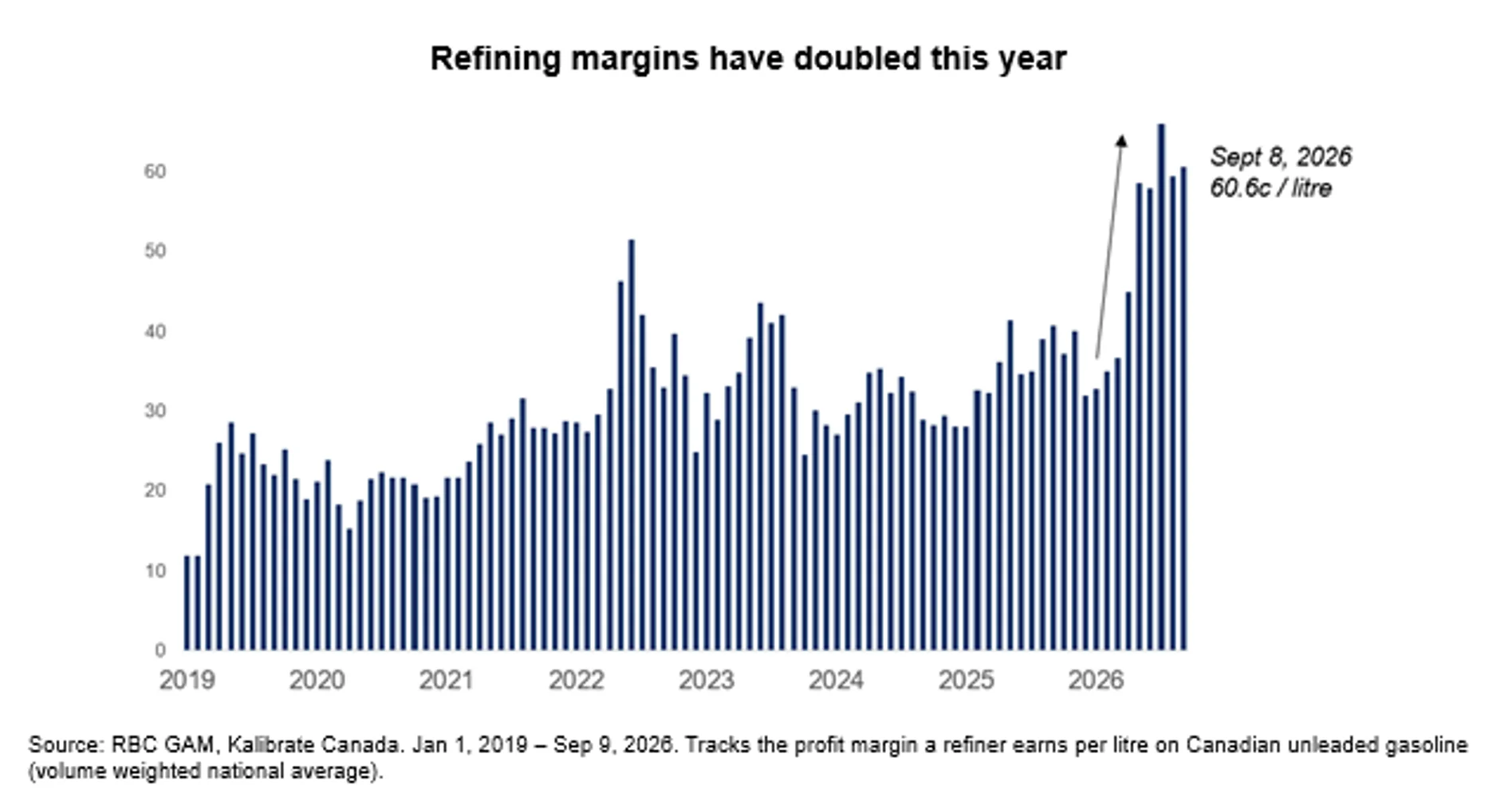
- Refining margin (the “crack spread”): This is the cost of refining crude oil into gasoline and currently the second-largest component of the price at the pump. When there’s ample refining capacity, this margin tends to be compressed, and when refineries are operating at maximum capacity, this margin expands.
This year, refining margins have expanded meaningfully, reflecting insufficient capacity. In fact, the amount Canadians pay for refining has doubled since just the start of the year.
Like oil supply, refining capacity has faced severe disruption from the conflict in the Middle East. Refineries have deferred maintenance to try and take on additional capacity, but it hasn’t been enough to prevent refining margins from being pressured higher.
- Tax: This portion varies considerably by province/territory, ranging from as low as 6 cents (Yukon) to 19 cents (Quebec). The federal tax (currently paused) and provincial fuel taxes are fixed, so they don’t scale up or down depending on the fuel price. Meanwhile, GST/HST is a percentage of the overall fuel price and does scale.
- Retail and marketing margin: This is essentially the cost of transporting, plus the portion that goes to the gas station itself. This slice is very small and is constantly squeezed by competition – including a certain big box retailer that uses cheap gas as a loss leader.
Additional factor: USD/CAD exchange rate
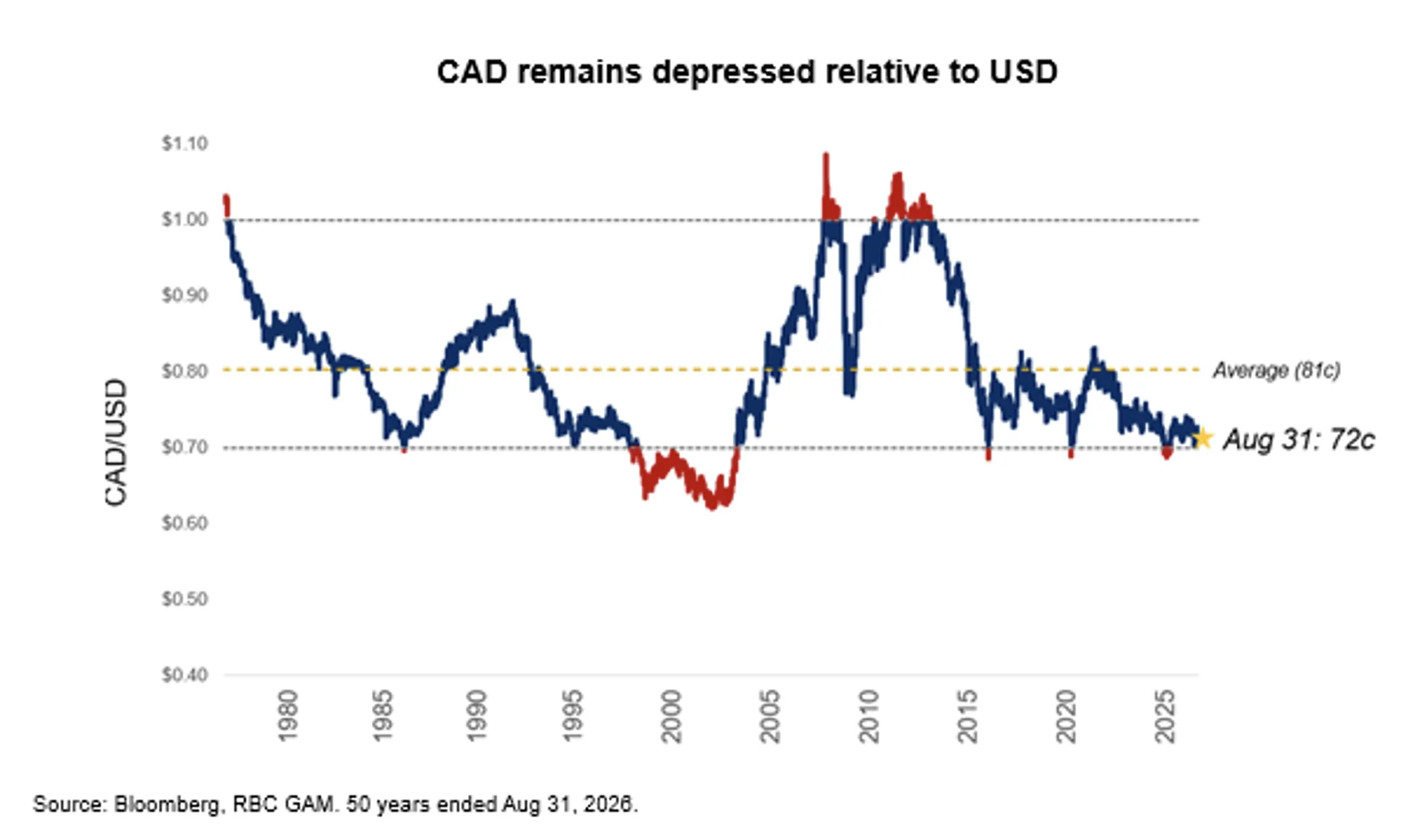
While Canadians purchase gasoline in Canadian dollars, oil is priced in U.S. dollars. So when the Canadian dollar weakens, prices at the pump increase.
Now typically the Canadian dollar exhibits some positive correlation with oil prices, given the prominence of oil production to the Canadian economy. So when oil prices rise (and therefore, fuel prices rise), a rallying Canadian dollar can mitigate some of the increase. Unfortunately, that hasn’t been the case this year as the U.S. dollar has been stubbornly strong.
What this means
It can be painful to watch the cost of gasoline increase due to geopolitical events out of our control. However, it may give some comfort to know that Canada’s financial markets – and by extension, investment portfolios – are also linked to oil and gasoline pricing.
16% of the Canadian stock market is comprised of businesses directly involved in oil, gas and consumable fuels. Canada’s one of the few economies in the world that’s a net beneficiary of rising oil prices, given how much we export.
So while it can be painful to see prices increase at the pump, at least there’s a positive economic effect for Canada overall. We’ll see how prices move into the last few months of 2026.