
Can Ozturk
RBC GAM
June 15, 2026
If you’ve ever wondered why markets seem to react dramatically to economic headlines, you’re not alone. One week it’s an inflation report. The next it’s a jobs report. In both cases, markets can move sharply within minutes.
While the reactions may seem confusing, they often stem down to how it’s going to impact companies. For example, a recent focus is on inflation and its impact on interest rates, which impacts the cost of corporate borrowing, consumer spending, and overall attractiveness of stocks compared to fixed income.
Among the many economic reports released throughout the year, inflation (CPI) and employment (Nonfarm Payrolls) receive a fair amount of attention. Together, they help investors assess two critical questions: Is inflation under control, and is the economy still growing?
CPI: the inflation report investors watch most closely
The Consumer Price Index (CPI) measures changes in the prices consumers pay for goods and services.
Investors typically focus on two measures:
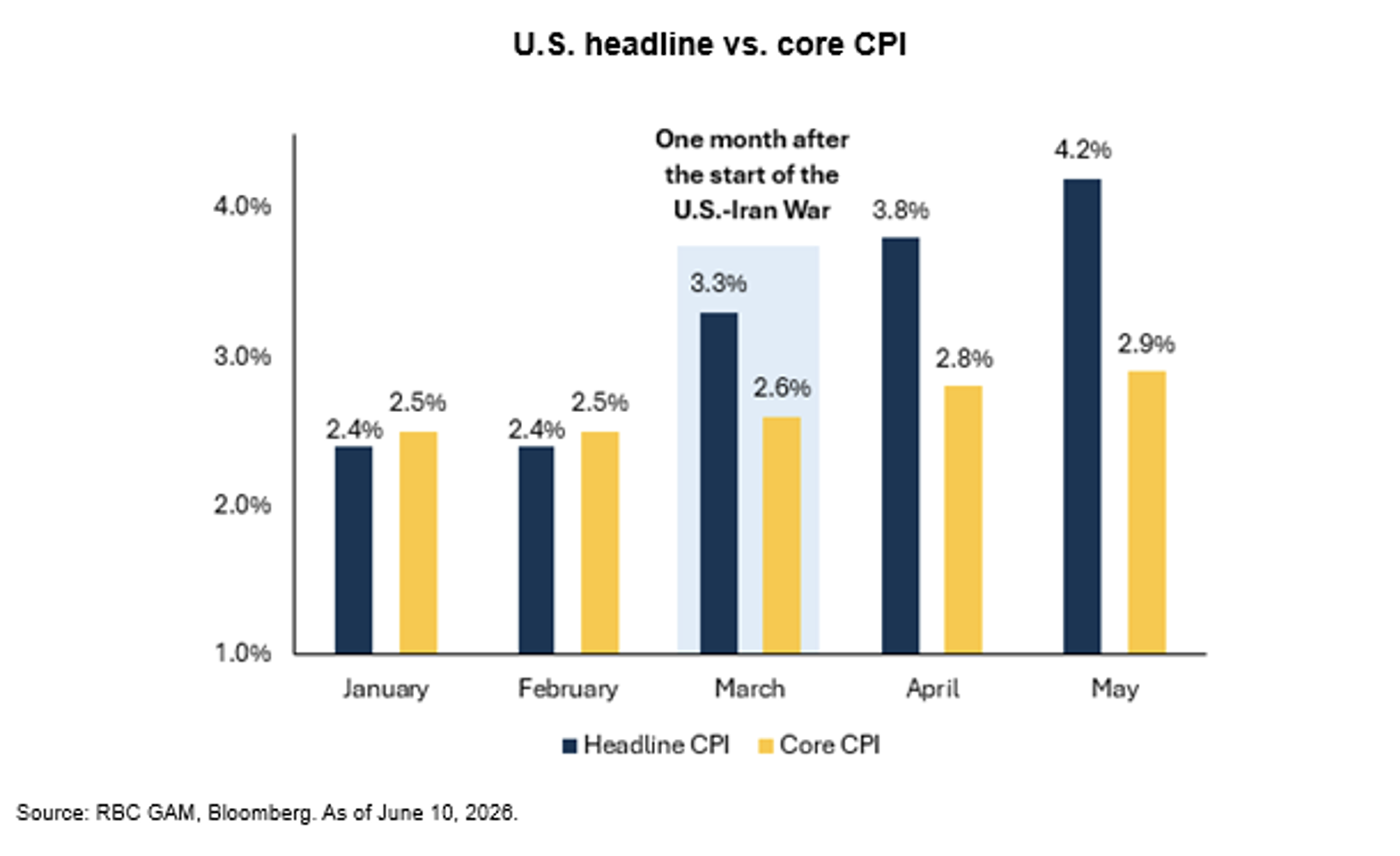
- Headline CPI: Includes all categories, including food and energy.
- Core CPI: Excludes food and energy prices, providing a clearer picture of underlying inflation trends.
Why does the distinction matter?
- Food and energy prices can be more volatile month-to-month.
- Core inflation helps identify longer-term trends.
- Inflation plays a key role in central bank decision-making.
If inflation remains stubbornly high, policymakers may be less willing to lower interest rates. If inflation continues to cool, rate cuts become more likely.
NFP: the report that measures economic strength
Another closely watched report is Nonfarm Payrolls (NFP), commonly known as the U.S. jobs report.
The report measures how many jobs were added or lost during the month and provides insight into the health of the labour market.
A strong jobs report generally signals:
- A healthy labour market
- Strong consumer spending
- Continued economic growth
However, strong employment can also create challenges for policymakers.
If consumers continue spending and businesses continue hiring, inflation may take longer to return to target levels. As a result, strong economic data can sometimes reduce expectations for interest rate cuts.
Why markets can react unexpectedly
Investors aren’t just looking at today’s data, they’re trying to predict tomorrow’s interest rate decision.
This is why:
- Strong economic data can sometimes be viewed negatively.
- Weak economic data can occasionally be viewed positively.
- Markets often react more to surprises than to the data itself.
How the latest numbers moved markets
The May U.S. jobs report added 172,000 jobs, while the unemployment rate held at 4.3%. On the surface that sounds encouraging. But the data came in stronger than expected which immediately raised concerns that the labour market was still too tight for the Fed to cut rates anytime soon. As a result, bond yields moved higher and stocks came under pressure.
May’s CPI report showed headline inflation at 4.2% year-over-year while core inflation rose 2.9%, roughly in line with expectations.
Remember: markets are continuously adjusting their assumptions before data is released. It’s not just the data alone that moves markets, it’s how it compares to market expectations.
Key take-aways
CPI surprises and jobs data move markets for days and weeks, not decades. Over the past 40 years, inflation has ranged from near-zero to double digits, and unemployment has swung from 3% to 10% — yet long-term financial plans built on discipline and diversification have held through every cycle. For clients with multi-year time horizons, reacting to each data release creates more risk than the data itself. Focus stays on the plan, not the headline.