
Matteo Ghantous
PAG, RBC GAM
July 14, 2026
Markets have climbed this year, fueled by AI optimism, easing trade policy concerns, and surging capex. As stock prices have reached new highs, many investors are growing cautious and wondering whether it's safer to sit on the sidelines and wait for a pullback.
But here's the question: Should you avoid stocks simply because they seem expensive? Or should you dig deeper and understand what's propelling them higher?
The same principle applies to markets as it does to buying a car: A $50,000 car might be overpriced if it's a basic sedan, but it could be a bargain if it's a luxury SUV loaded with features. The price alone doesn't tell the full story, you need to look under the hood.
So what should we look at when evaluating whether today's stock prices are justified? While many factors influence market returns, today we'll focus on two fundamental concepts: earnings and valuations, and why earnings are the more powerful driver of market returns.
Valuations tell only part of the story
First, let's define these two drivers. Earnings represent a company's ability to grow and generate profit, essentially, the bottom line available to shareholders after all expenses are paid. Valuations measure what investors are paying for a stock relative to its earnings. You can think of a stock's "price tag" as its price-to-earnings (P/E) ratio, the amount an investor is willing to pay for each dollar of earnings a company generates. For example, a P/E ratio of 20 means investors are paying $20 for every $1 of annual earnings.
When we say “valuations have climbed”, we mean that P/E ratios have increased, investors are now paying more per dollar of earnings than they were before.
While valuations often dominate market headlines, they are only one piece of the puzzle. Over the long run, earnings growth has been the primary driver of equity market returns. Companies that consistently grow profits create value for shareholders, even when valuations remain elevated.
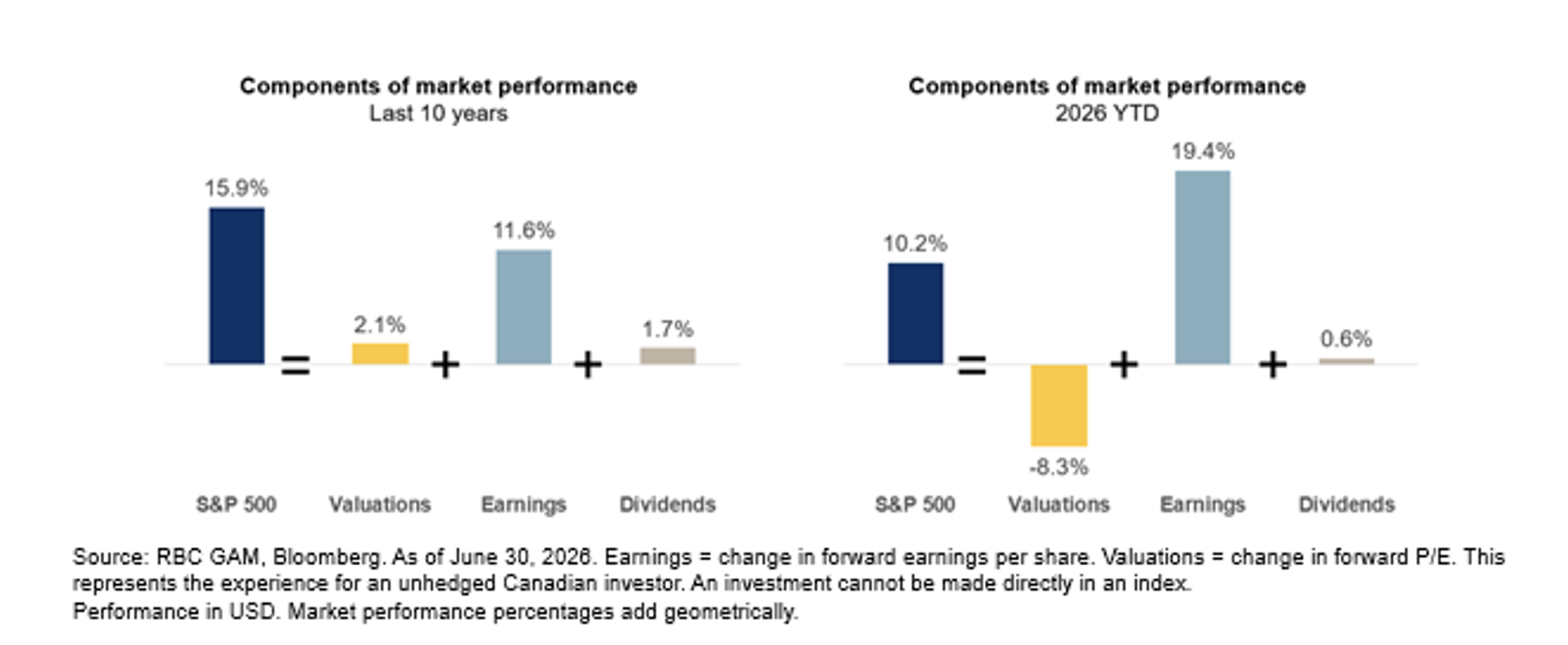
History reinforces this point. Over the past decade, earnings growth has accounted for the majority of the S&P 500's returns, while changes in valuations have played a relatively small role. In fact, when we look at forward valuations—what investors are willing to pay per dollar of future earnings—this multiple has compressed by roughly 8% in 2026.
This tells us something important: stock prices have risen primarily because companies are earning more, not because investors are willing to pay inflated premiums. Markets are rewarding fundamental profit growth.
What about the future?
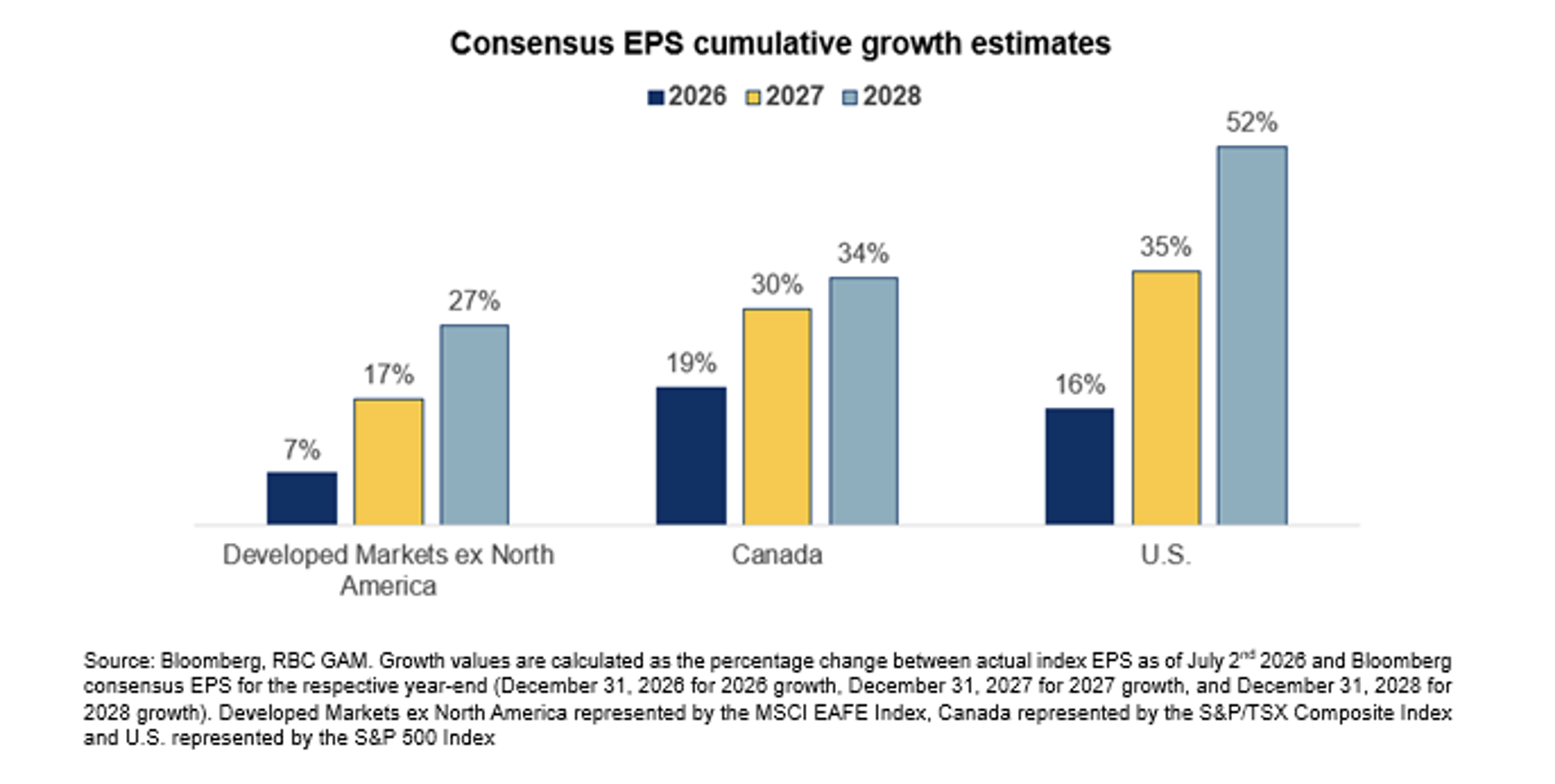
The more important question is whether companies can continue delivering the earnings growth needed to support today’s valuations. Consensus forecasts suggest they can.
Analysts expect earnings growth to continue across developed markets through 2028. This is not simply a technology story. Instead, profit growth is expected to broaden across regions and sectors as business investment remains healthy and productivity continues to improve.
What supports this outlook?
- Several factors are expected to support earnings growth over the coming years.
- AI investment is expanding beyond technology. Infrastructure spending is creating opportunities across industries including utilities, industrials, engineering, energy and real estate.
- Productivity improvements are supporting profitability. As companies adopt AI and automation, many are becoming more efficient, helping expand profit margins across a broad range of industries.
- The economic backdrop remains supportive. Continued business investment, resilient economic growth and relatively low recession risk provide a favourable environment for corporate earnings.
These are not simply optimistic assumptions. They are supported by announced capital spending plans, improving productivity trends and early signs of margin expansion across many industries.
What this means for investors
All-time high markets can understandably make investors cautious. However, history has shown that waiting for the perfect entry point can come at the cost of missing continued market gains.
If companies continue delivering on earnings expectations, today’s valuations may become easier to justify over time. While no forecast is guaranteed, focusing only on valuations risks overlooking the factor that has historically mattered most: earnings growth.
Key take-aways
- Earnings remain the foundation of long-term market returns. While valuations can influence markets over shorter periods, sustained profit growth has historically been the primary driver of equity performance.
- Market leadership may continue to broaden. Although AI related companies have led recent gains, analysts expect earnings growth to expand across additional sectors and regions.
- It is important to remind clients to maintain a long term perspective. Investors have historically been better served by remaining invested than attempting to predict short term market pullbacks