Finucci Allen Smith Wealth
April 7, 2026
Recent market volatility can feel unsettling, especially when headlines point to wars, inflation, or economic uncertainty. But when we step back and look at the bigger picture, a clear pattern emerges: market pullbacks are a normal and regular part of investing.
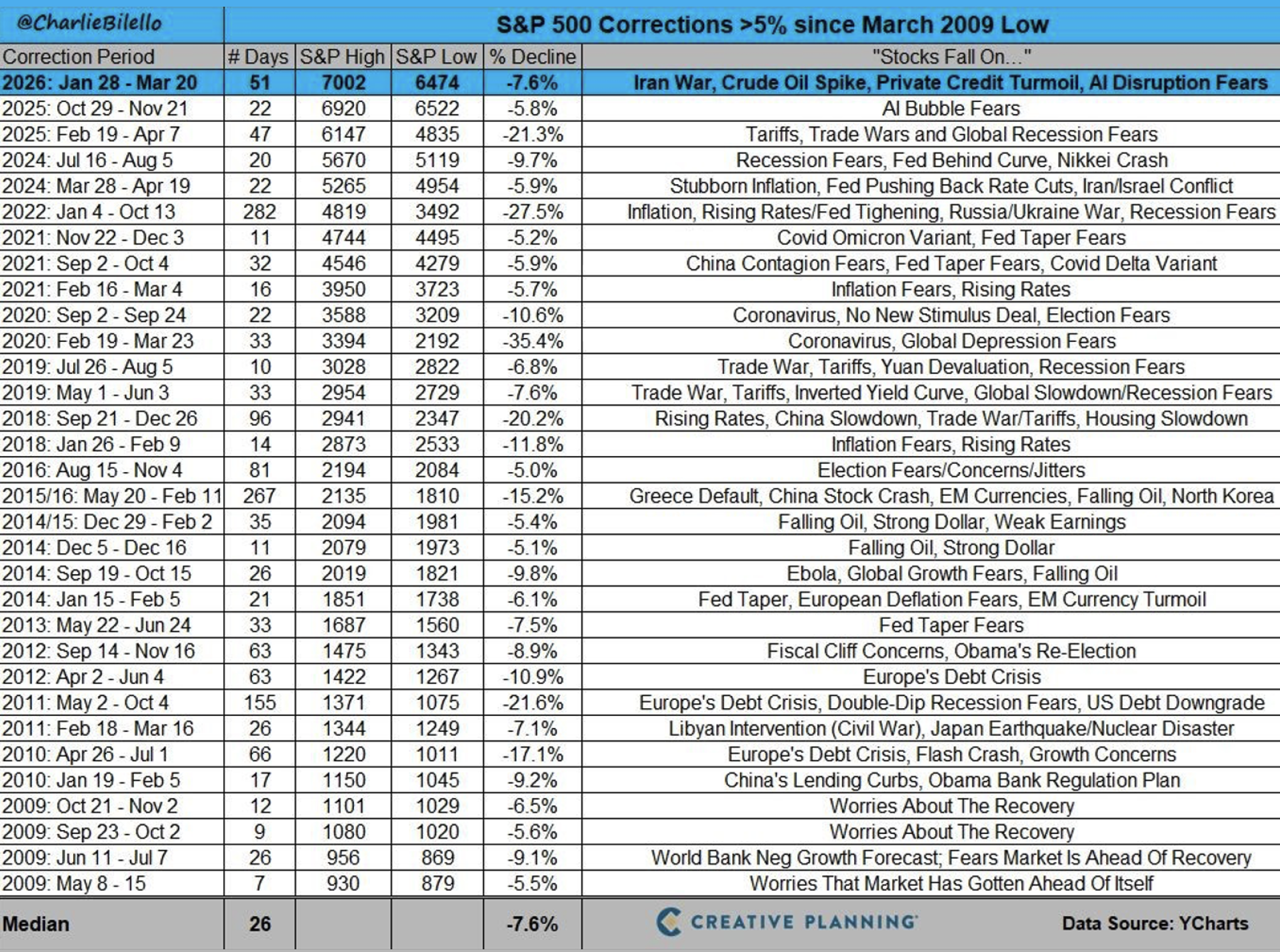
The chart above tracks every time the S&P 500 has dropped more than 5% since the market low in 2009. What stands out is how often these corrections happen. In fact, there have been more than 20 of these pullbacks over that time. On average, markets experience a decline of around 7–8%, typically lasting just a few weeks. In other words, what we’re seeing now is not unusual, and in fact, it’s part of the normal rhythm of the market.
Each correction tends to come with a different explanation. At various times, markets have fallen due to inflation concerns, global conflicts, interest rate changes, or economic slowdowns. While the reasons change, the pattern remains the same: short-term declines followed by longer-term recovery.
We’ve seen this play out during some of the most stressful moments in recent memory. During the 2008–2009 financial crisis, markets experienced a deep and prolonged decline but eventually recovered and went on to reach new highs. In early 2020, when COVID-19 shut down the global economy, markets dropped sharply in a matter of weeks. Yet shortly after, they rebounded and continued higher. Even more recent concerns, like rising interest rates or geopolitical tensions, have caused temporary declines, but markets have continued to move forward over time.
It’s also important to remember that markets spend much more time rising than falling. Strong market days often happen close to the worst ones, which means trying to “time” the market can lead to missing key recovery periods. Just a handful of the best days in the market can have a meaningful impact on long-term returns.
While it’s natural to feel concerned during volatile periods, these moments are expected and have occurred many times before. Our approach remains the same: stay disciplined, stay diversified, and focus on the long-term plan.