
Jonathan Greenwald
April 6, 2026
In the world of investing, the term "risk" conjures up images of dramatic market dips and soaring volatility. However, investors must reframe their understanding of what risk really means. Short-term market volatility is not synonymous with risk; rather, it's a natural characteristic of financial markets that, if approached correctly, does not threaten long-term investment goals.
Understanding Volatility Versus Risk
Volatility is the statistical measure of the dispersion of returns for a given security or market index—simply, it tells us about the range of potential outcomes in the short term. While these fluctuations can be unsettling, they are not inherently risky unless they impact the investor's ability to meet their financial goals over the desired time frame. This is why we always advise investors and clients to have 2 years’ worth of savings, or any funds required in the short term, set aside.
The real risk for investors is not achieving their desired goals. This could be due to several factors such as inflation eroding purchasing power, the failure to adequately diversify, or permanent loss of capital due to investing in failing businesses or sectors.
Mitigating Short-Term Volatility
While numerous strategies exist to manage short-term market volatility, we highlight three essential practices that every investor should prioritize:
- Maintain Adequate Liquidity: Reserve sufficient liquidity for immediate needs to ensure sales can be completed during a time of market stability rather than a downswing.
- Diversify Investments: Spread investments across various asset classes to reduce the impact of a decline in any single market or sector.
- Keep Emotions in Check: Emotional investing can lead to poor decision-making. Maintain a disciplined approach to investing, with a focus on long-term goals, helping to mitigate impulsive decision making based on short-term market movements.
Volatility as Opportunity
Instead of a threat, short-term volatility should be viewed as an opportunity. Market dips can present buying opportunities for quality stocks at lower prices. We recognize these moments as chances to purchase valuable assets at a discount, adhering to Warren Buffett’s adage of being "fearful when others are greedy, and greedy when others are fearful."
Long-Term Perspective on Volatility
Historically, markets have shown a positive trend over the long term despite short-term fluctuations. For example, as illustrated in the chart below, the S&P 500 has experienced numerous periods of significant volatility since its inception, yet it has consistently delivered positive returns over decades. The key to benefiting from this upward trajectory is staying invested over the long term, thereby allowing the power of compounding to work.
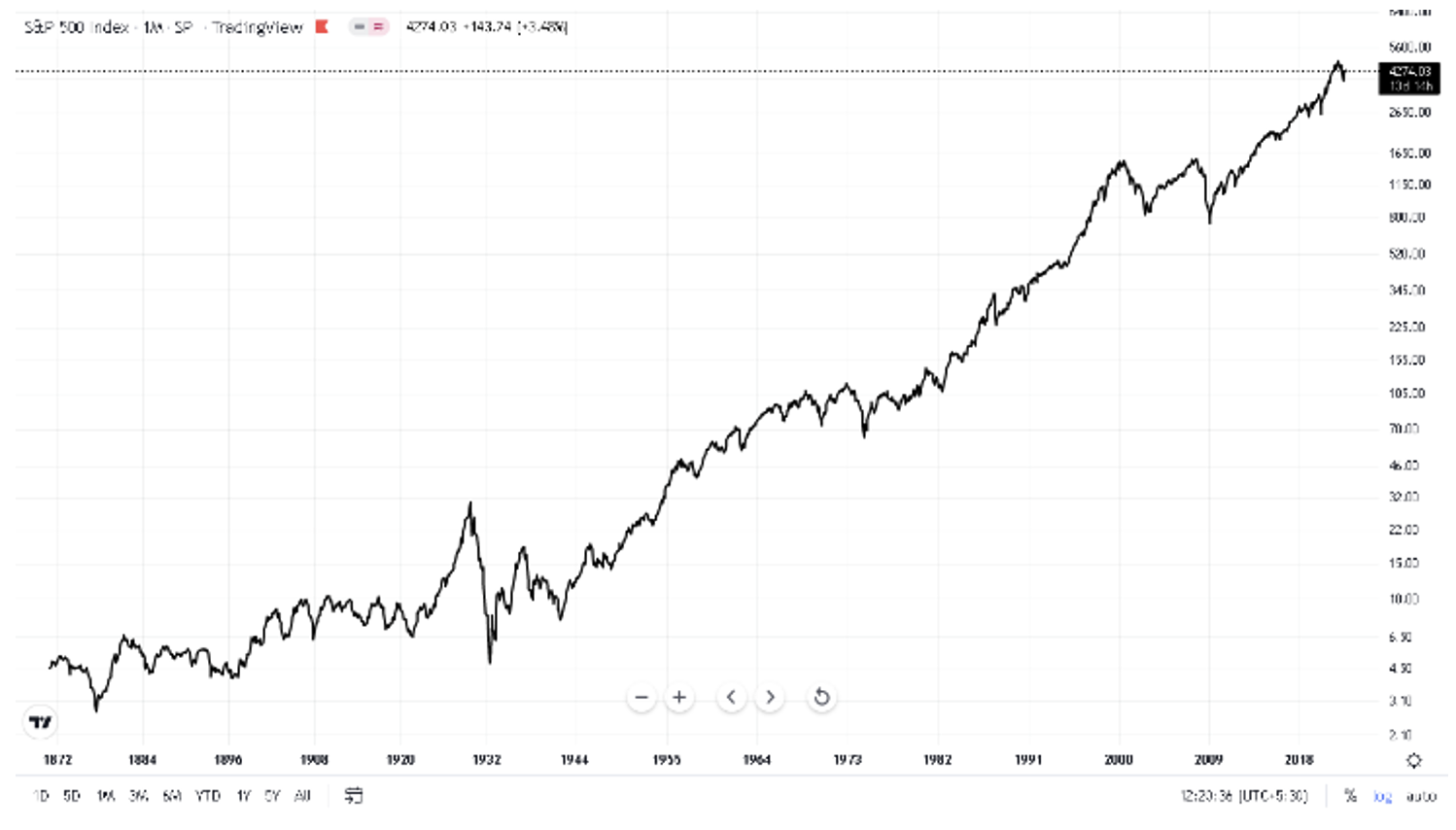
Source: Fidelity investment finder
Conclusion
Short-term volatility is an inherent part of investing in the stock market and should not be confused with risk. The true risk is failing to meet long-term financial objectives. By maintaining a well-diversified portfolio, preparing for liquidity needs, and adopting a disciplined approach, investors can use the natural volatility of the market to their advantage, engaging with it as a tool rather than fearing it as a threat. This mindset shift is crucial for anyone looking to build lasting wealth.