Michael Capobianco
July 15, 2026
Business owners are operating in an environment where uncertainty has become the norm rather than the exception. Interest rates, geopolitical tensions, evolving technologies, labour shortages, and changing consumer behaviour all create variables that no entrepreneur can fully control.
The businesses that will thrive over the next decade won't necessarily be the ones with the biggest budgets or the fastest growth. They'll be the ones that are best prepared to adapt.
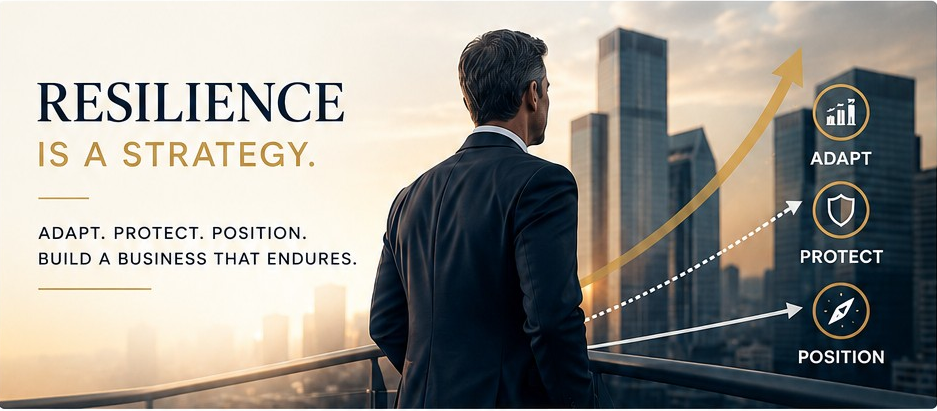
Resilience isn't simply about surviving difficult periods—it's about building a business that becomes stronger because of them.
Here are three principles worth considering:
Focus on What You Can Control
You can't control markets, elections, inflation, or your competitors. You can control your culture, your customer experience, your cash flow, and your decision-making. Successful entrepreneurs consistently invest their energy where it creates the greatest return rather than reacting to every headline.
Build Flexibility Into Your Business
Rigid businesses often struggle when conditions change. Resilient businesses create options. They diversify revenue streams, maintain healthy liquidity, invest in their people, and build systems that allow them to respond quickly when opportunities—or challenges—appear.
Position for Long-Term Value
Short-term uncertainty often creates long-term opportunity. Businesses that continue investing in technology, leadership, client relationships, and operational excellence during uncertain times are often the ones that emerge with a stronger competitive position when conditions improve.
The takeaway: Optimism is valuable, but preparation is indispensable. A resilient business doesn't try to predict every outcome—it develops the capacity to succeed across many possible outcomes.
As business owners, one of our greatest responsibilities is ensuring that today's success translates into tomorrow's opportunity. The right financial strategy, succession planning, and capital allocation decisions can provide the flexibility needed to navigate whatever lies ahead.
The most resilient businesses don't predict the future better than others—they simply prepare better for it.
Building resilience requires challenges as they arise it requires thoughtful planning around your business your wealth and your long-term goals.
If you're reviewing your financial strategy succession plans or long-term goals, I would welcome the opportunity to share ideas and perspectives.