Michael Capobianco
August 6, 2026
While geopolitical tensions in the Middle East may continue to create short-term volatility, corporate earnings remain the more important driver of long-term U.S. equity market performance.
Following a three-month consolidation, the S&P 500 has reached new all-time highs, supported by easing geopolitical concerns and another strong earnings season.
Earnings Remain Broadly Resilient
With roughly 80% of the S&P 500 having reported second-quarter results, earnings continue to exceed expectations.
Key highlights include:
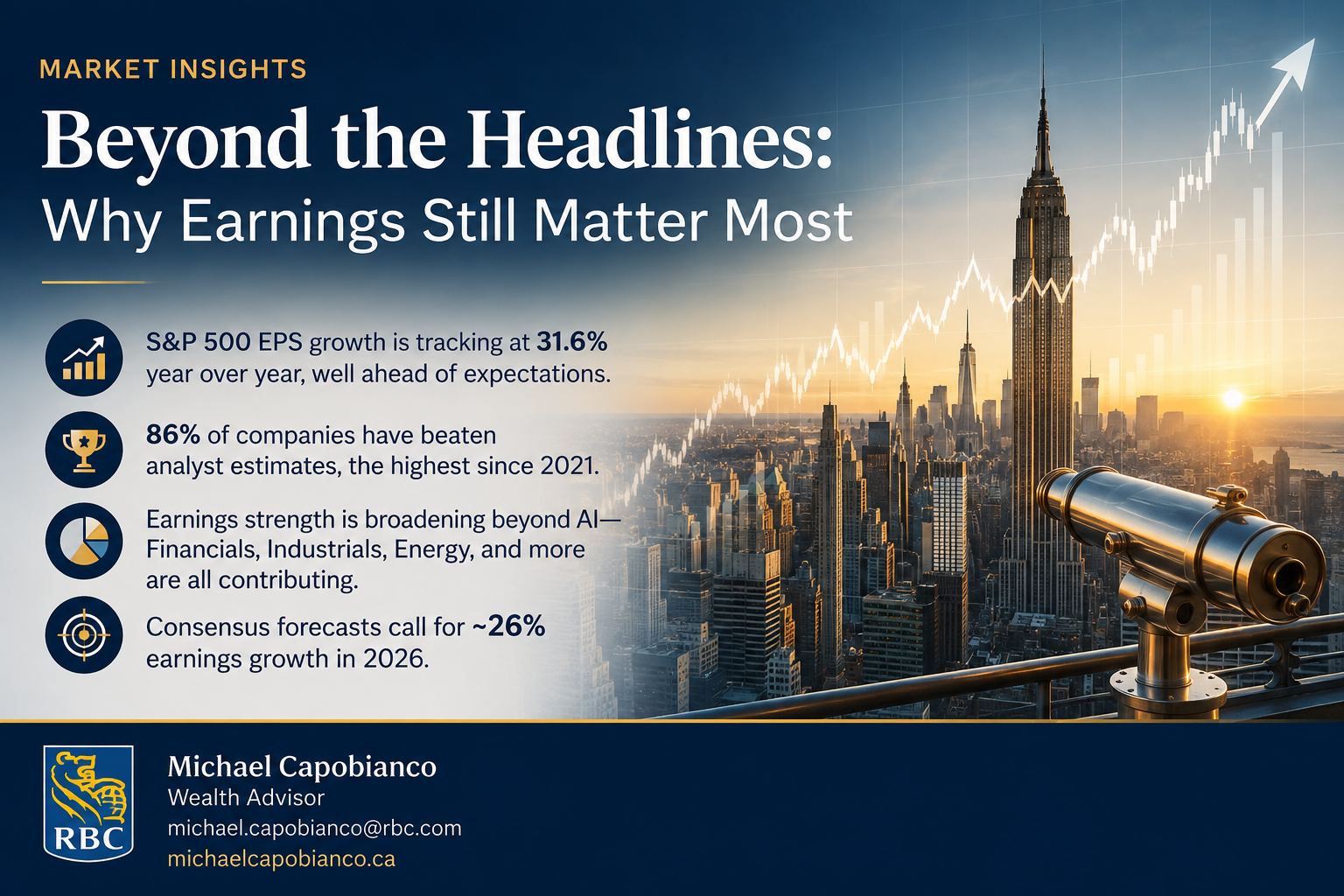
- S&P 500 earnings per share (EPS) growth is tracking at 31.6% year over year, well above the 23.2% consensus estimate heading into earnings season.
- Approximately 86% of companies have beaten analyst expectations, the highest success rate since 2021.
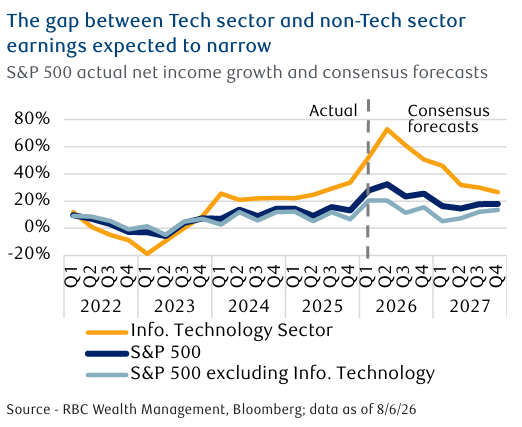
While artificial intelligence continues to be a major contributor—particularly within semiconductor companies—earnings strength is becoming increasingly broad-based.
Financials, Industrials, Utilities, Communication Services, Energy, and Materials are all delivering solid profit growth, reinforcing that this is no longer solely an AI-driven market.
Looking Ahead: A Healthy Profit Outlook
Forward earnings expectations remain constructive, which is ultimately more important for market performance than historical results.
Current consensus forecasts call for:
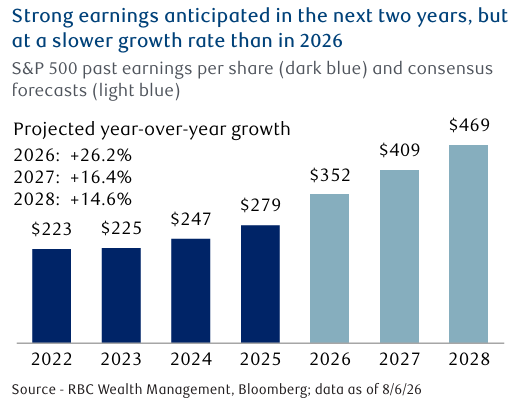
- 2026 EPS of $352, representing approximately 26% growth.
- 2027 EPS of $409, reflecting continued double-digit earnings expansion.
Although these forecasts will likely be revised over time, they suggest analysts continue to expect healthy corporate profitability, supported by a resilient economy.
We also expect earnings leadership to gradually broaden beyond the Technology sector. If this occurs, investors may continue rotating toward sectors that have lagged while maintaining diversified equity exposure.
Risks Worth Monitoring
Despite the positive outlook, investors should remain aware of several factors that could create market volatility:
- Changes in Federal Reserve leadership and the future path of interest rates.
- Inflation and employment data that could influence monetary policy.
- Ongoing geopolitical tensions in the Middle East and potential disruptions to global energy markets.
- Uncertainty surrounding the upcoming U.S. midterm elections.
- Whether AI-related capital spending continues to translate into sustainable earnings growth.
Putting it into Perspective:
Although periods of volatility are inevitable, the combination of solid economic growth and healthy corporate earnings continues to support the current bull market.
Maintaining a diversified portfolio and avoiding excessive concentration in any single company or sector remains an effective way to participate in long-term market growth while managing risk.
We continue to recommend a Market Weight allocation to U.S. equities.
If you have any questions or comments, please feel free to let me know.
Many Thanks