Tax Planning Isn't a December Activity
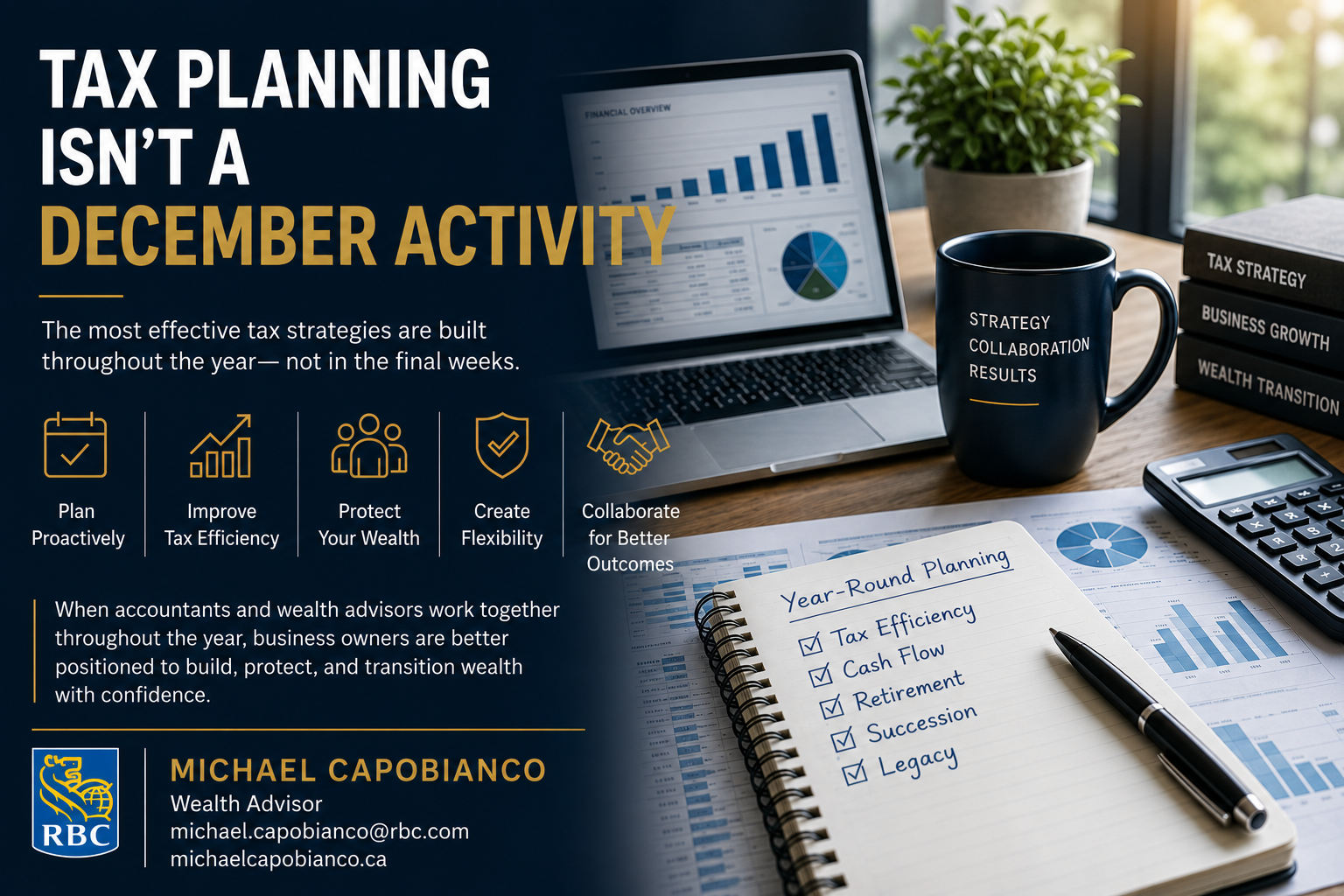
For many business owners, tax planning begins when the calendar turns to December. By then, however, many of the most effective planning opportunities have already passed. The most successful business owners don't treat tax planning as a year-end exercise. They view it as an ongoing process that supports cash flow, protects wealth, and creates flexibility for the future.
For many business owners, tax planning begins when the calendar turns to December. By then, however, many of the most effective planning opportunities have already passed. The most successful business owners don't treat tax planning as a year-end exercise. They view it as an ongoing process that supports cash flow, protects wealth, and creates flexibility for the future.
Michael Capobianco
July 28, 2026
For many business owners, tax planning begins when the calendar turns to December. By then, however, many of the most effective planning opportunities have already passed.
The most successful business owners don't treat tax planning as a year-end exercise. They view it as an ongoing process that supports cash flow, protects wealth, and creates flexibility for the future.
This is where collaboration between an accountant and a wealth advisor becomes invaluable.
While accountants focus on accurate reporting, compliance, and tax strategy, a wealth advisor helps ensure those strategies align with broader financial objectives. Together, they can help business owners make informed decisions around corporate cash management, retirement planning, investment structure, succession, insurance, and estate planning.
When these conversations happen throughout the year—not just at tax time—clients are often better positioned to:
- Improve tax efficiency.
- Optimize corporate and personal cash flow.
- Build retirement assets more strategically.
- Prepare for the eventual sale or transition of the business.
- Protect family wealth across generations.
The strongest outcomes rarely come from working in silos. They come from professionals who collaborate with a shared objective: helping clients make smarter financial decisions over the long term.
As a wealth advisor, I've found that some of the best client outcomes are achieved alongside trusted accountants who understand both the numbers and the bigger picture. That collaborative approach allows clients to move beyond simply minimizing taxes and toward building lasting financial security.
Tax planning shouldn't be something you think about once a year. It should be an integral part of your overall wealth strategy.