Michael Capobianco
August 20, 2026
Identifying the flaws in U.S. fiscal policy is easy. The harder question is how the country ultimately adjusts to a federal deficit and debt burden that increasingly appears unsustainable.
The key concern is the post-COVID “new normal” of running deficits approaching 6% of GDP even during economic expansions. Policymakers responded appropriately to the pandemic, but failed to rebuild fiscal capacity when conditions improved.
So how does the adjustment happen? We see neither an easy solution nor an extreme outcome as particularly likely.
A surge in AI-driven productivity is unlikely to eliminate the problem, while genuine political leadership may be even harder to find. Reducing deficits would likely slow economic growth and raise unemployment—hardly an attractive proposition for elected officials.
Instead, we expect the bond market to play a growing role. Periodic increases in Treasury yields could eventually force policymakers toward action.
The adjustment may ultimately involve:
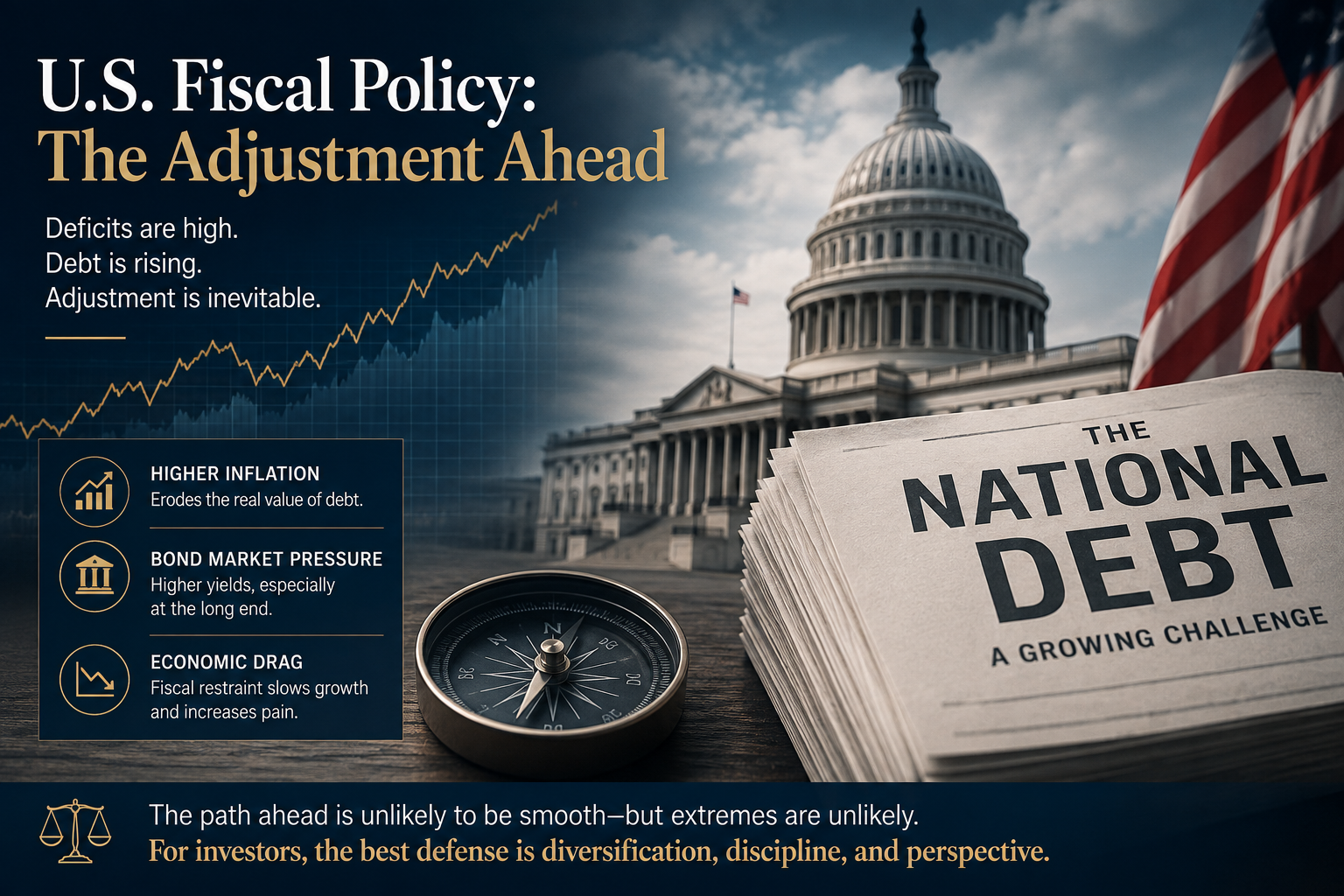
- Higher inflation: A gradual erosion in the real value of debt can make repayment less painful.
- Pressure on long-term bonds: Longer-maturity Treasuries could remain vulnerable as investors demand greater compensation for fiscal risk.
- Unnecessary economic weakness: Fiscal restraint can reduce growth, particularly if implemented reactively rather than through a carefully sequenced, long-term plan.
The good news is that we do not view a U.S. debt crisis resembling historical hyperinflation episodes as a likely outcome. The more probable scenario is a messy, politically driven series of adjustments—effective enough to stabilize the situation, but far from efficient.
What does this mean for investors?
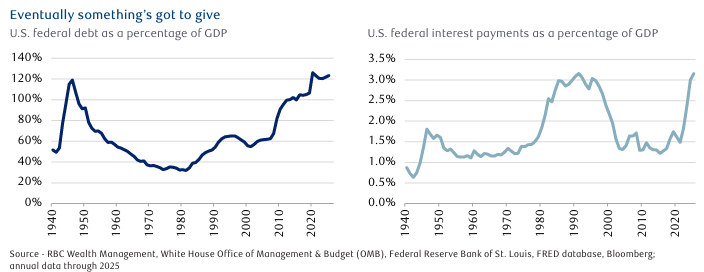
The biggest mistake may be trying to time a U.S. fiscal crisis. Concerns about U.S. debt have existed for decades, yet investors who positioned for an imminent collapse would have missed substantial gains.
Instead, the better approach is to return to the basics: global diversification, regular rebalancing, and careful attention to duration and asset-class exposure.
We remain cautious toward very long-term U.S. Treasuries, while shorter maturities may offer a more attractive risk/reward profile.
The U.S. fiscal challenge is real. But for investors, the answer is unlikely to be predicting the precise moment it breaks. It is building portfolios that can withstand a range of outcomes.
If you have any questions or comments, please feel free to let me know