
Nick Milau
March 12, 2026
Special Notice for Tax Season – Please note that certain tax slips (e.g. for Income Trusts, Private Equities, etc.) will not be available until the end of the March. Please refer to your tax package checklist for tax slips you can expect to receive.
Weekly Wrap |
This week U.S. equity prices pushed lower amid further turmoil in oil markets. The S&P 500 is down 3% year to date while oil prices surged over 40% from reduced shipping traffic through the Strait of Hormuz, a key global trading route that delivers oil from the Persian Gulf. While rising oil prices have benefited performance in energy stocks, most broader indices are down in March from concerns about inflation, demand for labor, and signs of distress in the US$1.8 trillion private credit market. Canadian equities have slipped modestly since the U.S. and Israel launched airstrikes across Iran, though the S&P/TSX Composite remains up roughly 2.50% year to date. The Energy sector’s 22% gain has contributed to that strength as investors priced in rising risks of Middle East oil supply disruptions. As a major oil exporter, Canada is better positioned than global peers to weather higher crude prices, in our opinion, though the broader economic impact is mixed. U.S. Treasuries remain pressured in March as broadening hostilities in the Middle East fuel angst around rising energy prices and the risk of hotter inflation in the pipeline. This month’s slump in Treasury prices raised yields on key benchmark maturities to multi-month highs—particularly the policy-sensitive 2-year yield after recently striking the highs from September 2025. The sudden resurgence in inflation expectations has revamped the market’s outlook for rate cuts by the Federal Reserve. According to Fed fund futures data on Bloomberg, markets are now pricing in just one quarter point rate cut by December 2026, down from two to three quarter-point cuts priced in a month ago. Meanwhile, long-term Treasury yields also jumped on concerns that the war in Iran may further swell the U.S. budget deficit. As of writing, week-to-date the S&P 500 is down around .30%, the TSX .45%, the Dow .75% and the NASDAQ is just barely negative at around .10%.
Market Insights |
U.S. Opens Section 301 Probe to Rebuild Tariff Strategy: The Trump administration has launched a trade investigation into foreign manufacturing practices, aiming to restore tariff authority over certain countries after the U.S. Supreme Court struck down earlier tariffs imposed under emergency powers. The investigation will be conducted under Section 301 of the Trade Act of 1974, which allows the U.S. government to examine foreign policies or practices that may disadvantage American companies and potentially respond with tariffs. The probe will assess issues such as excess industrial capacity, government subsidies and labour conditions that may give foreign manufacturers an advantage over U.S. firms. Countries included in the investigation span major trading partners and export-oriented economies, including China, the European Union, Japan, India, South Korea, Mexico, and several Southeast Asian producers. The administration currently relies on a temporary 10% global tariff under a different trade provision, which expires in a little over four months. Officials aim to complete investigations quickly to make new policy options available before that deadline. For Canada, which was left out of the investigation, focus remains on the upcoming Canada-United States-Mexico Agreement (USMCA) review scheduled for July 2026.
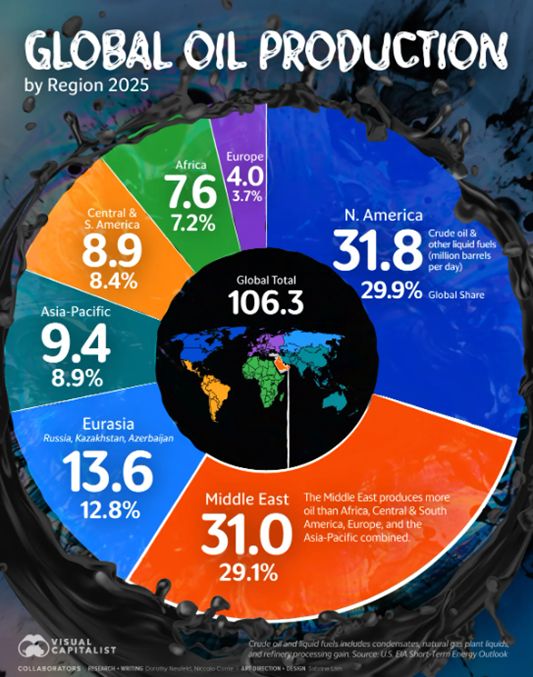
Escalating Hormuz Attacks Raise Risk of Extended Shipping Shutdown: Iranian attacks on vessels in the Strait of Hormuz and the absence of U.S. naval escorts are raising concerns that the world’s most important oil transit route could remain closed for an extended period. On Wednesday, Iran’s military struck three cargo ships attempting to pass through the narrow waterway and warned that additional vessels would also be targeted. The strait, which serves as the only maritime outlet for Persian Gulf oil exports, has effectively been closed as shipping companies avoid the route. U.S. defense officials say deploying warships to escort tankers would be highly risky given the confined geography and the proximity of Iranian military capabilities. Major Gulf exporters have collectively cut output by nearly seven million barrels per day as crude accumulates with limited export options. The news that the International Energy Agency would release a record 400 million barrels from strategic oil reserves did little to cool volatile oil prices, with traders unclear on how quickly supply could reach the market. Although the U.S. military has struck dozens of Iranian naval assets, Iran retains capabilities to attack vessels with drones, fast boats and antiship missiles. According to shipping executives, even if hostilities end, trade through the strait may recover slowly as shipowners remain wary.
Prime Minister Mark Carney used a recent Indo-Pacific visit to deepen Canada’s strategic ties with both Japan and Australia, signaling a broader effort to diversify economic and security partnerships. In Tokyo, Canada and Japan announced a new comprehensive strategic partnership covering defense, energy, critical minerals, trade, and advanced technologies. The initiative aims to expand investment flows; strengthen supply chains in sectors such as semiconductors, batteries, and clean energy; and increase cooperation on cybersecurity, AI, and defense industrial capabilities. The two countries also committed to greater coordination on energy security—including liquefied natural gas, hydrogen, and nuclear technologies—and to deepen joint military exercises and maritime security efforts. Similarly in Australia, Canada elevated bilateral ties through agreements focused on critical minerals, clean energy, defense, and technology cooperation, including welcoming Australia into the G7-linked Critical Minerals Production Alliance to help diversify supply chains for key resources used in manufacturing and defense systems. The two governments also launched a new Clean Energy Partnership and expanded defense collaboration, including Arctic radar training. The initiatives highlight a growing push among Indo-Pacific partners to reinforce longer-term themes around energy security, critical minerals, and defense, though economic and investment implications will likely unfold only gradually over time, in our view.
Portfolio Update |
No portfolio updates this week.
Planning On |
CRA and the Tax Season
We are knee deep in the weeds of tax season as documents continue to become available to our clients. A quick reminder that not all tax documents necessarily come from RBC Dominion Securities. Some come directly from the companies that offer some of the investment strategies we employ.
If you recall, CRA had a rather tough time of it last year. Documents took longer to access and not everything was available through CRA due to a new uploading program they had switched to. Wait times were very long to get through to an agent if you even could.
Here are some things to note from CRA this year:
- They recommend confirming you have access to CRA’s My Account before tax season begins. If you are locked out, you no longer need to call as you can regain access online.
- CRA has instituted a backup multi-factor authentication meaning if you haven’t logged in since February 2026, you will be required to set up a backup option such as a passcode grid or third-party authenticator app. This strengthens security.
- If you are setting up someone as a representative (typically an accountant), you can give them instant access by adding them as a representative or confirm their authorization request in My Account.
- As of now, you can find your NETFILE access code more easily in your CRA Account. Once you sign in, select “Tax Returns” to view your 8-character access code (letters and numbers). You can use this code when filing your tax return electronically.
- CRA has improved its GenAI chatbot beta. This is a chatbot that is available 24/7 on Canada.ca and can answer a wider range of questions, including more complex ones for business owners, such as eligibility for tax credits.
Two strategies to consider if you have a refund that you don’t need for your life and lifestyle expenses:
- Pay down higher interest rate debt (credit cards, lines of credit, etc.)
- Contribute to your registered plans (RSPs, TFSAs, RESPs, etc.)
If we can help you plan for your refund, please let us know.
This information is not intended to provide legal, tax, or insurance advice. To ensure that your own circumstances have been properly considered and that action is taken based on the latest information available, you should obtain professional advice from a qualified lawyer or accountant, as applicable, before acting on any of the information.
Monthly Conference Call Replay Link – Friday March 6th, 2026 |
Absolution for the mutual fund industry
Mutual funds have earned a negative reputation for high fees and limited flexibility. And while we've favored selective investing by holding individual securities over broad fund strategies, the landscape has shifted. In recent years, we've discovered compelling opportunities within carefully chosen mutual fund niches and the funds we hold have delivered some of our strongest returns. The reality? Not all mutual funds deserve the same negative rep. This month's conference call tackles the nuanced question: when and how should we invest in mutual funds? We'll explore mutual funds alongside closely related strategies (such as separately managed accounts and third-party managed investments) to help you build a smarter, more diversified approach.
Please click here for the replay
Recording Password: nQ5mgDnM
Charts of the Week |
Spare Time Updates |

St. Patrick’s Day Celebrations in Vancouver
St. Patrick’s Day is on March 17th and all week there are Irish celebrations including Vancouver’s CelticFest, parties at pubs and other Irish events.

8 Ways to Become a Nicer Person
Being nice is associated with all kinds of benefits. Humans are wired to enjoy the “warm glow” of feeling like we’ve improved someone else’s well-being—doing so triggers the brain pathways that signal pleasure.