
Nick Milau
October 15, 2026
Weekly Wrap
Global stock markets continued to behave like a herd of cats this week as there was no unified theme or direction to summarize activity and movements. This has been an ongoing phenomenon in stock markets in 2026 as investors seem less inclined to buy or sell the market en masse and more inclined to trade between sectors, regions and specific stocks looking for outperformance. Canadian stocks fared well this week, gaining 2% with the Energy sector getting a lift from the near 4% increase in oil prices. A sustained sell-off in tech stocks sent the US market down 1%, with the entirety of the downward move coming from the tech sector. EU stocks gained 1% while the Emerging Markets shed 4%, as Taiwan Semiconductor shares (which dominate the EM) were off over 8% on the week. Despite a plethora of troubling inflation data in the US, interest rates fell this week as investors seemed more focused on lowering portfolio risk by selling stocks for bonds. In Canada, rates edged lower by 3 to 5 basis points while in the US they dropped about 0.15% in spite of US inflationary concerns (see below). The Loonie gained about 1% this week, partly due to higher oil prices but more likely due to the relative drop in US rates vis a vis Canadian rates.
Market Insights
US Inflation Worries Grow. For anyone convinced that US inflationary pressures were moderating, this week’s US CPI report for September hardly offered any comfort. Headline CPI rose +0.6% over the month, an acceleration from +0.4% in August. Core CPI rose 2.6% over the year, also higher than expected. More worryingly, momentum in core CPI continued to accelerate, as core CPI rose +3.4% on a 3-month annualized basis, the highest such reading in a year. “Supercore CPI” (core services ex-shelter) rose a whopping 4.6% on a 3-month annualized basis, more than double last month’s reading. Unsurprisingly, higher energy costs in September are thanks to the re-heating of the conflict in Iran. On the services side, shelter inflation was the biggest driver, with shelter costs up +0.39%. This CPI report sparked a selloff in bond markets as yields rose and investors priced in higher odds of a Fed hike at the end of October. Oddly, though, this move was not sustained as markets were driven down by a selloff in tech stocks which sent investors rushing back into bonds and sending rates down. Then yesterday, US wholesale inflation data reports also showed a surge in September, all just weeks before the midterm elections. Inflationary concerns clearly haven’t gone away in the US, which will keep pressure on the Fed to increase rates. However, the timing of the Fed’s next hike is uncertain. RBC sees the Fed pausing in October and hiking in December, broadly in-line with current market pricing, before delivering one more hike (three total, including this past September’s) in early 2027. Meanwhile in Canada, after a weak Jobs report last week the market is now expecting no rate hike at the end of this month.
IMF Flags Global Risks. The International Monetary Fund (IMF) slightly increased their global growth projections for 2026 from 3.0% to 3.1%, as AI-related infrastructure investment has continued to offset pressures from higher commodity prices. The IMF did, however, highlight risks to the outlook, including slowing AI investment, growing debt levels, and an extended conflict in the Middle East. In the latest World Economic Outlook report, the IMF also forecast that global growth should reach 3.4% in 2027, but this is dependent on the Strait of Hormuz reopening by March and for global shipping conditions to return to their pre-war state by October 2027. They project that oil prices persistently above $130 through Q1 of 2027 would reduce full-year growth by half a percentage point. The IMF also stated that a drop in AI investment could bring forth a sharp fall in asset prices, undercutting global GDP by 1.1% in 2028. This would also be felt in the real economy, via reduced demand from a reduction in the wealth effect and it would also dampen global trade which has thus far carried on despite tariffs and trade tensions. Also in the news, the UN Development Programme, or UNDP, said that countries are facing overlapping, significant crises. With about 1.2 billion young people set to enter the workforce over the next decade and with only 400 million jobs in sight, the new UNDP investment and jobs initiative aims to align skills with employer demand and address barriers to business investment and hiring.
Portfolio Update
This week we decided to sell our shares of Stella Jones and add those proceeds to our holdings in the Pender Corporate Bond Fund. SJ has not worked out for us; despite them still having a very strong and defensible competitive advantage in the utility pole and railway tie market, they have run into some medium-term growth issues compounded by them getting caught up in the US/Canada trade dispute. We triggered a loss on the sale; while disappointing, we felt this tax loss would be more useful this year given the capital gains that have been realized earlier in the year. The Pender Corporate Bond fund remains very attractive yielding above 6% a year and given the relatively attractive outlook for fixed income vis a vis stocks and my growing concerns of a potential pullback in stocks we felt this move made good sense from a risk/return perspective. Our portfolios continue to get prepared for a more subdued equity return environment but we expect this will be mitigated by better fixed income yields and a still attractive outlook on our alternatives (or Alts).
Please note any changes apply to our Private Investment Management (PIM) portfolios only, subject to restrictions. Please call to clarify if you have any questions.
Planning On
Understanding Capital Losses in Non-Registered Accounts
Over the past two weeks, we've exited two positions that have resulted in capital losses. A capital loss simply refers to selling an investment for less than you purchased it. While losses are never pleasant, they offer a meaningful tax planning opportunity worth understanding.
How Capital Losses Work
When you sell an investment held in a non-registered account (or any other capital property held that isn’t in a registered account) at a loss, you can use that loss to offset capital gains from other investments. This reduces your taxable income and, consequently, your tax bill. In Canada, only 50% of capital gains are taxable (the "inclusion rate"), and the same applies to capital losses—you can offset 50% of your losses against 50% of your gains on a dollar-for-dollar basis.
If your capital losses exceed your capital gains this year, you can carry the excess loss backward to offset gains from the previous three tax years. This can trigger tax refunds if you paid tax on gains in those prior years.
The Carryforward Advantage
Any remaining unused losses can be carried forward indefinitely. This means losses that exceed your current and past three years' gains aren't wasted—they're available to offset future gains whenever you realize them.
The Discipline Factor
Many retail investors hold struggling stocks hoping to "break even," missing the tax benefit opportunity and, more importantly, tying up capital that could be working harder elsewhere. Lacking the conviction to sell underperformers can adversely affect your portfolio over the long-term. Disciplined loss-taking is a part of portfolio management.
Gains/Loss Report
You will be hearing from us in November as we send an email reminding you that we offer the opportunity to have a glimpse into your non-registered gains and losses as we approach year-end.
Questions? Reach out—we're here to help maximize these opportunities.
This information is not intended to provide legal, tax, or insurance advice. To ensure that your own circumstances have been properly considered and that action is taken based on the latest information available, you should obtain professional advice from a qualified lawyer or accountant, as applicable, before acting on any of the information.
Updates from the Team
Tree Planting Branch Event
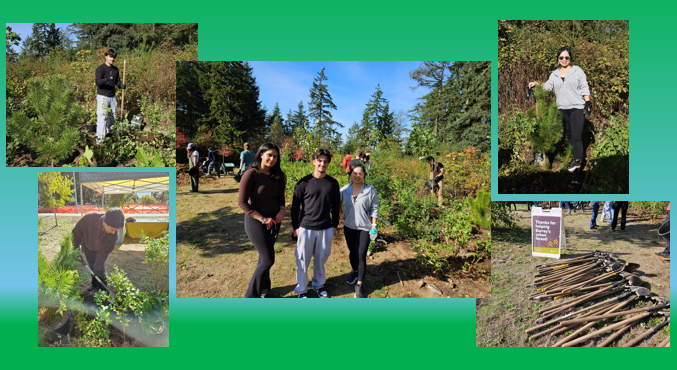
Our branch staff worked as a group and did some digging at the Orchard Grove Park in South Surrey. Twenty of us spent a sunny afternoon planting 200 trees and shrubs along the 24th Avenue. Some sweat was shed, and it felt great that we helped create a forest-like environment for the wild birds and animals.
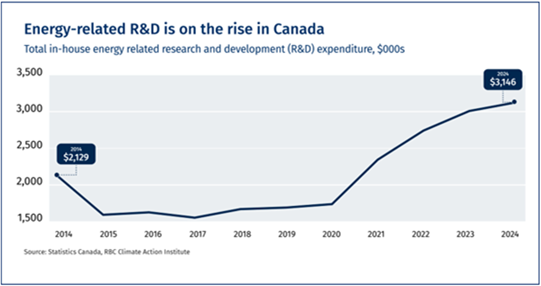
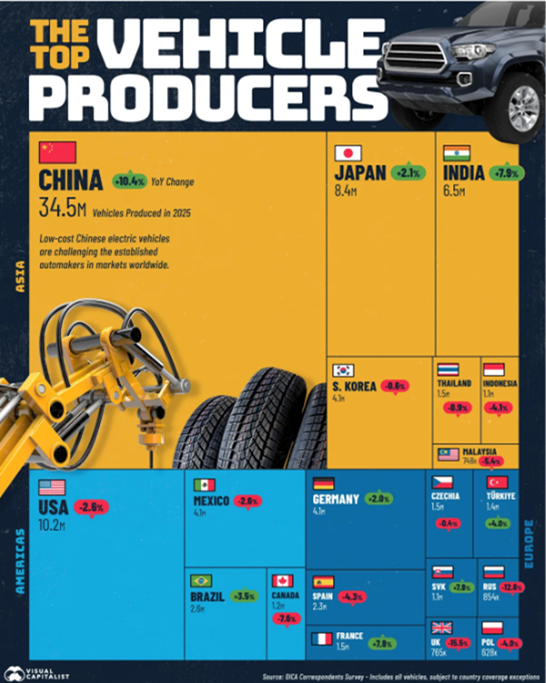
Charts of the Week
Feel free to share this newsletter with anyone who might benefit from it or find value in it. Thank you for reading our commentary. We welcome your feedback!
Return to homepage
This information is not investment advice and should be used only in conjunction with a discussion with your RBC Dominion Securities Inc. Investment Advisor. This will ensure that your own circumstances have been considered properly and that any action is taken based upon the latest available information. The strategies and advice in this report are provided for general guidance. Readers should consult their own Investment Advisor when planning to implement a strategy. Interest rates, market conditions, special offers, tax rulings, and other investment factors are subject to change. The information contained herein has been obtained from sources believed to be reliable at the time obtained but neither RBC Dominion Securities Inc. nor its employees, agents, or information suppliers can guarantee its accuracy or completeness. This report is not and under no circumstances is to be construed as an offer to sell or the solicitation of an offer to buy any securities. This report is furnished on the basis and understanding that neither RBC Dominion Securities Inc. nor its employees, agents, or information suppliers is to be under any responsibility or liability whatsoever in respect thereof. The inventories of RBC Dominion Securities Inc. may from time to time include securities mentioned herein. This publication is for information purposes only. Graphs and charts are used for illustrative purposes only and do not reflect future values or changes. Past performance is not indicative of future returns. This commentary is based on information that is believed to be accurate at the time of writing and is subject to change. All opinions and estimates contained in this report constitute RBC Dominion Securities Inc.'s judgment as of the date of this report, are subject to change without notice and are provided in good faith but without legal responsibility. Interest rates, market conditions and other investment factors are subject to change. Past performance may not be repeated. The information provided is intended only to illustrate certain historical returns and is not intended to reflect future values or returns. This publication is not intended as nor does it constitute tax or legal advice. Readers should consult their own lawyer, accountant or other professional advisor when planning to implement a strategy. Insurance products are offered through RBC Wealth Management Financial Services Inc.("RBC WMFS"), a subsidiary of RBC Dominion Securities Inc.* RBC WMFS is licensed as a financial services firm in the province of Quebec. When providing insurance products in all provinces except Quebec, Investment Advisors are acting as Insurance Representatives of RBC WMFS. In Quebec, Investment Advisors and Estate Planning Specialists are acting as Financial Security Advisors of RBC WMFS. RBC Dominion Securities Inc., RBC WMFS and Royal Bank of Canada are separate corporate entities which are affiliated. *Member-Canadian Investor Protection Fund. RBC Dominion Securities Inc. and RBC WMFS are member companies of RBC Wealth Management, a business segment of Royal Bank of Canada. â / ™ Trademark(s) of Royal Bank of Canada. Used under license. RBC Dominion Securities Inc. 2026 All rights reserved.