Nick Milau
September 24, 2026
Weekly Wrap
If you feel like the stock markets have had a hard time making up their mind this week, you are in good company. Equities across North America and around the globe spent the last few days in an energetic tug-of-war between optimistic corporate headlines and persistent macroeconomic reality. In the U.S., major indexes kicked off the week with a sharp tech-led rally, briefly flirting with record highs as bond yields retreated and energy costs dipped. That initial enthusiasm hit a wall midweek, however, when sticky inflation figures and hawkish central bank chatter reminded investors that high interest rates are not quite ready to leave the party. Closer to home, the S&P/TSX followed a similar, somewhat restless pattern. A solid performance in the energy sector provided a comfortable safety net, helping offset quieter pullbacks across materials and industrials as domestic economic data pointed to stable, if modest, growth. Overseas markets echoed the same narrative. European and Asian equities saw brief relief from lower commodity prices and decent manufacturing numbers, though ongoing economic friction in China and broader global rate anxieties capped any serious late-week momentum. As of writing, the Dow is the loser index this week down about 0.70%, the S&P 500 is just barely positive and the Nasdaq is the winner on the US side as it sits comfortably at 0.70% for the 5-day period. The TSX is in the red to the tune of 0.6%. EM was a bright spot with the MSCI Emerging Market Index posting a weekly gain of 1.25% (maintaining strong year-to-date momentum with a return of 23.34%). The Stoxx Europe 600 had a great week currently up just below 2% on oil’s price retreat and optimism surrounding tech and banking stocks as inflation worries eased.
Market Insights
U.S. business activity gains momentum; keeps inflation in focus. U.S. business activity accelerated sharply in September, with S&P Global’s flash Composite PMI (Purchasing Managers Index) rising to 58.4 from 56.0 in August, its highest level since July 2021 and consistent with annualized economic growth of around 5%. Strength was broad-based across manufacturing and services, while new orders climbed to their highest level since March 2022. The stronger demand backdrop, however, is also creating capacity strains. Work backlogs rose to their highest level since May 2022, supplier delivery times lengthened, and companies reported difficulty finding suitable workers. Inflation pressures also intensified, with the input-price index jumping to 66.4, its highest since October 2022, as supply shortages and higher raw-material costs pushed expenses higher. Altogether, the report points to a U.S. economy that remains resilient, but one where strong demand and supply constraints are increasingly reinforcing inflation, adding to the case for the Federal Reserve to keep policy rates elevated and potentially deliver further rate hikes in the coming months if price pressures remain persistent.
Global bond yields push higher as rates risk build. Global bond markets remained under pressure Thursday, with the U.S. 10-year Treasury yield briefly reaching 5.14%, its highest level since before the global financial crisis. The selloff reflects several concerns, including stronger-than-expected U.S. business activity, a weak Treasury auction, hawkish Fed messaging, heavy funding needs from the technology sector, and lingering worries over the U.S. fiscal outlook. Geopolitical tensions are adding to the pressure, with Brent crude prices moving back above US$105 per barrel as doubts grow over prospects for a U.S.-Iran deal and uncertainty around shipping through the Strait of Hormuz persists. Higher oil prices could further complicate the inflation outlook and keep upward pressure on bond yields. Following Wednesday’s strong U.S. PMI data, markets now see nearly a 70% chance of another Federal Reserve rate hike in October, up from about 50% a week earlier. The combination of higher yields and renewed inflation concerns weighed on global equities, while the U.S. dollar strengthened.
BoC Governor Macklem's Balancing Act. Bank of Canada Governor Tiff Macklem outlined a complex monetary policy challenge this week, caught between the need to contain inflation and the risk of dampening economic growth. With external pressures from U.S. tariffs and Middle East instability threatening Canada's recovery, Macklem emphasized that the BoC must act decisively if inflationary pressures persist, as delaying rate increases could necessitate more aggressive hikes later. The current policy rate of 2.25% may prove insufficient to reach the 2% inflation target, yet raising rates prematurely could harm an already fragile economy potentially halved to below 1% GDP growth in Q4 due to tariffs. To aid this decision-making, the BoC introduced Prima, a new forecasting tool designed to better distinguish temporary from persistent inflation. While markets are pricing in five rate hikes over the next twelve months with a 60% probability of an October increase, analysts suggest this may be overly optimistic about the pace of tightening.
Portfolio Update
There is no portfolio update this week.
Please note any changes apply to our PIM Portfolios Only, subject to restrictions. Please call to clarify if you have any questions.
Planning On
A Word About the Financial Decisions the Younger Generations Are Making
As we work with you on building and preserving multigenerational wealth, we thought you'd want to know what's happening on the investment side of the next generation's financial lives—because it's worth paying attention to. I apologize for the excessive stats but considering the next couple of paragraphs perhaps it is fitting.
The Troubling Trend
Recent data paints a concerning picture. According to a Wealthmanagement.com survey, 26% of Gen Z investors now incorporate sports betting into their formal financial plans, with 52% actively redirecting funds originally earmarked for traditional investing into sports betting. Meanwhile, lottery-based retirement hopes persist: a TIAA survey from October 2025 found that 10% of North Americans still view winning the lottery as a legitimate retirement strategy—a figure that climbs significantly among younger cohorts.
What's even more telling is the financial literacy gap. The 2026 Personal Finance Index found that Gen Z scores lowest on financial literacy across all generations—averaging just 38% correct on fundamental concepts, with risk comprehension scoring a mere 36%. Yet paradoxically, according to Morningstar research, they're entering markets at an average age of 19, earlier than any prior generation.
Perhaps most concerning: according to recent data from Finance Magnates, 60% of Gen Z report actively taking on more risk than usual in their portfolios, yet very few actually use leveraged products directly (only about 1% use margin or leveraged ETFs, per Knewz analysis of trading data). This suggests they may be seeking higher returns through other speculative means—sports betting, crypto, meme stocks—while simultaneously misunderstanding the risk dynamics they're actually taking on. They're chasing volatility without the financial literacy to comprehend it.
What's driving this? Financial pressure, limited savings, and the allure of a "quick fix" to bridge the wealth gap they perceive relative to previous generations. It seems the younger generations don’t have the patience to watch the investment slowly grow year over year, not when they compare their investment accounts to whatever they see glorified on their social media channels.
This all suggests a fundamental gap in financial literacy—and discipline. These aren't calculated risks; they're substitutes for the kind of long-term, methodical wealth-building that has served our clientele year over year, decade over decade.
The Conversation Worth Having
Whether it's over dinner or during a family meeting, consider gently reinforcing the principles that got you here:
- Compound growth requires patience, not prediction. Time in the market beats timing the market—every single time. Use this example: $1,000 USD invested in Home Depot’s IPO (initial public offering) in September 1981 would be worth roughly $16 million today if you invested all dividends. I can’t think of a less exciting stock to use to demonstrate such an exciting result.
- Diversification cushions disappointment. A well-constructed portfolio doesn't rely on any single bet paying off.
- Consistency compounds. Regular contributions, made without emotion, build staggering wealth over decades.
We're Here to Help
If you'd like guidance on having these conversations with younger family members, or if you're interested in exploring intergenerational wealth transfer strategies that include financial education, we'd welcome the opportunity to discuss. Sometimes the greatest gift isn't just money—it's the knowledge to steward it wisely.
This information is not intended to provide legal, tax, or insurance advice. To ensure that your own circumstances have been properly considered and that action is taken based on the latest information available, you should obtain professional advice from a qualified lawyer or accountant, as applicable, before acting on any of the information.
Updates from the Team
W8BEN Renewal Reminder
A W-8BEN form is a document used by non-US individuals to certify their foreign status to the IRS, typically to claim tax treaty benefits and reduce US tax withholding on income like dividends. As a reminder, individual clients with a W8BEN expiring this year will receive an automated notification via email at the end of September. Please follow the email instruction to e-sign or reach out to any of us for assistance.
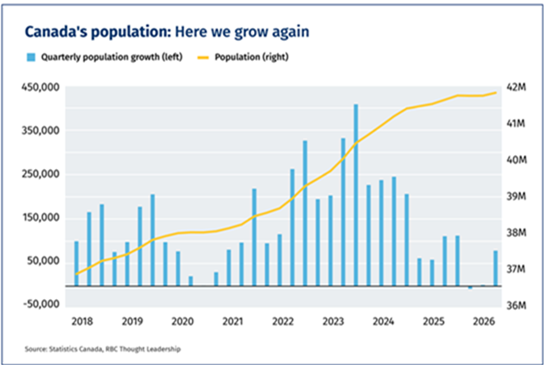
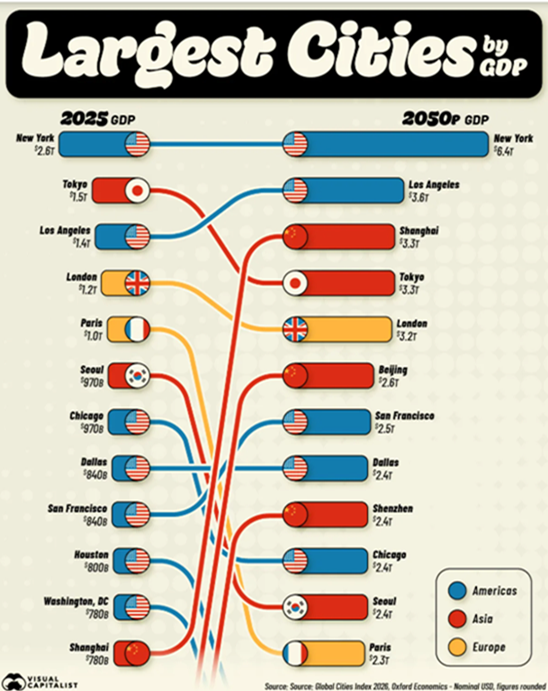
Charts of the Week
Feel free to share this newsletter with anyone who might benefit from it or find value in it. Thank you for reading our commentary. We welcome your feedback!
Return to homepage
This information is not investment advice and should be used only in conjunction with a discussion with your RBC Dominion Securities Inc. Investment Advisor. This will ensure that your own circumstances have been considered properly and that any action is taken based upon the latest available information. The strategies and advice in this report are provided for general guidance. Readers should consult their own Investment Advisor when planning to implement a strategy. Interest rates, market conditions, special offers, tax rulings, and other investment factors are subject to change. The information contained herein has been obtained from sources believed to be reliable at the time obtained but neither RBC Dominion Securities Inc. nor its employees, agents, or information suppliers can guarantee its accuracy or completeness. This report is not and under no circumstances is to be construed as an offer to sell or the solicitation of an offer to buy any securities. This report is furnished on the basis and understanding that neither RBC Dominion Securities Inc. nor its employees, agents, or information suppliers is to be under any responsibility or liability whatsoever in respect thereof. The inventories of RBC Dominion Securities Inc. may from time to time include securities mentioned herein. This publication is for information purposes only. Graphs and charts are used for illustrative purposes only and do not reflect future values or changes. Past performance is not indicative of future returns. This commentary is based on information that is believed to be accurate at the time of writing and is subject to change. All opinions and estimates contained in this report constitute RBC Dominion Securities Inc.'s judgment as of the date of this report, are subject to change without notice and are provided in good faith but without legal responsibility. Interest rates, market conditions and other investment factors are subject to change. Past performance may not be repeated. The information provided is intended only to illustrate certain historical returns and is not intended to reflect future values or returns. This publication is not intended as nor does it constitute tax or legal advice. Readers should consult their own lawyer, accountant or other professional advisor when planning to implement a strategy. Insurance products are offered through RBC Wealth Management Financial Services Inc.("RBC WMFS"), a subsidiary of RBC Dominion Securities Inc.* RBC WMFS is licensed as a financial services firm in the province of Quebec. When providing insurance products in all provinces except Quebec, Investment Advisors are acting as Insurance Representatives of RBC WMFS. In Quebec, Investment Advisors and Estate Planning Specialists are acting as Financial Security Advisors of RBC WMFS. RBC Dominion Securities Inc., RBC WMFS and Royal Bank of Canada are separate corporate entities which are affiliated. *Member-Canadian Investor Protection Fund. RBC Dominion Securities Inc. and RBC WMFS are member companies of RBC Wealth Management, a business segment of Royal Bank of Canada. â / ™ Trademark(s) of Royal Bank of Canada. Used under license. RBC Dominion Securities Inc. 2026 All rights reserved.