
Michael Wilkie
March 27, 2026
A Word from Mike
Hello,
The Middle East conflict is increasingly influencing expectations for growth, inflation and interest rates. Below, I review the latest developments, how they are beginning to show up in the data, and how markets and central banks are responding.
Middle East: Awaiting Clarity
Now in the fourth week of what U.S. officials initially framed as a four-to-six-week operation in Iran, time remains the central variable. Mixed messaging from the U.S. and Iran’s apparent inclination to prolong tensions continue to obscure expectations around the conflict’s duration.
A potential opening for de-escalation emerged this week after U.S. President Trump announced a five-day halt in strikes on Iranian infrastructure, followed by a “15-point” peace framework delivered to Iran. Whether this reflects the start of diplomatic reengagement is unclear. Limited domestic support and rapidly rising fuel prices should incentivize the U.S. to pursue an off-ramp, while Iran’s interest in preserving the regime and critical infrastructure could eventually support a return to negotiations. However, despite somewhat more constructive signals, Iranian officials continue to deny that substantive talks are underway.
For markets, commodity prices, particularly oil, remain the primary transmission channel. The world economy has weathered high oil prices before, but the speed of the recent increase, coupled with disruptions to a key trade route (the Strait of Hormuz), makes this episode more challenging. Greater visibility on the conflict’s trajectory and commodity price pressures will likely be required before markets can stabilize more durably. I continue to watch for more credible signs of de-escalation.
Economic Impact: Moderation Underway
Prior to the conflict, the global economy was showing improving momentum, with business activity strengthening across both manufacturing and services and economic data broadly surprising to the upside.
Recent releases now offer an initial look at how conditions may be shifting. In the U.S., growth appears to have eased slightly, with rising cost pressures and softness in services activity. Manufacturing has held up somewhat better, likely supported by inventory building ahead of potential supply disruptions and diminished tariff concerns. Meanwhile, growth indicators for Europe have weakened more noticeably, while input costs have risen more sharply, reflecting the region’s greater reliance on imported energy. For now, overall activity levels remain consistent with continued, albeit slower, economic expansion.
Central Banks: A Cautious Approach
Against this backdrop, the interest rate outlook has shifted as markets incorporate the inflationary impact of higher energy prices, scaling back expectations for rate cuts. Although this reaction is sensible, it may be placing too much focus on near-term price pressures. While higher oil prices lift inflation, they also drag on growth by reducing consumer spending, which tends to be disinflationary over time. In addition, monetary policy is not well equipped to address supply-driven price shocks, as interest rates have limited influence on underlying supply issues.
Accordingly, most major central banks held rates steady at their latest meetings, emphasizing a wait-and-see, data-dependent approach. In the U.S., inflation remains somewhat above target, while job gains have slowed. In Canada, inflation has moved closer to target and the economy is operating with more slack, allowing policymakers flexibility to monitor developments for future decisions.
Corporate Fundamentals: Still Constructive
Earnings estimates remain optimistic. Major equity markets, including Canada and the U.S., entered the year with expected profit growth in the mid-teens. Although analysts appear to be taking a similar “wait-and-see” approach as central banks, full-year forecasts have nonetheless trended higher in recent weeks, suggesting continued confidence in economic fundamentals despite a widening range of potential outcomes. As expectations remain elevated, strong earnings delivery will likely be crucial to providing fundamental support for equity markets.
Takeaway
Recent market swings have been driven largely by the Iran conflict and rising oil prices, raising concerns that higher energy costs could dampen growth while adding to near-term inflation pressures. While the corporate earnings outlook remains favourable, markets will need greater confidence in a path toward de-escalation before sentiment can improve more sustainably.
For investors, periods like this can feel uncomfortable but can also present opportunities to add quality assets at more attractive valuations. Despite elevated cross-asset volatility, long-term financial plans and diversified portfolios are built to endure a range of market environments. When uncertainty dominates headlines, maintaining discipline and perspective becomes especially important.
Highlights
Iran war: De-escalating or escalating?
The Middle East conflict has thrust energy markets into crisis. While diplomatic overtures this week offered a glimmer of de-escalation, military buildups and continued strikes suggest that the conflict remains fluid. We examine the evolving strife, market risks ahead, and the lessons history offers investors.
Regional developments: Canada’s economy maintains its resilience; U.S. equity markets struggled to make headway as volatility ratcheted up; Energy price surge from Middle East conflict accelerates inflation across Europe, as central banks remain hawkish; Relief rally in Asian equities, but fuel crisis far from over
Please take some time to review the Global Insight Weekly.
New Scams Hit Every Week… Here is How to Stay Vigilant
Scams are getting more sophisticated. According to RBC research, 81% of Canadians feel there's a new scam to watch out for every single week, and most have started treating every unknown message as a threat. That's not paranoia. That's diligence.
The good news is that a few simple habits can go a long way. Here are a few of our fraud prevention tips:
- Pause before acting on urgent requests
- Verify who's actually reaching out before sharing anything
- Enable alerts and multi-factor authentication on your accounts
- Safeguard your personal and financial information
Scammers are counting on you to move fast. Don't.
March is Fraud Prevention Month, and RBC has produced an article to help us protect ourselves from fraud and scams.
To read the full article, please click here.
The Bank of Canada is “ready to respond” to Middle East turmoil
After keeping rates unchanged at 2.25%, the bank warned of inflation risks due to higher energy prices. However, Governor Tiff Macklem did not commit to a particular view on the net growth impact for Canada. Concerns about U.S. tariffs and trade headwinds also remain, with the review of the Canada-United States-Mexico Agreement "a big unknown," the bank noted. The U.S. Federal Reserve also left rates steady, but is still projecting one rate cut this year.
Canada is pitching to boost natural gas shipments to the U.S.
Energy Minister Tim Hodgson said he had a "wonderful conversation" with U.S. Energy Secretary Chris Wright on boosting natural gas flows into the U.S., aimed at lifting liquefied natural gas exports from the Gulf Coast. Canada's eight billion cubic feet per day of gas exports to the U.S. underpins American LNG exports of 20 bcfd to Asia and Europe. Hodgson also said he told Wright and United States Secretary of the Interior Doug Burgum that Canada is taking every measure to keep oil flowing amid the war.
B.C. is on a healthcare-worker hiring spree in the U.S.
More than 400 healthcare professionals, including American doctors, nurses and allied health professionals, accepted jobs in the province from March 2025 to Jan. 2026, according to the B.C. Ministry of Health. The province's recruitment campaign in Washington state, Oregon and California attracted 2,800 applications, with many still being processed. B.C. is now eyeing expanding the campaign to other parts of the U.S. Doctors trained and certified in the U.S. can start their practice in Canada immediately.
Average Canadian homes prices fell again in February
The 4.8% drop from a year ago sent prices lower to $661,000. The national MLS Home Price Index declined for the 15th consecutive month, 0.6% lower compared to January. Transactions fell 1.3%, while new listings dropped 3.9% month-on-month, according to the Canadian Real Estate Association, as the U.S. trade war and issues around job security kept both buyers and sellers on the sidelines. A relatively high 4% fixed mortgage rate also hit sentiment, CREA said. For more on housing, read RBC Economics' report.
Canada posted its first annual population decline on record
The country’s population shrank by 102,436 people, or 0.2% lower, in 2025 as the government placed restrictions on immigration. However, Statistics Canada warned that the data should be “interpreted with caution” as recent immigration policy changes may lead to larger-than-usual revisions. The decline was driven by the exodus of temporary residents, which now account for 6.4% of the population—from their peak of 7.6% in October 2024. The federal government aims to reduce temporary residents to 5% of total population by 2027.
The Middle East conflict has hit Canadian airfares
Travel agents in the country are already seeing 20-30% increases in the prices of domestic and international flights. Air Canada, WestJet and Air Transat have either adjusted prices or are contemplating raising airfares. Globally, the average weekly price of jet fuel has risen to US$175 compared to US$99.40 a week before the war on Iran started. Amid conflicts across several regions, Canadians are also changing destinations with the Dominican Republic and Jamaica seeing an uptick, while some Mexican regions are being avoided. Canadians are also opting for Europe rather than the U.S.
Inflation in advanced economies could rise to 4% this year
A prolonged Middle East conflict could send inflation across G20 nations soaring by 1.2 percentage point compared to a previous OECD forecast. Energy price rises would push up inflation globally, while growth could ease to 2.9% in 2026, from 3.3% last year, the Paris-based organization estimated. U.S. inflation could hit 4.2% this year—the highest in the G7. The OECD downgraded Canada’s GDP growth from 1.3% to 1.2% this year and upgraded inflation to 2.4% from 2.1%.
Charts of the day
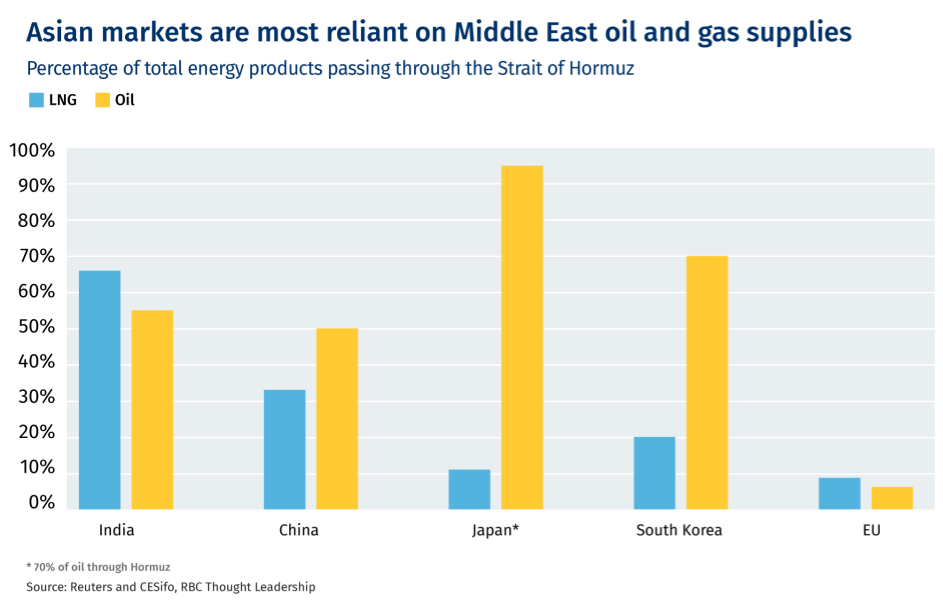
Energy Shock: 8 charts that explain the global oil and gas fallout
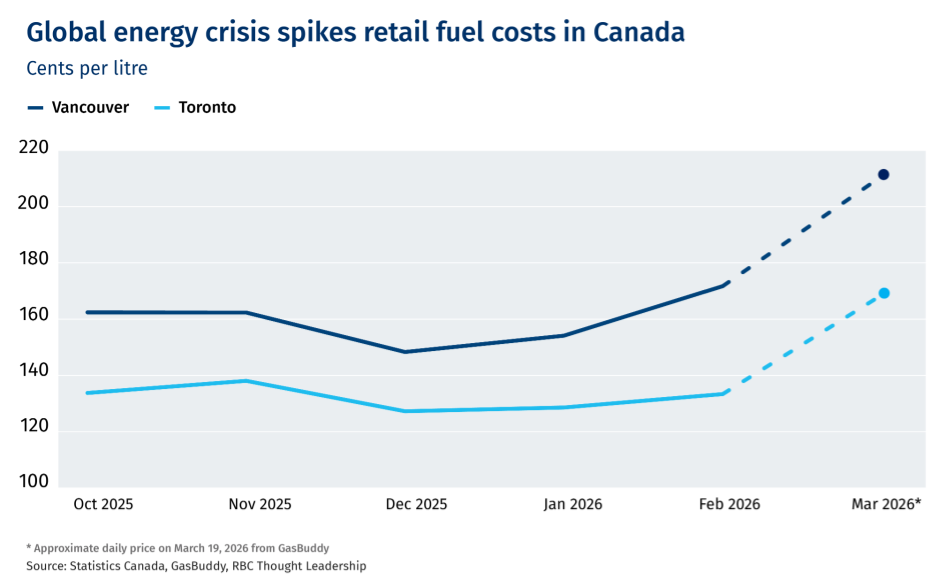
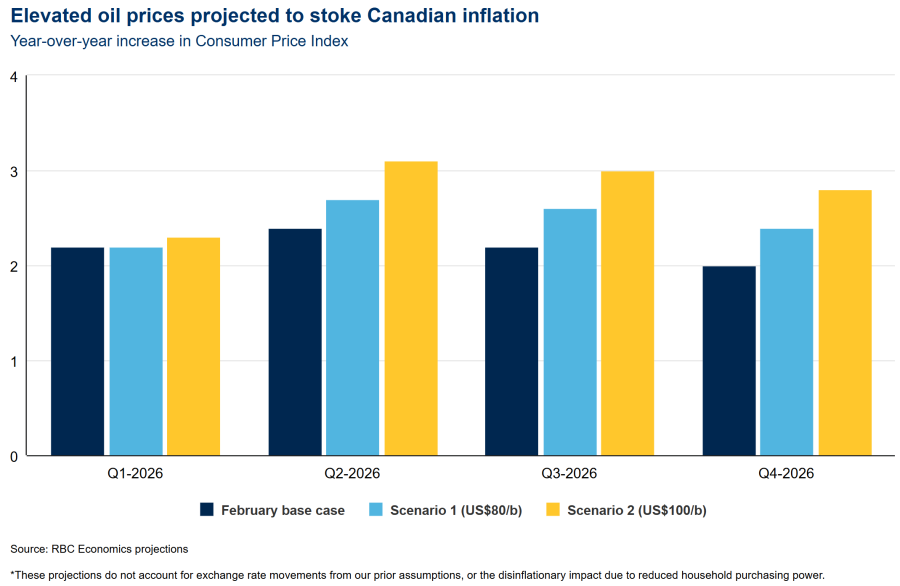
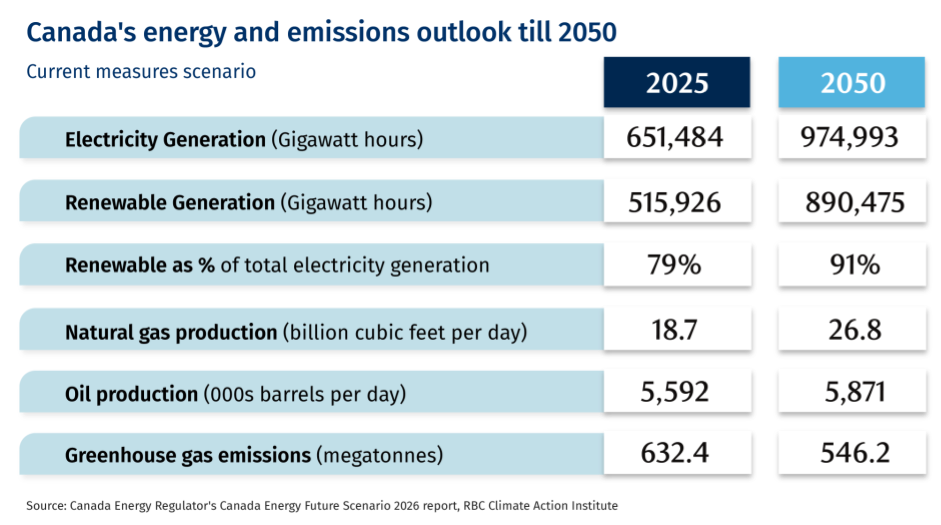
Climate Crunch: Canada charts new scenarios for a new energy era
Interesting tidbits
- AI is sniffing more success ahead. Scientists are working on an e-nose AI technology, which can distinguish between aromas and scents a thousand times more precisely than humans. While limited smell data exists on the Internet—unlike text and images—researchers are exploring technologies that can sense volatile gases in buildings, detect deadly infections in a person's breath, or develop perfumes cheaply—or even detect counterfeits. NASA's scent technology, originally developed to track astronauts' health during long-duration missions, could soon be commercially deployed in barns to analyze livestock health.
- 25th. Canada’s ranking in the latest World Happiness Report, from 18th place last year and 7th place a decade ago—the precipitous drop is primarily driven by social media. The U.S. was ranked 24th, while Finland, Denmark and Iceland are the three happiest places on earth.
Today’s funny
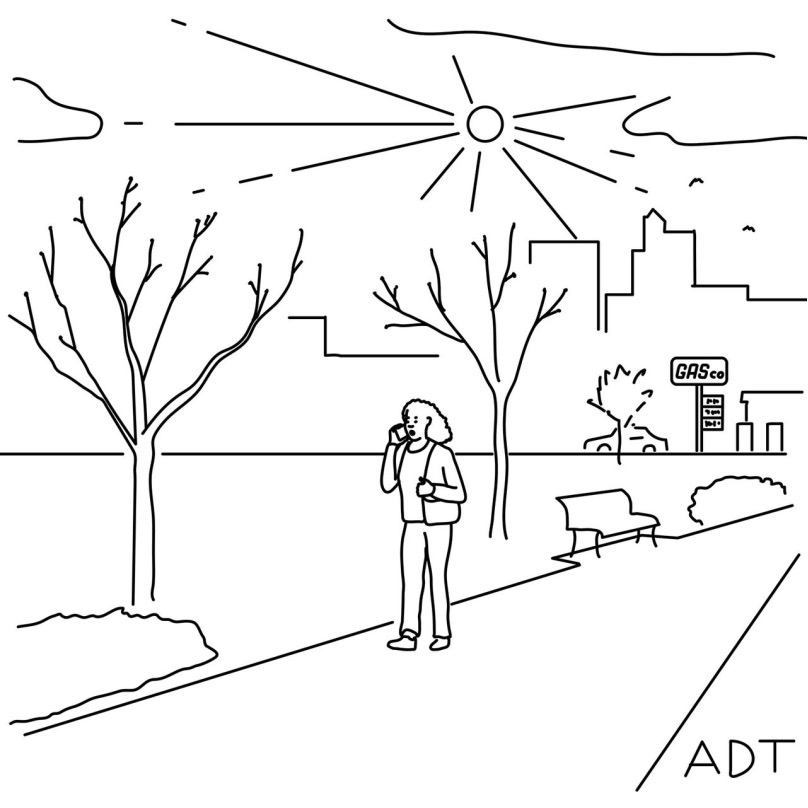
“I thought I’d walk to work because the weather is nice, and because I abandoned my car at the gas station when I saw the prices.”
REMINDER: Most of my new clients come to me via word of mouth as I don’t advertise or engage in marketing programs. Please keep my team in mind if you hear of anyone with over $1 million in investable assets who is in need of wealth management services.
This information is not investment advice and should be used only in conjunction with a discussion with your RBC Dominion Securities Inc. Investment Advisor. This will ensure that your own circumstances have been considered properly and that any action is taken based upon the latest available information. The strategies and advice in this report are provided for general guidance. Readers should consult their own Investment Advisor when planning to implement a strategy. Interest rates, market conditions, special offers, tax rulings, and other investment factors are subject to change. The information contained herein has been obtained from sources believed to be reliable at the time obtained but neither RBC Dominion Securities Inc. nor its employees, agents, or information suppliers can guarantee its accuracy or completeness. This report is not and under no circumstances is to be construed as an offer to sell or the solicitation of an offer to buy any securities. This report is furnished on the basis and understanding that neither RBC Dominion Securities Inc. nor its employees, agents, or information suppliers is to be under any responsibility or liability whatsoever in respect thereof. The inventories of RBC Dominion Securities Inc. may from time to time include securities mentioned herein.