Rita Li, CFA, MBA, CFP
Senior Portfolio Manager, Wealth Advisor
August 1, 2026
I remember a time not too long ago, the macro environment was so stable that for a long stretch of time, it felt as if nothing out of ordinary was happening and everything was going as expected. The markets moved like a fine-tuned machine.
Today’s environment could not be more different. With the constant shifts in geopolitics and trade policies, students and executives alike find it difficult to navigate important decisions.
In times of uncertainty, we re-examine the fundamental pillars of the economies and try to look around the corner for potential upsets. There are three themes that dominate the current investment landscape: great power competition, rising national debts and AI arms race. We will address the national debts first as it filters through to the real economy in the forms of higher funding costs, higher inflation and/or slower economic growth.
Many of the largest economies today are heavily indebted to domestic as well as foreign creditors. Take U.S. for example, its Debt as a percentage of GDP is now sitting at 124% and interest payments as a percentage of GDP is 4%. In Canada, we are at 114% Debt to GDP and 3.5% in interest payments as a percentage of GDP.
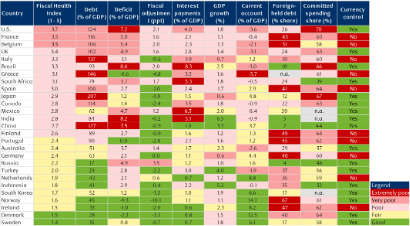
Source: Federal Reserve Bank of New York, Bloomberg, RBC GAM.
What this translates into is bond holders demanding higher interest rates, especially on longer dated debt with higher inflation risks. If the governments choose to keep interest rates artificially low, then it will likely lead to asset bubble as it did in the past.
We will be monitoring inflation adjusted rates or real rates of return for fixed income to determine their attractiveness as part of the portfolio composition, especially for clients that have already entered retirement.
A New Era in Geopolitics
The established geopolitical order and trade agreements are fracturing on several fronts.
The Asia Pacific pivot started with the Obama administration only intensified under the Trump administrations. This is understandable given China now account for close to 30% in share of global manufacturing value[1].
U.S. has directed domestic industries to be less reliant on global supply chains and as a result, tariffs are likely to be used more frequently as a policy tool to protect and foster domestic industry growth. Instead of upholding the long-standing free trade policies, U.S. will likely continue to engage in bi-lateral negotiations and seek advantages to itself.
In the U.S. Iran war, on the heel of a great victory in Venezuela, the U.S. political leaders may have expected a swift victory and capitulation from Iran. However, Iran has demonstrated its ability to endure intense bombing and in turn cause significant disruption in the Strait of Hormuz.
Analysts attribute the lack of immediate impact from the Strait’s disruption to three key factors: Industries and countries can reduce consumption in the short term, countries have been releasing their strategic petroleum reserves to limit price spikes and lastly, China has significantly reduced their oil imports since the beginning of the war.
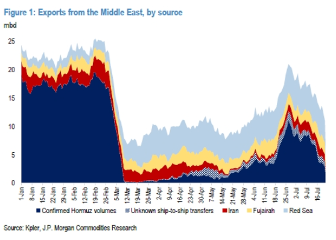
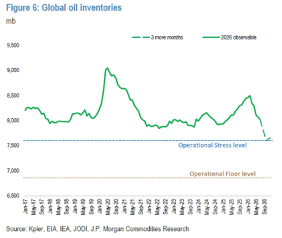
JPM believe that China may be able to operate with crude imports roughly four million barrels per day below normal for another three months. The firm estimates that each additional month of disruption could add roughly US$7 to US$8 per barrel to Brent, with a three-month extension lifting the monthly average toward US$114, that roughly translates into US$4.50 gasoline prices.
Even though US has superior military power, air offence alone is unlike to force a capitulation from Iran. In the current set up, the conflict can last longer still without a true MOU for peace.
U.S. Earnings and AI Capex Growth
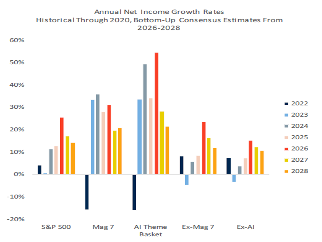
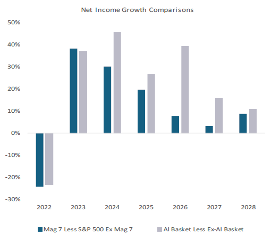
U.S. earnings are on pace to deliver strong double-digit year over year growth. However, one lingering concern is much of the growth is hinged on the AI capex spend by the large cap Magnificent 7 companies. The concentration in one theme makes earnings more vulnerable to AI developments. Companies are under increasing pressure to show profitability or productivity growth from their AI investments.
The current expectation is for S&P500 net income to peak in 2026, then decelerate in 2027 and 2028 but still demonstrate growth. The key is for investors to observe sustainability of the current AI driven earnings boom. The Magnificent 7 has been driving earnings growth for many years. Recently, the baton has passed to the semi-conductor companies, memory chip producers as well as datacenter built-out beneficiaries. Investors are beginning to questions where the next leg of growth will come from out of the S&P 500 companies.
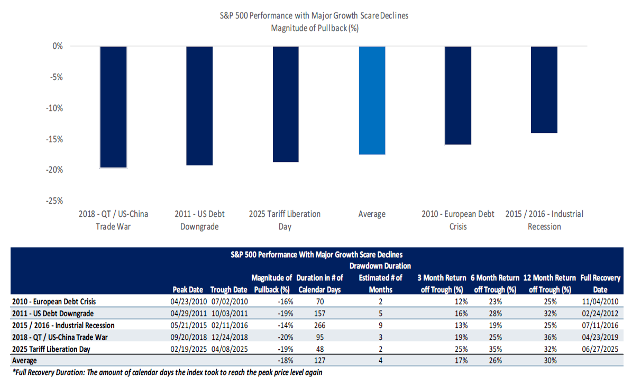
Some clients wonder about the strong market performance despite consistent headline risks from the U.S. -Iran war. It is likely that we will see more volatility as we approach the midterm elections in November. Historically, we have observed more than 10% correction about 60% of the time since 1928. However, about 70% of the time, the S&P500 has finished the year positively.
In the recent two decades, the average recovery period has been four months. To avoid making emotional decisions, the winning formula has been to remain disciplined in adhering to an asset allocation that can help clients achieve their financial goals.
Revisiting The Major, Post -GFC/ Pre-Covid Drawdowns
Source: RBC US Equity Strategy, Bloomberg.
SpaceX and Other Mega IPOs
This is also a year for scheduled mega IPOs. Anthropic and OpenAI are expected to raise around US$60billion each. SpaceX came to the market with a US$75billion IPO offering in June this year. These are some of the fastest growing and yet to be profitable companies.
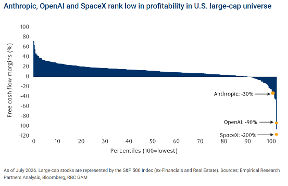
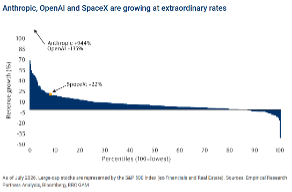
Given the high growth profile, these IPOs are priced at extraordinarily high multiples. SpaceX was priced at close to 96x price to sales ratio. Since we may see more high-profile IPOs in the coming year, it is worth keeping in mind that historically expensive US IPOs have consistently delivered lower returns:
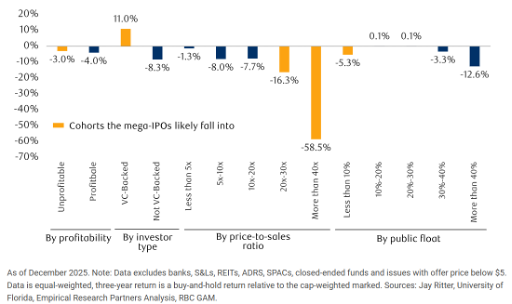
The former Bank of Canada governor Stephen Poloz wrote about the uncertain time we are in within his book “The next Age of Uncertainty: How the World Can Adapt to a Riskier Future.” We are indeed in a time of uncertainty but also a time of extraordinary growth driven by AI, which many technologists have pronounced to be a revolution that is greater in magnitude than the internet. Throughout history, we learn that technological advancement is one of the driving forces in long-term growth. The discovery and advancement of the internet fueled many boom-and-bust cycles. Many market veterans use the 1998–2000 tech bubble as a price analog for today. This is why we need to be even more cautious about valuation metrics and beware not to chase thematic trends that have developed too quickly.
The Bottomline
The investment landscape in 2026 presents a complex interplay of significant challenges and remarkable opportunities. While elevated national debt levels, geopolitical tensions, and concentrated earnings growth in AI-dependent sectors pose genuine risks, the long-term historical record remains reassuring.
The key to navigating this uncertainty is disciplined, strategic planning. We recommend that clients remain committed to their long-term asset allocation strategies rather than reacting to headline volatility. Valuations in emerging growth areas—particularly high-flying IPOs—warrant careful consideration, but the transformative potential of AI and other technological advances should not be dismissed.
For our clients, this is a moment to stay focused on your financial goals, maintain appropriate diversification, and work with us to ensure your portfolio is positioned for both near-term volatility and long-term growth. The companies and sectors driving today's market may shift, but the principles of sound investing remain constant.
Rita Li works with professionals, business owners, and high-net-worth families to provide tailored investment advice, risk management, and financial planning solutions. Her team includes professionals with deep expertise in taxation, insurance, and legal planning, enabling the delivery of a comprehensive wealth management experience. Rita is a CFA® charter holder and Certified Financial Planner (CFP®) and holds an MBA from the Richard Ivey School of Business. Rita began her career in the investment industry in 2007 and has developed in depth expertise across different assets classes in Equities, Fixed Income and Equity Derivatives at various prestigious financial institutions.
This information is not investment advice and should be used only in conjunction with a discussion with your RBC Dominion Securities Inc. Investment Advisor. This will ensure that your own circumstances have been considered properly and that action is taken on the latest available information. The information contained herein has been obtained from sources believed to be reliable at the time obtained but neither RBC Dominion Securities Inc. nor its employees, agents, or information suppliers can guarantee its accuracy or completeness. This report is not and under no circumstances is to be construed as an offer to sell or the solicitation of an offer to buy any securities. This report is furnished on the basis and understanding that neither RBC Dominion Securities Inc. nor its employees, agents, or information suppliers is to be under any responsibility or liability whatsoever in respect thereof. The inventories of RBC Dominion Securities Inc. may from time to time include securities mentioned herein. RBC Dominion Securities Inc.* and Royal Bank of Canada are separate corporate entities which are affiliated. *Member-Canadian Investor Protection Fund. RBC Dominion Securities Inc. is a member company of RBC Wealth Management, a business segment of Royal Bank of Canada. Insurance products are offered through RBC Wealth Management Financial Services Inc. (“RBC WMFS”), a subsidiary of RBC Dominion Securities Inc. When providing life insurance products in all provinces except Quebec, Investment Advisors are acting as Insurance Representatives of RBC WMFS. In Quebec, Investment Advisors are acting as Financial Security Advisors of RBC WMFS. RBC DS WMFS is licensed as a financial services firm in the province of Quebec. ®Registered trademarks of Royal Bank of Canada. Used under licence. © 2026 RBC Dominion Securities Inc. All rights reserved.
[1] Q1 2026 World Manufacturing Production and Trade by UNIDO.