
Vince Boschman
October 29, 2026
Every market cycle seems to have its defining concern. Sometimes it's inflation, interest rates, or slowing economic growth. Other times it's geopolitical events that suddenly dominate the headlines and leave investors wondering what comes next.
The current conflict in the Middle East is one such example. Disruptions to global energy supplies have pushed oil prices higher, increased inflationary pressures, and raised new questions about economic growth. While no one can predict how long these events will last, history has shown that markets have always had to navigate periods of uncertainty.
One of the challenges during times like these is separating temporary disruptions from lasting changes. Rising energy prices can create short-term pressure on consumers, businesses, and central banks. If those pressures persist, they may influence interest rate decisions and slow economic activity. These are real risks that deserve attention, but they don't necessarily change the long-term outlook for well-managed businesses or diversified portfolios.
It's also important to remember that not every region or industry is affected equally. Energy-producing countries often prove more resilient than those that rely heavily on imports, while some sectors are naturally better equipped to weather higher input costs than others. These differences reinforce the value of diversification. Rather than trying to predict which area of the market will perform best, a balanced portfolio allows investors to participate in opportunities while reducing reliance on any single outcome.
Perhaps the most encouraging aspect of today's environment is that the underlying fundamentals remain relatively healthy. Corporate earnings expectations continue to be constructive, and while economic growth may be moderate, many companies have demonstrated an impressive ability to adapt to changing conditions. Markets often begin looking ahead long before the headlines improve, which is why some of the strongest periods of recovery have occurred when uncertainty still feels elevated.
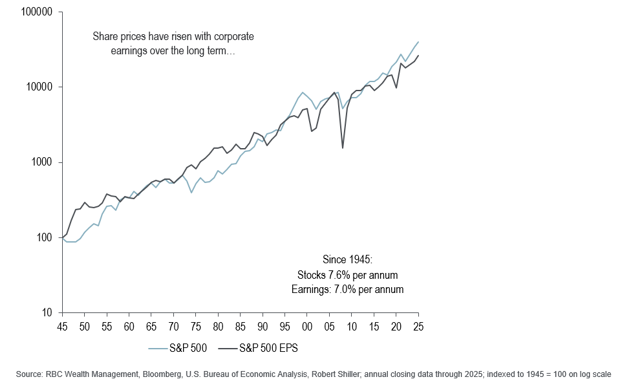
Periods of volatility can certainly test our patience. In fact, meaningful market corrections are a normal part of investing and have occurred throughout history—even during years that ultimately delivered strong long-term returns. While uncomfortable in the moment, they serve as a reminder that investing is rarely a straight line.
Rather than trying to anticipate every headline or geopolitical development, we believe investors are best served by focusing on the factors they can control: maintaining a diversified portfolio, owning quality businesses with growing earnings, and staying committed to a long-term financial plan. Those principles have guided investors through wars, recessions, inflationary periods, and countless other challenges.
The headlines will inevitably change. They always do. A disciplined investment strategy, however, is built to endure long after today's uncertainty has passed.