Wealth Management Review - Summer 2026
Access the PDF version of our Summer Newsletter 2026 here.
Access the PDF version of our Summer Newsletter 2026 here.

Robert Bryan
Senior Branch Manager & Senior Investment Advisor
July 16, 2026
Debunking mutual fund and ETF myths
Mutual funds or ETFs? The choice between them is one of the most misunderstood decisions investors face, including whether it has to be one or the other. But both are valuable tools for building diversified portfolios.
Myth 1: ETFs are index-tracking and mutual funds are active
A common misconception is that ETFs are strictly index-tracking investments (passive), while mutual funds are exclusively actively managed. In reality, both vehicles can be either actively managed or index tracking. And actively managed ETFs now represent 37% of all ETF assets.
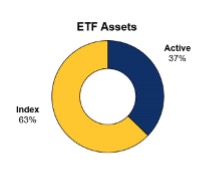
Source: IFIC, Simfund, RBC GAM. Active includes strategic beta ETFs. ETF results are adjusted to remove the impact of cross-holdings of ETFs and MF holding ETF of the same firm. As of Dec 31, 2025. Values in 000s. "Active" ETFs attempt to outperform an index. "Index" ETFs attempt to track an underlying index. Active n = 895. Index n = 560.
For a long-term investor, the difference between a mutual fund or ETF isn’t material and shouldn’t have an impact on their decision making.
Myth 2: All mutual funds are expensive, and all ETFs are cheap
Another common misconception revolves around fees. While actively managed funds can have higher fees, the cost difference largely depends on the investment strategy - not the vehicle itself. Comparing mutual funds to ETFs on cost alone is misleading, as fee dispersion exists in both vehicles.
You’ll notice that 57% of ETFs in Canada charge management fees of 40 basis points or more, which doesn’t necessarily fit the “ultra-low cost” perception.
This demonstrates that investors drawn to ETFs solely for perceived low costs may still be unknowingly buying higher fee strategies — as ETFs aren’t automatically cheaper.
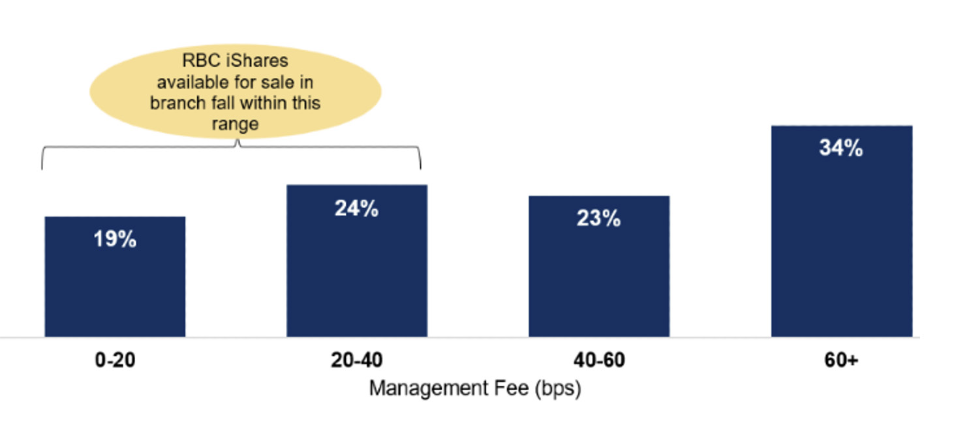
Source: RBC GAM, Bloomberg, Morningstar. ETFs: n = 1455. ETF results are adjusted to remove the impact of crossholdings of ETFs and MF holding ETF of the same firm. As of December 31, 2025. 1. RBC Index ETF Funds are mutual funds wrapping ETFs. RBC iShares available for sale in branch does not include the cost of advice.
Soundbite: Fees vary by investment strategy and asset manager – not by vehicle. Look at the longer-term track record of any strategy and manager you consider.
Why do we still like infrastructure, funds & ETFs?
• Provides exposure to companies involved in the infrastructure sector, including transportation, water utilities, and electricity services, with a focus on companies listed in North America.
• Resilience: In the face of elevated inflation and macroeconomic uncertainty, infrastructure offers inflation-linked, contract-based cash flows that provide stability.
• Infrastructure can play various roles in a portfolio
• Low Volatility – Essential services tend to remain in demand regardless of the present economic cycle
• Diversification – Infrastructure has exhibited lower correlation with other traditional asset classes, like equities
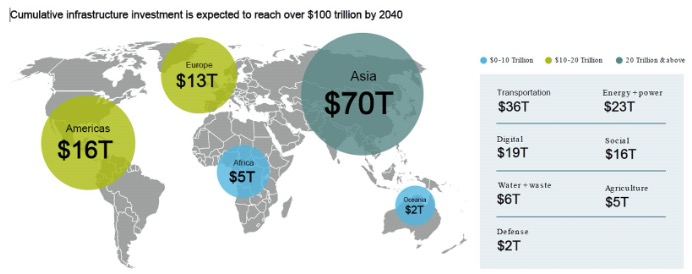
Source: Blackrock using data from McKinsey, “The infrastructure moment” iShares Global Infrastructure, FORCES IN FOCUS Infrastructure
Finally, the Canadian dollar has also moved sharply in recent weeks – but this time to its detriment against the US dollar. Uncertainty surrounding the renegotiation of CUSMA together with the prospect of further US interest rate hikes has undoubtedly played a major role. At current levels, however, we believe the balance of risks has become more favorable for the Canadian dollar over the medium term.
In this regard, our economics colleagues’ base case calls for a gradual appreciation of the Canadian dollar, with USD/CAD reaching 1.33 by the end of the first quarter of 2027.
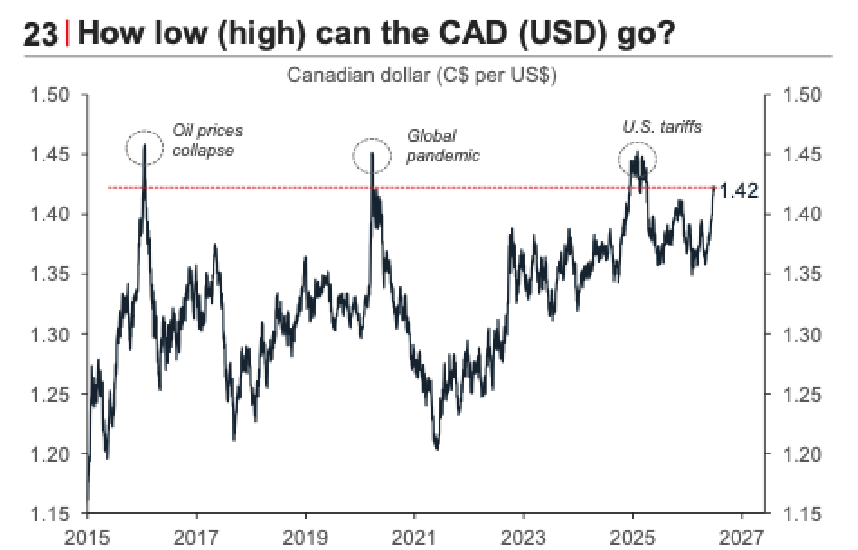
Source: NBF Economics and Strategy, Forex, June 2026
Summer investing: why “sell in May” doesn’t hold up
For those unfamiliar, this adage suggests that stocks underperform during the six months from May to October, suggesting investors should shift to bonds until winter. It’s been around for a while and gets plenty of attention this time of year. I’d rank this adage right up there with the Super Bowl indicator and Groundhog Punxsutawney Phil’s acumen.
Let’s dig into this theory and show why you should stay invested through summer rather than trying to time the market based on a calendar.
Where it all started
Where it all started The “Sell in May and go away” adage originated in 18th-century Britain, referring to wealthy London elites leaving for summer holidays. Wall Street traders later adopted it as they vacationed during summer months, creating reduced trading volume and supposedly weaker market momentum. Looking at historical S&P 500 Index data since 1928, summer months have in fact underperformed winter, averaging 2.6% versus 5.2% returns (ignoring dividends), respectively. So, the adage appears to have some truth to it on the surface.
What the data really shows
The chart below shows the average monthly returns for the S&P 500 from 1928 to 2026. This is where the “Sell in May” strategy really falls apart.
• September is a culprit. This single month has averaged -1.1% returns, making it the worst performing month of the year. This is a big part of why summer months show lower averages. There are many theories about why September has historically underperformed, but major market crises like the dot-com bubble burst, global financial crisis, and COVID-19 inflation panic all happened to occur in September.
• July tells a different story. It’s actually been the best performing month historically, averaging 1.7% returns. Those who sold in May would miss the strongest month of the entire year.
Interestingly, the summer period had both the worst performing month (September at -1.1%) and the best performing month (July at +1.7%). This variation suggests that the calendar doesn’t drive returns.
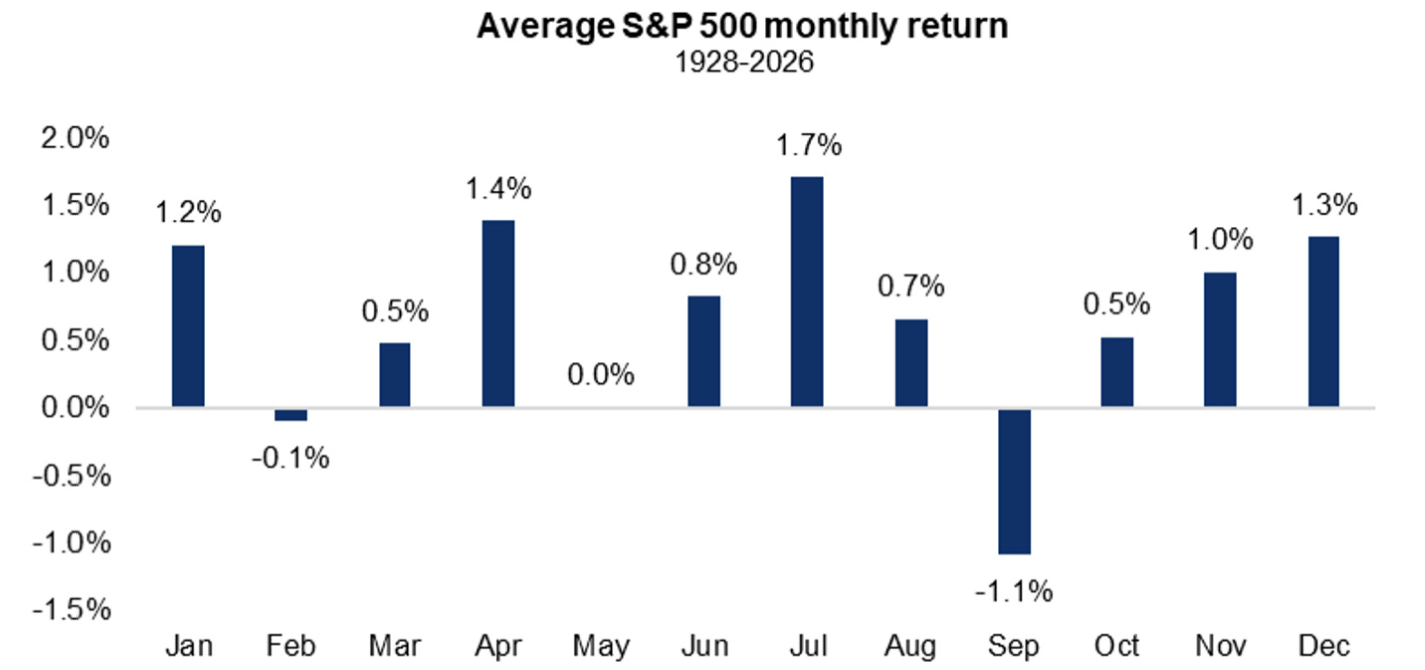
Source: Morningstar, RBC GAM. S&P 500 Price Return Index in USD. Monthly return data from February 1, 1928, to April 30, 2026.
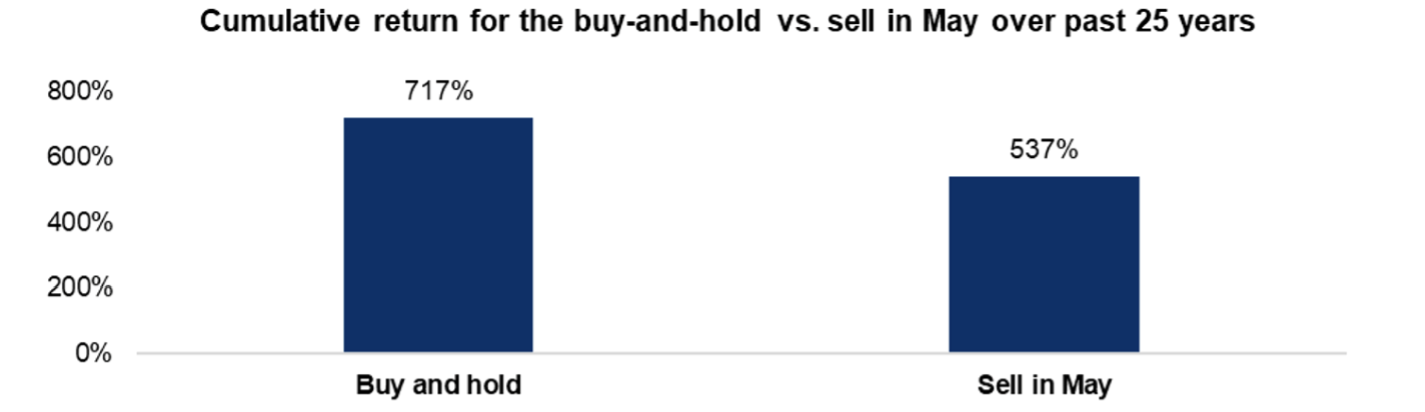
Source: Morningstar, RBC GAM. Stocks represented by S&P 500 Total Return Index in CAD. Bonds represented by U.S. Aggregate Bond Index in CAD. Period ranges from May 1, 2001, to April 30, 2026.
Empty Bowls
The team and I are at it again! Dean, Brittany, and I dusted off our painting smocks and rolled up our sleeves to paint bowls for Empty Bowls fundraisers supporting our local food bank, Stratford House of Blessing. The theme of my bowl once again… Sailing! Last year, through ticket sales, sponsorships, and donations, they were able to raise ~$44,000 to help support families across our communities.
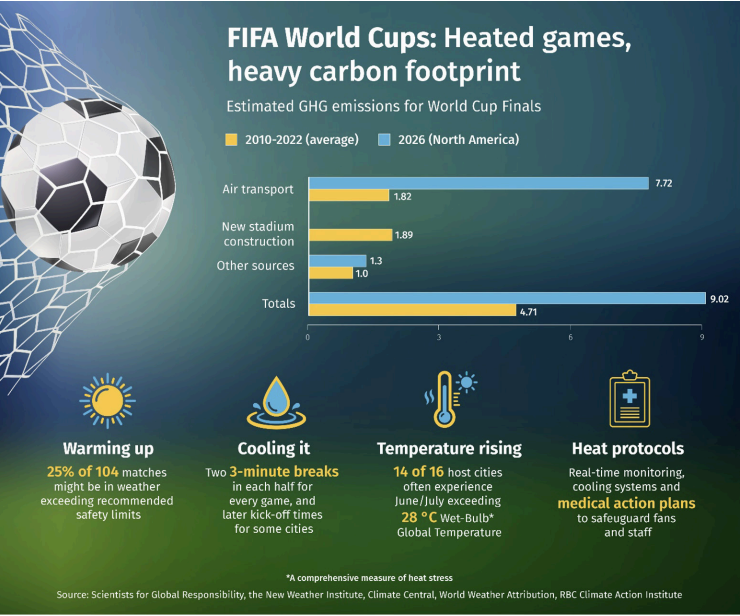
FIFA World Cups: 2010-22 vs. 2026
Stratford General Hospital Charity Golf Tournament
Ok, this is not a picture of the 2026 RBC Canadian Open Champ, however, it is a picture of the champ of the RBC DS Putting Competition at the Stratford General Hospital Foundation charity golf tournament. The tournament raised $35,300 this year and this is my 23rd straight year that I have been the major sponsor. Between RBC Foundation, my sponsorship, and the funds raised from the putting competition, I have raised over $35,000 for the SGHF. Thank you Stratford and Community!!

Paper or Digital - You decide!
This newsletter has been our way of staying connected throughout the year, sharing insights from the investment realm, as well as what is going on in our own backyard. As the world is vastly changing, we realize that preferences do too. To make sure you’re receiving it in the way that suits you best, whether that’s paper or electronic, we’re happy to offer both options. If you’d like to keep things as they are, no action is needed. If you’d prefer to make a change, simply reach out to Brittany at Brittany.Leppington@rbc.com and we’ll take care of the rest.
About the Bryan Wealth Management Group
Robert Bryan, B.Comm, FMA, CIM, FCSI Branch Manager, Senior Portfolio Manager & Investment Advisor robert.bryan@rbc.com
Dean McKelvie, PFP Associate Advisor dean.mckelvie@rbc.com
Brittany Leppington Associate brittany.leppington@rbc.com
RBC Dominion Securities 187 Ontario St. Stratford, ON N5A 3H3 Phone: 519-271-4611 Toll-free: 1-800-265-4596 robertbryan.ca
Extended wealth management team
Steve Wiffen, CLU, CFP, CH.F.C Estate Planning Specialist RBC Wealth Management Financial Services
Shannon Row-Ewing, BA, LL.B Will & Estate Consultant RBC Wealth Management Services
Scott VanEngen Financial Planning Specialist RBC Wealth Management Services
Chelan Mansour Senior Trust Advisor RBC Royal Trust
This information is not investment advice and should be used only in conjunction with a discussion with your RBC Dominion Securities Inc. Investment Advisor. This will ensure that your own circumstances have been considered properly and that action is taken on the latest available information. The strategies and advice in this report are provided for general guidance. Readers should consult their own Investment Advisor when planning to implement a strategy. Interest rates, market conditions, special offers, tax rulings, and other investment factors are subject to change. The information contained herein has been obtained from sources believed to be reliable at the time obtained but neither RBC Dominion Securities Inc. nor its employees, agents, or information suppliers can guarantee its accuracy or completeness. This report is not and under no circumstances is to be construed as an offer to sell or the solicitation of an offer to buy any securities. This report is furnished on the basis and understanding that neither RBC Dominion Securities Inc. nor its employees, agents, or information suppliers is to be under any responsibility or liability whatsoever in respect thereof. The inventories of RBC Dominion Securities Inc. may from time to time include securities mentioned herein. RBC Dominion Securities Inc. and Royal Bank of Canada are separate corporate entities which are affiliated. Member-Canadian Investor Protection Fund. RBC Dominion Securities Inc. is a member company of RBC Wealth Management, a business segment of Royal Bank of Canada. ® / TM Trademark(s) of Royal Bank of Canada. Used under licence. © 2026 RBC Dominion Securities Inc. All rights reserved.