Paul Chapman
Senior Portfolio Manager & Wealth Advisor
August 30, 2026
“Everyone wants to be a beast. Everyone wants to be the best. But very few people are willing to do what it actually takes. Because what it takes is boring. It is waking up at 4:00 AM. It is shooting the same shot a thousand times. It is watching the film when you are tired. People fall in love with the result, but they hate the process. You have to fall in love with the boredom. You have to fall in love with the repetition. If you can find joy in the mundane work that no one else sees, the lights will eventually shine on you.” – Kobe Bryant
Note that the contents of this memo are all my thoughts, and not the views of RBC Dominion Securities. As well, no part of this content was AI-assisted or created.
YOU CAN LISTEN TO THE ABBREIVATED PODCAST VERSION OF THIS NOTE HERE
Friends & Partners,
Never a dull moment out there – especially given that it’s supposed to be the slowest month of the year in August! We got some wobbles in markets, especially the big one – the bond market, which inherently scares the stock market (and governments!).
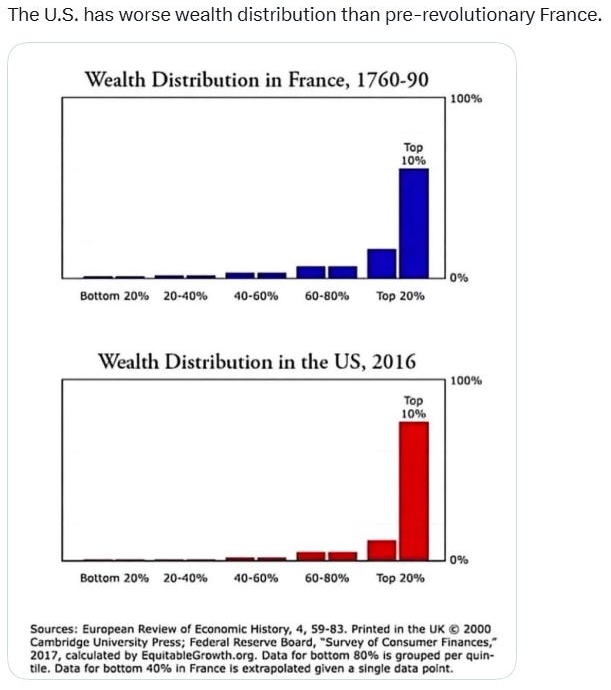
One thing that is interesting is that people are more negative overall (with life in general) than they’ve ever been, even in the face of all the positives we enjoy today. US survey data shows some of the deepest, broadest and stubbornest economic pessimism ever recorded even while jobs are plentiful and the stock market is booming. I recently read a great essay on this, and one line captures the situation: “Americans may be experiencing prosperity, but they’ve lost the ability to enjoy it.” There’s no easy way to solve this. But here are the contributing factors I believe:
- Americans have stopped believing the economy can be good and lost the willingness to admit they are doing well.
- Research shows “a sudden, sharp and historically unprecedented decline in self-reported happiness” across nearly all demographic groups and geographic areas. This happiness crash coincides with a collapse in institutional confidence and civic trust.
- Negativity drives engagement on social media, reinforcing the unhappiness.
- The country’s affluence might be contributing to its pessimism. There is no quick or simple fix here:
But, back to the market. The main issue currently is bond yields moving up. And several factors are driving bond yields higher worldwide: the war in the Middle East seems never-ending now and boosts yields amid concerns that soaring oil prices will continue to push inflation. The war, along with other geopolitical crises, is bound to increase defense spending and widen already bloated government deficits. So, the fiscal situation in a number of countries will go from bad to worse. That doesn’t help.
Japan's bond yield has risen the fastest among developed economies as the Bank of Japan has raised its official interest rate to stop a falling yen from boosting inflation. This is forcing ‘carry traders’ to unwind a very popular trade in which they financed with cheap credit raised in Japan.
To top it off, new corporate bond issuance rose to a record high of almost $3 trillion over the past 12 months, mainly as hyperscalers tapped debt markets to finance the AI buildout. At the same time, governments continue to run large fiscal deficits, with the IMF projecting global public debt will reach 100% of GDP by 2029. The result is growing competition for capital.
So that’s why bond yields have been moving up, scaring stock markets.
On the other hand, some of the recent rise in US bond yields reflect the economy's strength. The 10-year US Treasury yield is arguably just getting ‘back to normal’ in its levels, which is, in effect, a vote of confidence in the US economy. As long as rates don’t skyrocket, it may be manageable for markets.
The elephant in the room that is becoming more of a concern is the sheer amount of debt that the US government has. This is a big one, and something I have been waiting to add to this note in detail for brevity’s sake. I first wrote about it a few years ago in a couple of Partner Memos, as it is clearly a problem that will come home to roost, but wasn’t an immediate market concern. That is finally changing – which was a matter of time. It still may not be today’s problem, but it will be at some point. I will expand on this topic in the coming months as it will likely be ground zero (or a significant contributing factor) for the next crisis.
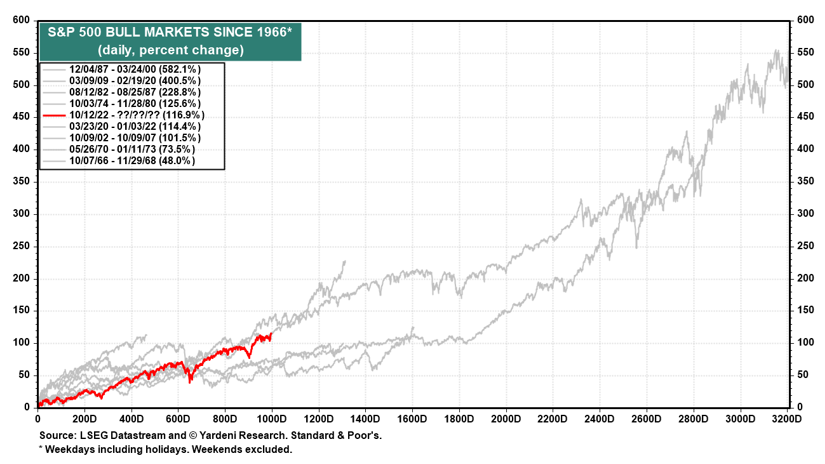
In the medium and longer term, there remains a solid outlook for the economy, inflation, rates, and earnings, and I remain generally constructive on that front. And in the midst of a generally strong stock market that has everyone asking if we are ‘near the top’, it’s a good moment to ask where this bull market fits in the historical record. The answer is that it's in the middle. Bull markets do not die of old age or of accumulated gains. They usually die when earnings roll over. That isn’t happening yet.
The current bull market has been compared to the dot-com era's meltup/meltdown scenario. If the late 1990s ended with a stock-market meltup, will the next few years be the same? Back then, it was a FOMO-driven meltup; everyone feared being left out. This time, FEMO, or fabulous earnings momentum, is the driving force. The question is if the earnings growth is sustainable?
The AI ‘bubble’ is certainly a worry for many. The arms race to build out AI ecosystems will intersect with the market’s willingness and ability to foot the bill. Investors will eventually need a line of sight on ROI and profitability and cash flow – something that the tech bubble hit eventually, and we know how that ended. Times are easy for capital funding now, but like in 2008, credit for a sector can dry up when the payback doesn’t come to fruition. The argument today is that we are still in early innings, and capital is flowing.
As Peter Lynch said, "Far more money has been lost by investors preparing for corrections, or trying to anticipate corrections, than has been lost in the corrections themselves."
I will leave you with a quote from a great retired portfolio manager Bob Decker: “The recent earnings season exceeded all expectations, thus creating the melt-up we have just seen. Now the hard part begins. Two critical issues are facing markets in the Fall - the post-Jackson Hole Federal Reserve meetings and the Midterms. If you want catalysts, there are a couple right there. Market timing is a difficult game to play. But like in blackjack, when the deck is tilted against you, like it is for the market bulls, you just might want to take something off the table.” Managing through these environments is what we get paid for, and why work tirelessly for our clients. There are opportunities and interesting strategies, they’re just not out in the open like they have been for the last decade.
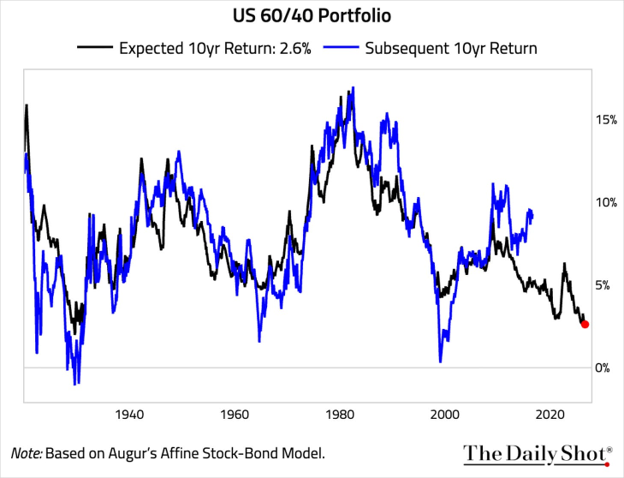
And work we will. Because many passive investors could well have crappy returns in the coming years. Something called the Affine Stock-Bond Model, which simultaneously fits equity and bond risk premia, has been remarkably accurate for many years, and points to low expected returns for the 60/40 portfolio over the coming decade (like 2.5%):
Other Interesting Things To Highlight
I am excited to be the presenting sponsor for the Georgian Triangle Humane Society’s marquis annual event on October 14th – this year they’re introducing Dueling Pianos, featuring an incredible performance by the Great Canadian Dueling Pianos.
Enjoy an unforgettable evening of live, interactive entertainment, chef-inspired food stations, and plenty of laughs, all in support of the pets and people who rely on the Georgian Triangle Humane Society. You can get tickets HERE before they go on sale to the public soon.

I am proud to support My Friend’s House, and their upcoming event on Oct 1 at Osler Ski Club. Join us for an inspiring and interactive evening where creativity and community come together. HeArt of Red: Live Painting Experience celebrates artistic expression while raising vital funds for My Friend’s House in support of women and children facing gender-based violence and abuse in South Georgian Bay. Throughout the evening, guests will witness the powerful process of art unfolding in real time. Ten talented artists will take part in two live painting rounds, each lasting 30 minutes. As the artists bring their canvases to life, attendees are invited to be part of the experience by casting their votes during each round. Artwork created during the evening will be available through a silent auction, while the finalist’s pieces will be showcased in an exciting live auction at the end of the night. More than an art event, HeArt of Red: Live Painting Experience is a chance to come together in support of a shared vision - a community where everyone can live free from gender-based violence and abuse and feel safe, respected, and supported. Purchase tickets HERE

This is a tough one (for me and Nancy) – our son is embarking on an adventure, heading to school in Vermont for grades 11/12. Drop off was this past weekend, and was an emotional one. Enjoy the journey, Stanley…


More Negative Points to Ruin Your Day
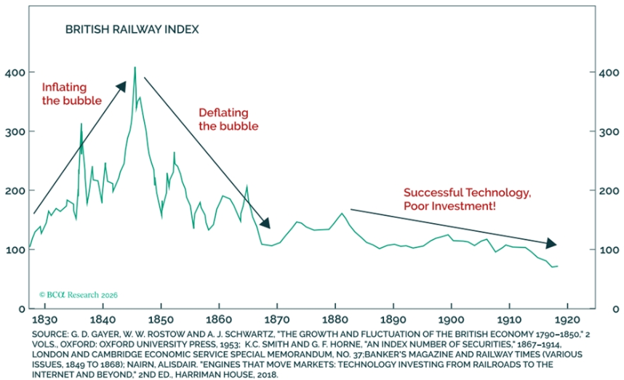
Are we in tech bubble 2.0? Investors remain mindful of when today’s AI investment cycle may produce excess capacity or disappointing returns. Looking back through history, investors can point to many examples of transformative technologies that created important economic benefits yet failed to produce worthwhile returns for many of the investors financing the associated build out. BCA highlights the 19th-century railway boom in the chart below as one of many examples. Though railways reshaped the economy, over time railway equities eventually gave back much of their gains built up during the investment boom.
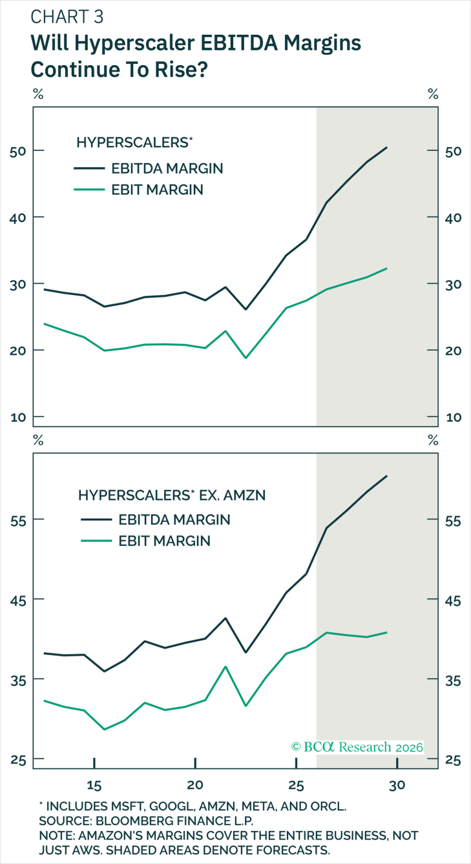
On this theme, Analysts expect hyperscaler EBITDA margins to rise to roughly 50% by decade-end from about 30% in recent years, a critical assumption underpinning the economics of massive AI capital spending. Is this realistic?
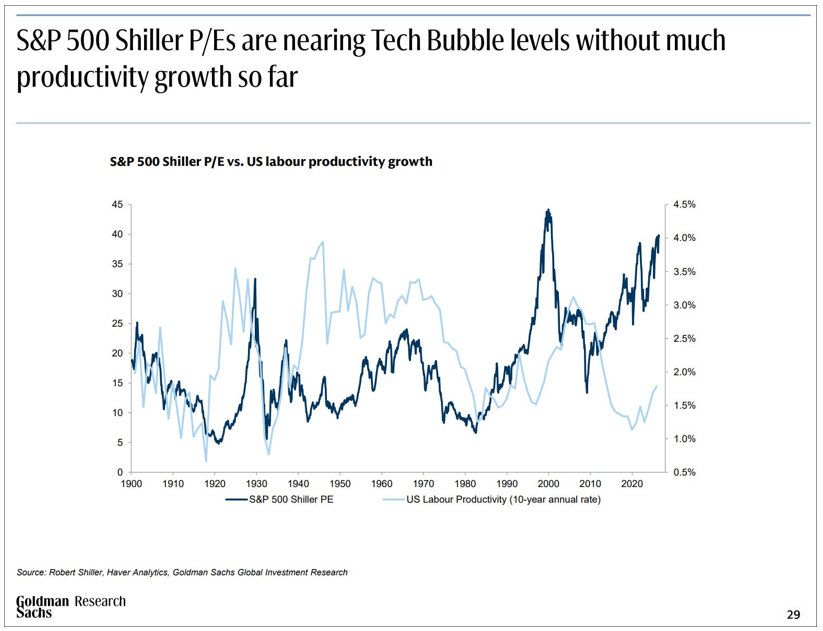
In terms of valuation levels, this isn’t good…
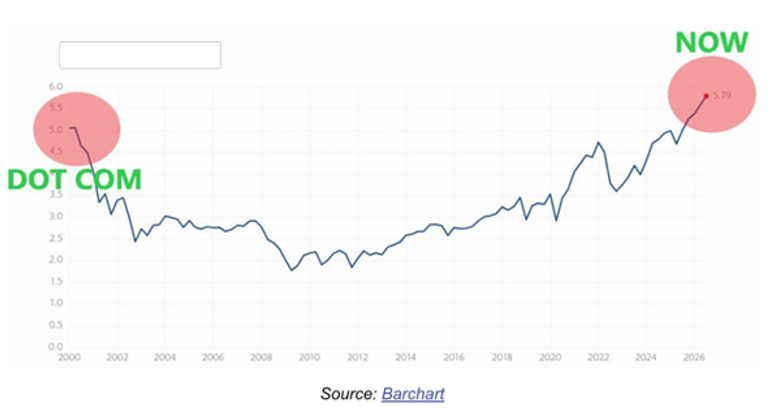
The price-earnings ratio is probably the most familiar stock valuation metric, but it’s not the only one. This chart below shows the S&P 500 price-book value ratio, and it recently surpassed the dot-com era peak set back in 2000. In that case, a painful bear market followed. “Book value” is essentially a company’s balance sheet value: total assets minus total liabilities. A market value exceeding book value says investors think the company is undervalued and/or anticipate future growth. Today’s investors thus believe the S&P 500 companies are collectively worth 5.8 times more than the balance sheets indicate. That level wasn’t sustainable in the last great technology bull market. Many seem convinced this time is different.
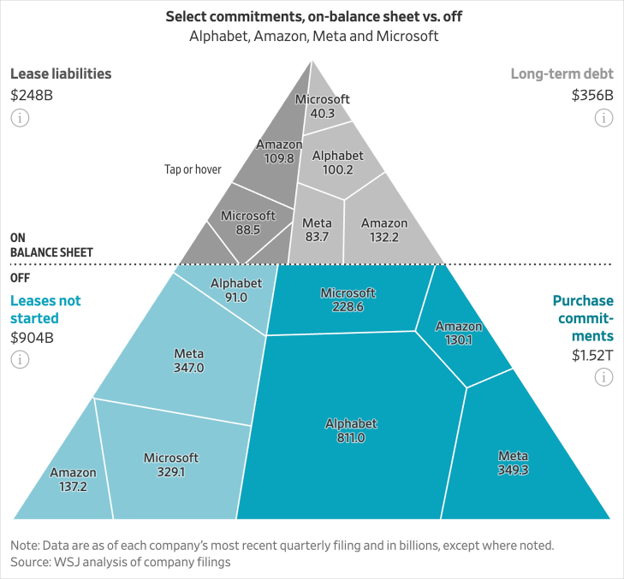
If you remember off balance sheet debt (SPVs, or special purpose vehicles and the like), this may sound familiar. Big Tech has amassed roughly $3 trillion in mostly AI-related off-balance-sheet commitments.
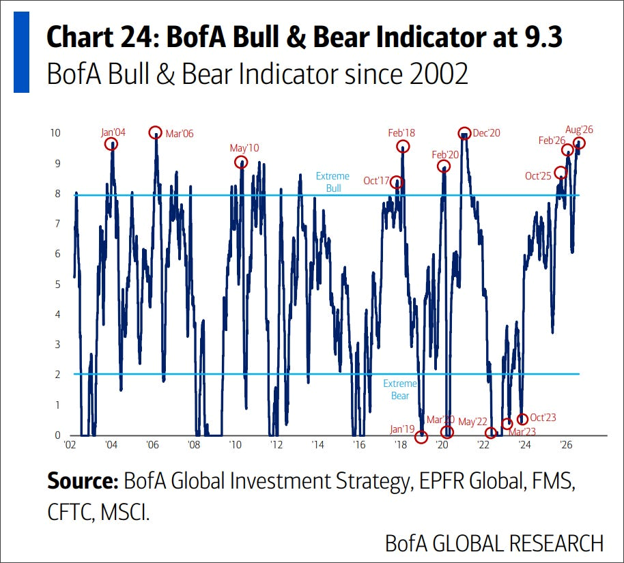
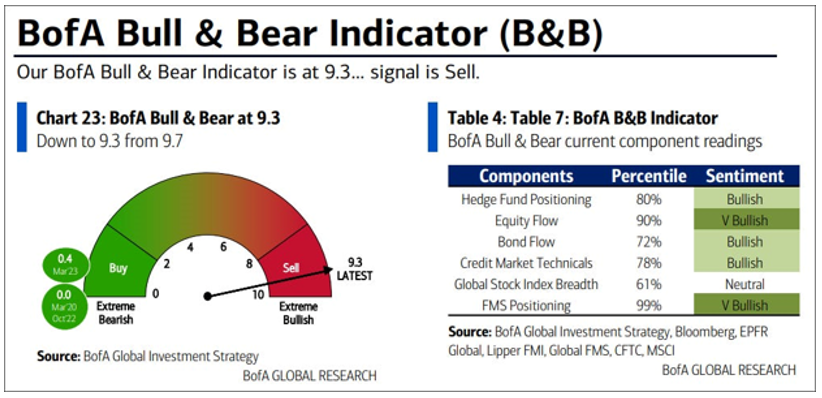
Sentiment is a solid short term market timing indicator, and when everyone’s bullish, watch out.
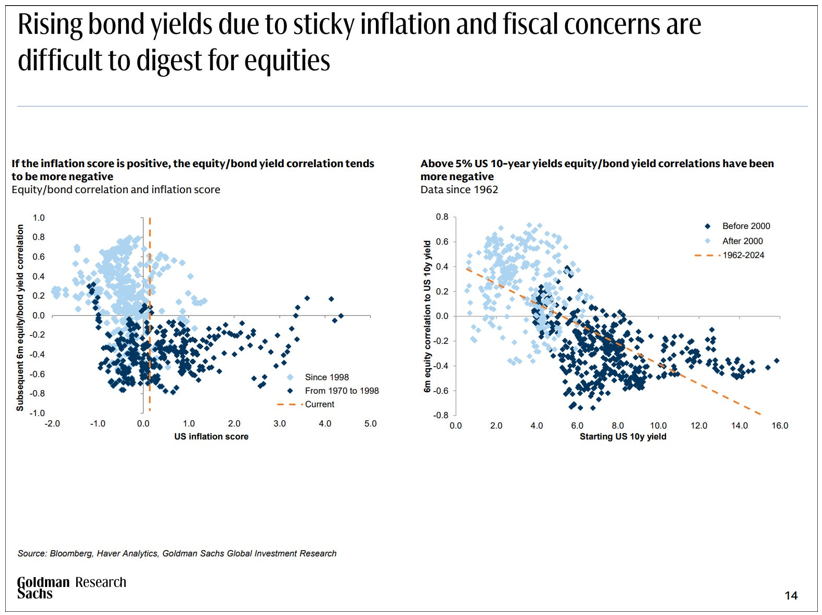
Finally, the environment we’re in could bode poorly for equities:
There Are A Number Of Positives To Note Too
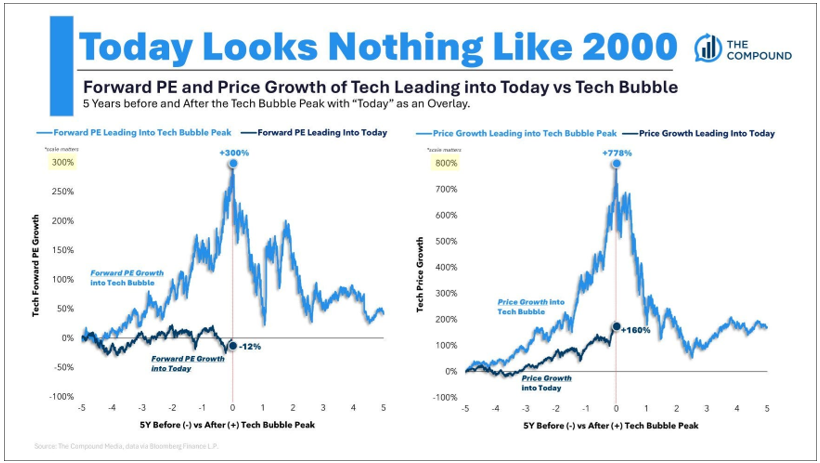
Is this really comparable to the valuation bubble of 2000? Arguably not.
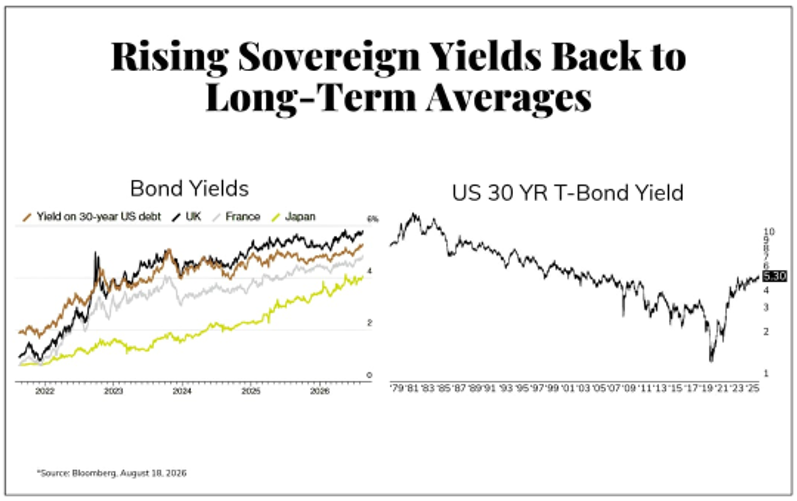
Bond yields are scaring markets, but if we look back at a 50-year time horizon, we are back to a long-term average of 5.30% on the US 30 year bond, with higher yields prevailing throughout most of that period There were plenty of good and bad policies and plenty of good and bad economies throughout that time – and US GDP went from $2T to $32T. There are issues, but this is worth noting for context.
Why has the market remained resilient despite persistent inflation, geopolitical conflict and policy uncertainty? Because today’s macroeconomic backdrop reflects a combination that has occurred very rarely: resilient U.S. economic growth, slight inflation, and a Federal Reserve that has remained on hold rather than tightening policy. History suggests this has been a supportive environment for equities – in periods where inflation exceeded approximately 2.7%, economic growth remained positive and the Federal Reserve held rates steady, the S&P 500 delivered an average annual return of 16.4%, a median return of 17.3%, and generated positive returns 94% of the time.
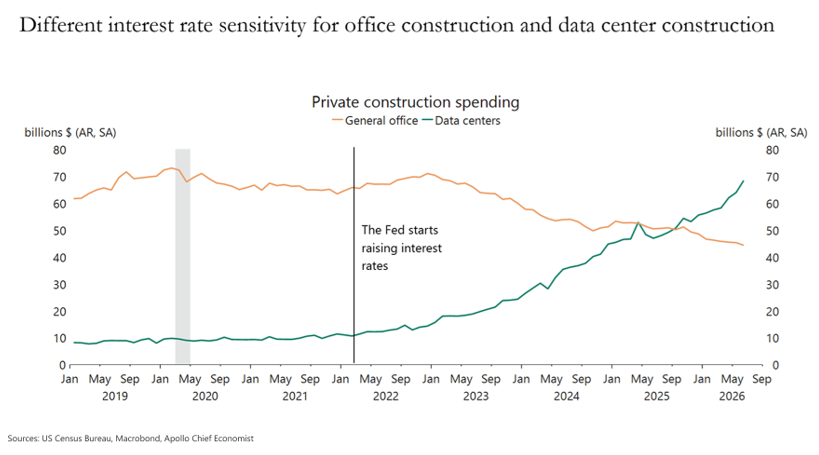
And are rising interest rates really going to slow spending (capex) and the economy? Apollo doesn’t think so. When the Fed started hiking rates a few years ago in 2022, traditional rate-sensitive sectors rolled over quickly, by design. But data center construction is ploughing ahead – it’s not interest rate sensitive as they judge that returns will exceed increased costs on that front. So, this blunts on of the main channels through which tightening normally slows activity. Between the One Big Beautiful Bill, this industrial renaissance, and prospective tariff refunds (all largely rate sensitive), they expect growth to continue to be firm.
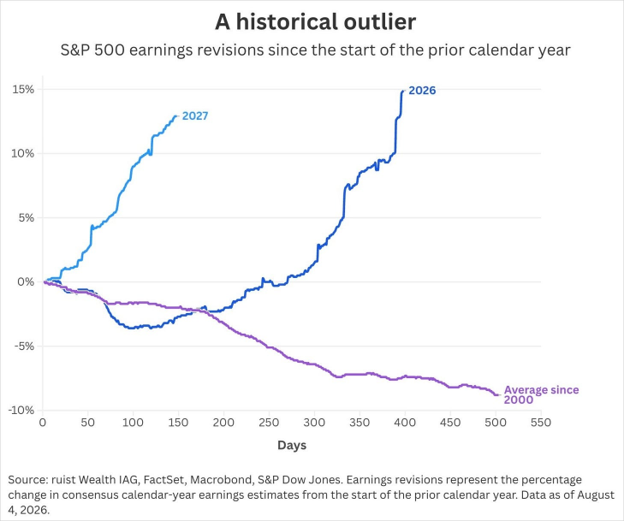
Earnings are kicking butt, which has driven this market higher. Estimates are moving higher for next year as well, so companies should continue to do well.
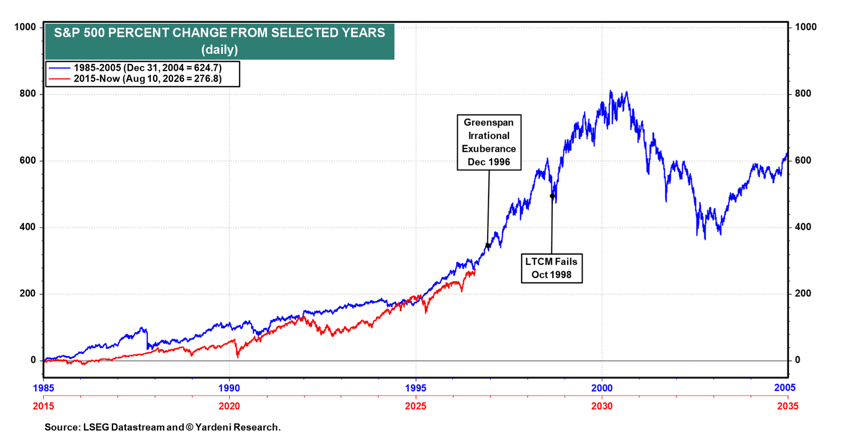
As I noted in the opening section, we could well be in the early innings of this bull run. If we overlay the current period starting in 2015 on 1985-2005, and the two paths track each other closely, with the current run at 280% since 2015, so off the analog continues to hold, the market keeps climbing, and the interesting years are ahead rather than behind us.
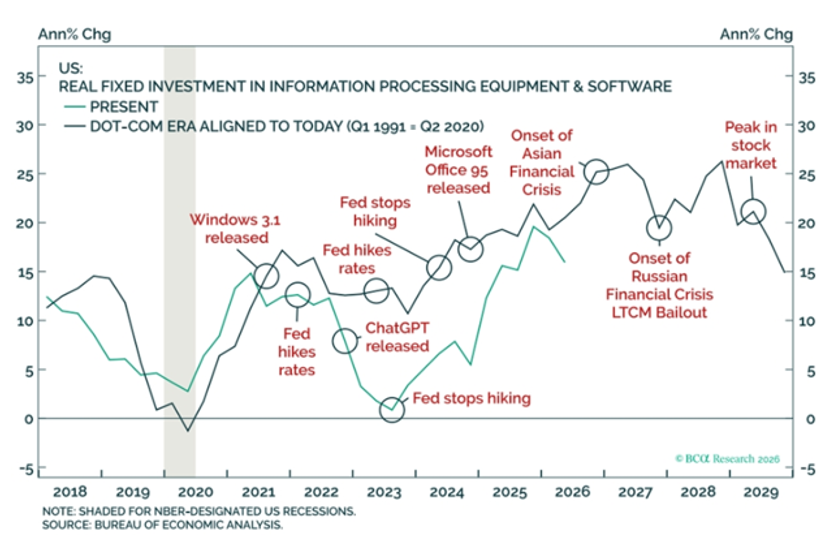
In the chart below, BCA compares today’s AI investment cycle with the 1990s tech boom, noting that if the two cycles were the same (they’re not), the current cycle would be roughly two-thirds of the way through. To me, the chart serves as another reminder that major technology investment cycles can persist for several years and are inherently difficult to time.
The economy is chugging along well, and tariff refunds are now a growth story. With IEEPA refund cheques flowing back to importers, the Atlanta Fed's GDP now points to 4.3% growth this quarter – an estimated 0.2 points from refunds alone, which are boosting earnings and GDP, even as it cuts the other way for the deficit and bond markets.
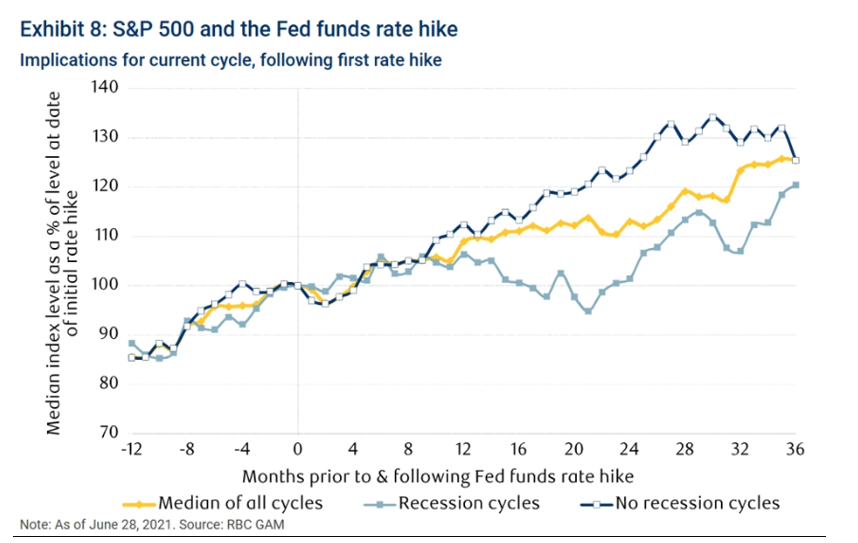
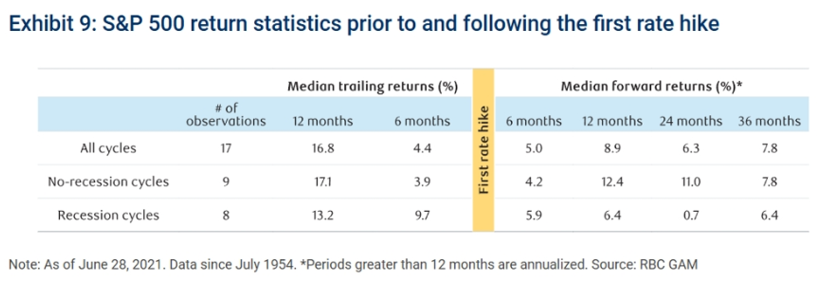
And don’t fear an interest rate hike – RBC GAM has some good research on this. Across 17 U.S. tightening cycles since 1954, equity performance after the first hike depended heavily on what happened to the economy. In cycles that were not followed by recession, stocks gained roughly 11% per year over the following two years. When recession followed, returns were roughly flat. GAM’s analysis also found that stocks tend to do well in the 12 months prior to the first hike of a cycle, with a median return of 17%.
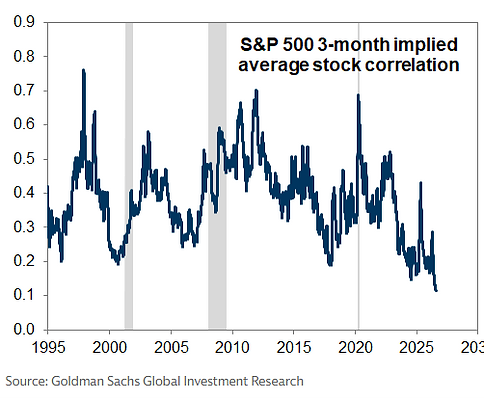
Stocks have been moving together for a while, which isn’t a good thing. But that’s changing, meaning there are opportunities for active managers to take advantage of.