Danielle Slavin
September 9, 2026
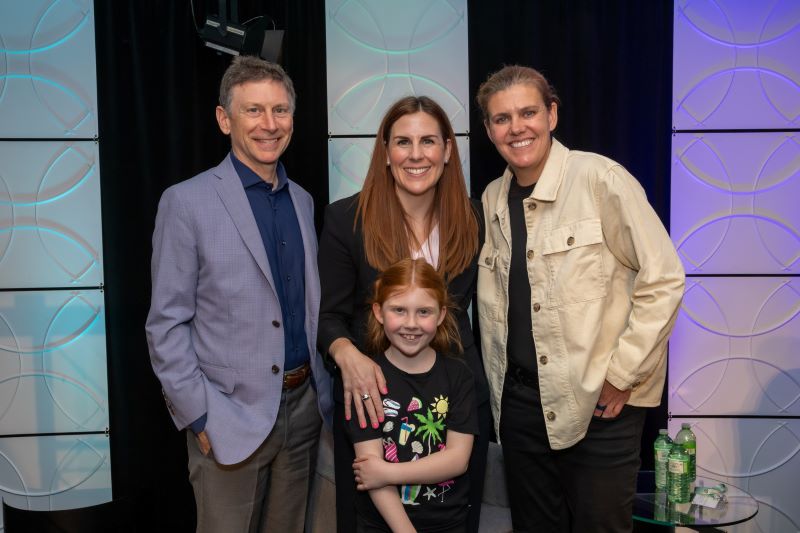
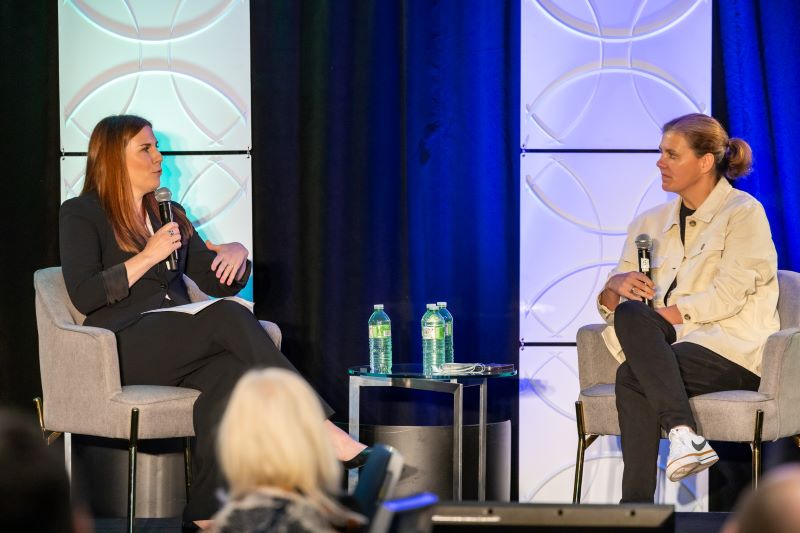
Back in May 2026 I had the absolute privilege of interviewing Canadian soccer star and Olympic Gold medalist Christine Sinclair at the CIRO conference in Vancouver. CIRO is the regulatory body that oversees our investment industry and for 2026, they were hosting their national conference in Vancouver and Christine Sinclair had agreed to be their special guest. The catch was that Christine does not do keynote speeches. She will only do interviews on main stages, so in their search for someone who could bridge the world of finance and soccer, they found me! To say I was thrilled is an understatement. I have been a huge fan of hers since I was a teenager and have been in awe of her performance both on and off the pitch. I want to share some of the key takeaways from the 1-hour discussion.
Firstly – Why soccer and not some other sport?
Christine grew up similar to me in the sense of wanting to copy her older brother. They played a lot of soccer together and even put a soccer ball through a window at their house which my brother and I did as well. She also had a couple of uncles who played professionally which was pretty inspiring as a kid. I mean what sporting kid didn’t at one point hope to become a professional athlete as their career objective? Her initial athletic dream was actually to play for the Blue Jays!
Her College NCAA Years
For those that aren’t familiar with Christine’s college career, there is no other way to describe it other than legendary. She won Freshman of the Year after scoring 23 goals in her inaugural season. She won the biggest individual award available, the Hermann Trophy, not once but twice. Her team won two NCAA championships during her reign, and she won the Honda-Broderick Cup which is given to the top female athlete across all sports! She scored 110 goals which at the time was the all-time Division I record and is still second of all-time now.
The biggest decision, in her mind, that helped foster that success was the choice of schools. She picked Portland. It was small by national comparisons where they would get 5,000 fans to games, not 50,000 fans. It didn’t have other big sports, so soccer was an important focus. Most importantly, her family knew the coach and knew that he was a good person who cared about her as an individual first and foremost. This same belief in what makes someone a good leader showed up several times over our conversation and rings true to me as well. I have a Theodore Roosevelt quote my mum used to say when I was a kid on our work website that says “No one cares how much you know, until they know how much you care”.
Leadership and Olympics
Christine explained that what made her coaches John Herdman and Bev Priestman great was the same thing as well. They took the time to really get to know the players and care about them individually and that’s what built the great culture and connection that ultimately won them a Gold medal at the Olympics. Christine also shared that John Herdman spoke at her father’s funeral and they remain close today. Over the years working with clients who have founded and sold a business, I have always loved seeing the look in their eyes when they describe the economic impact it made on their broader staff. The pure pleasure in enjoying someone else’s success as an extension of your own. Success is much sweeter when shared.
Having said that, Christine’s earlier leadership opportunities were a source of stress for her. She never liked being the centre of attention and early on believed that to be a leader, you needed to be a loud, communicative person. Because of this belief she often beat herself up for not being a better leader. However, later on as John Herdman had her undergo leadership training, she came to realize that sometimes the people who speak the most have the least interesting things to say and sometimes the quieter people have big contributions at key moments. This change in perspective allowed her to become the leader who would help her team win their first Olympic Bronze medal after losing a devastating loss to the US in the semi-finals at the 2012 London Olympics. Christine had a spectacular game that day including scoring a hat trick, but the referee made some highly criticized decisions that led to the US Women receiving a penalty shot in the 80th minute when Canada was winning 3-2. Christine shared that as she walked off the pitch someone told her “don’t worry, we’ll pay the fine” and that was the support she needed to not only speak freely to the press about the ref interference (side note: she was indeed fined and suspended), but more importantly she knew her team needed to hear from her. She went into the dressing room and told her teammates what an honour it was to share the field with them that day and how proud she was. She said they were going to take the day to feel whatever they felt (mad, sad, whatever) and then they needed to refocus on their original goal of making the podium. Gold and Silver were out, but Bronze was still within reach and they made it happen. Under Christine’s leadership they went on to win Bronze again in 2016 and Gold at the 2020 Olympics.
Creating a culture that values honesty and the pursuit of perfection are two of the things I value the most about working at RBC. For a large organization, it has created a culture of speaking freely and openly with the goal of continuous improvement. I see it evidenced every day in my team and their desire to do right by our clients. We aren’t perfect and no organization is either, but the commitment to pursuing perfection is always there. If you have an interest in Finance and haven’t read Michael Lewis’s book, Flash Boys, I would encourage you to do so. The main Whistle Blower in the world of High Frequency trading is an honest Canadian named Brad Katsuyama who was working at RBC in New York. It’s positioned as being rather cute that this single Canadian tries to take on the world of Wall Street on behalf of all clients. It reminds me a little of Christine’s story of just honestly calling something what it is and inspiring others to do the same.
Pay Equity
Later on, we finished with a really frank conversation about President Trump’s comments how he “had” to invite the US Women’s hockey team to the White House in addition to the Men’s hockey team because both teams won US Olympic Gold medals. Christine has played through the reality of often having equal outcomes, or in the case of the Canadian Women’s soccer team having more success, but still not receiving the same recognition, visibility or respect as the Men’s team. Christine said it is why she felt compelled to testify in parliament about the inequality. She made it clear she understands Soccer Canada cannot pay them like the US Women’s national team – they just don’t have the funds, but they did win an agreement of equality between how the revenue pool is split between both the men’s and women’s programs. She also stressed how much further the women’s program could go if equal viewership and support was offered.
We are seeing a similar narrative play out in basketball right now with the popularity of Caitlin Clark. Clark’s jersey sales came out this year as being second in the overall WNBA and NBA history combined beating Lebron James and trailing only Stephen Curry. One of Christine’s main takeaways from the 1-hour session was that if we want to support women’s sports, we need to put our money where our mouth is. As such, I would encourage any sports fans out there to attend a Vancouver Rise game this season. The games are held at Swangard and are a great family friendly activity.
Conclusion
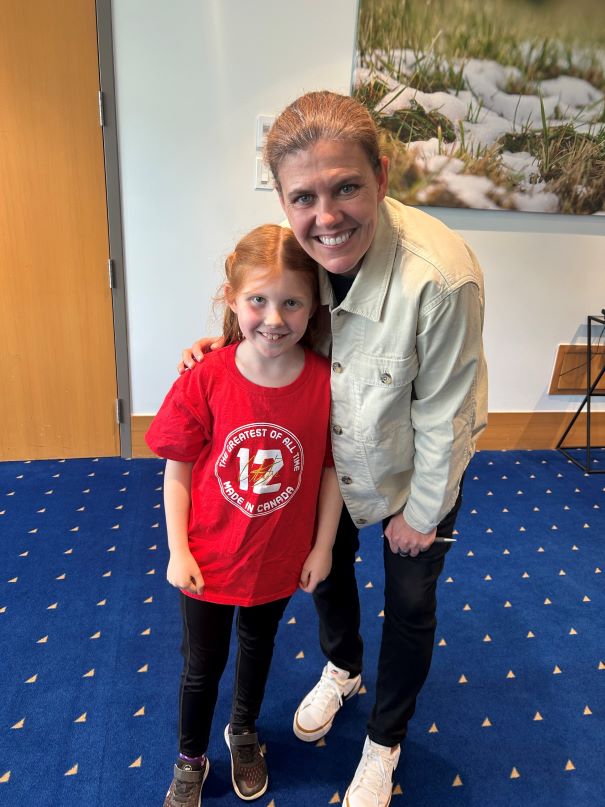
In conclusion, it was an incredible experience to once again meet Christine in person. Her candor, her stories, and her Canadian pride all made for a conversation I will never forget. She was also kind enough to sign a couple of autographs for my daughter, Kate, who got to miss some school to attend the big discussion between her mum and our shared idol.