“Rising Rates, Rising Returns”
"The Fed Just Raised Rates—And That's Actually Good News"
The Federal Reserve just hit the brakes on rate cuts for the first time since 2023. Sound scary? Don't panic. History shows rate-hiking cycles deliver nearly 10% returns within a year, corporations locked in cheap debt years ago and are crushing earnings, and a potential Congress flip could add another 17% to markets. The headline: rising rates have historically equaled rising returns. Your move? Stay the course.

John Ord and Tim Waller
Ord Private Wealth Management
September 21, 2026
All good things must come to an end. The last day of summer has officially come and gone; the Blue Jays playoff run is coming up short; and the Federal Reserve officially ended their latest rate cutting cycle! Even though the Fed has been “on pause” since late last year, this 25bps move was the first time they’ve raised the overnight rate since 2023. While the new rate level (3.75% to 4.00%) is still a long way from where it was at the highs three years ago (5.5%), this is a clear sign that the Fed is concerned enough about inflation to intervene with a restrictive move.
This move is not all doom and gloom however, so let’s focus on the positive! As much as investors seem to love interest rate cuts, here are some reasons why the market may end up celebrating the Federal Reserve (and its new chair Kevin Warsh) for shrugging off political pressure and raising rates:
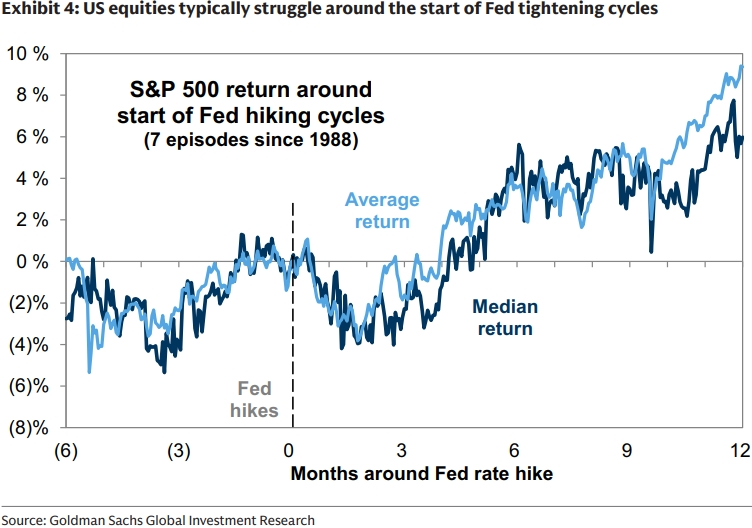
1) Rate hiking cycles usually result in a positive return 1 year later.
Of the 7 times a new hiking cycle started since 1988, the average 1-year return is almost 10%. There can be an initial adjustment period as investors acclimatize to the new normal, but in the past that has been followed by a quick recovery and continued gains. Currently, the market reaction has been mostly positive in the days following this announcement, inching closer to new all-time highs.
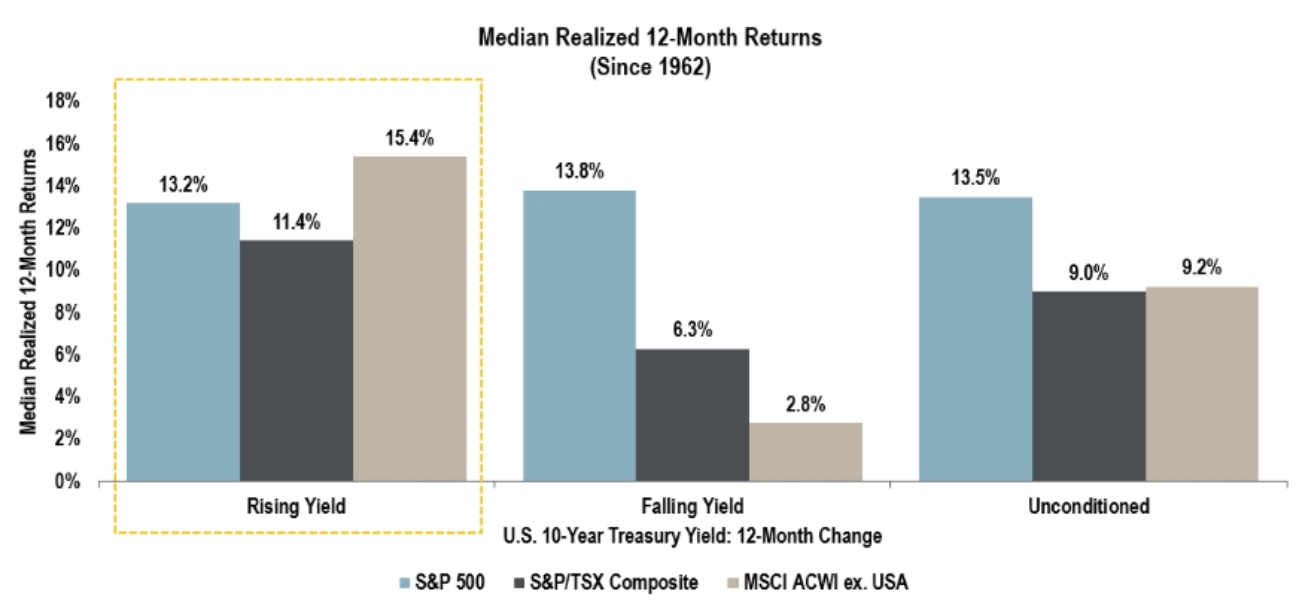
2) Rising treasury yields have been the sweet spot for global market returns.
Perhaps counterintuitively, global markets have performed better when the U.S. 10-year treasury yield has been rising. This is especially true for Canada and other developed nations, as seen in the chart below. Right now, the 10-year yield is bumping up against the 5.00% mark for the first time since October 2023 and has been rising steadily for about a year. All this to say, it may not be the end of the world if we do see yields move above 5%, even if it will surely cause a lot of headlines. The numbers speak for themselves: Rising Rates have equaled Rising Returns.
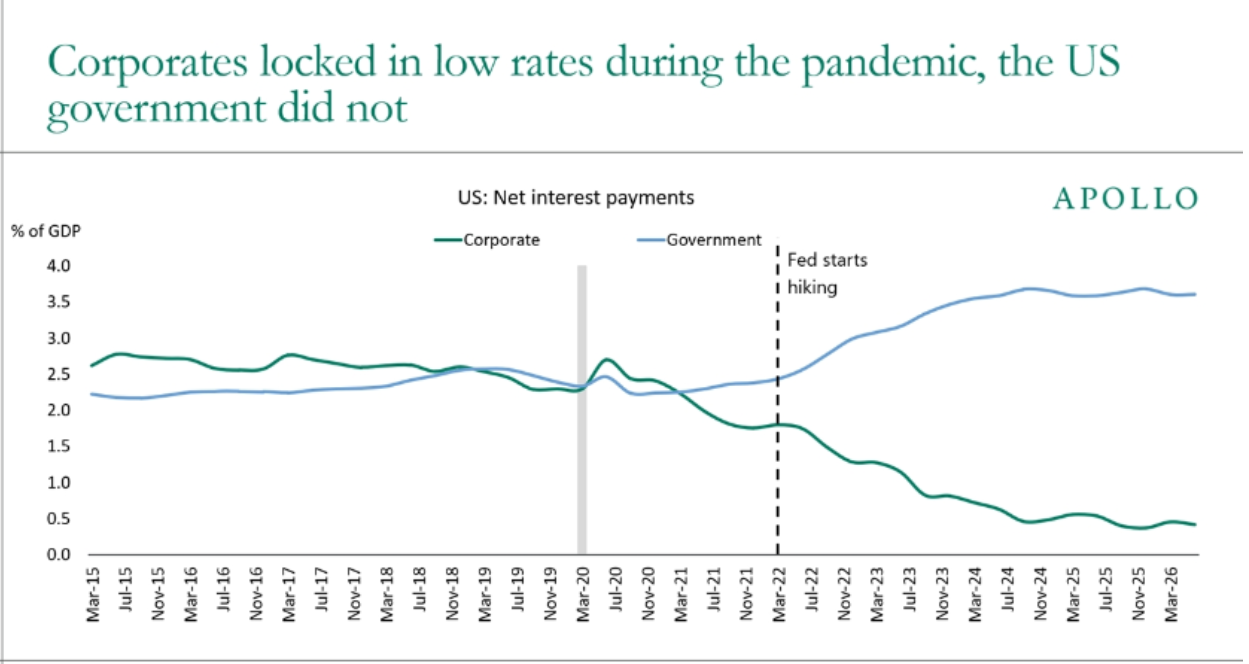
3) Corporations locked in extremely low interest rates on debt years ago and their businesses are thriving!
This is a two-parter, so it gets two charts. The first one shows the drastic difference between how corporations handled their debt obligations post-pandemic vs. the U.S. government. Prior to the Fed’s initial rate hike back in 2022 (when rates were near 0%), many large companies had already made the decision to lock in some of those lower rates for an extended term, which they then continued to do while the getting was good. The result? They are paying substantially lower net interest now than if they had been slow to act (the blue Government line on the chart shows the opposite effect).
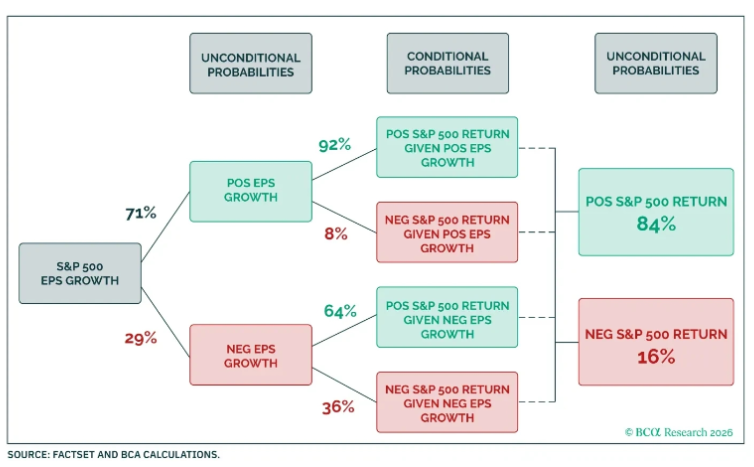
On top of this, earnings for large companies have exploded in recent quarters, with most recent estimates suggesting over 15% Earnings Per Share (EPS) growth for S&P 500 companies in the next year. That number is even higher when you focus on the Magnificent 7 companies only. These are huge numbers - well above average! The important takeaway here is seen in the 2nd chart: when EPS growth is positive, the odds of a positive stock market are about 92%! It’s only 64% when EPS growth is negative (not great but even that shows that the odds are with you as an investor!)
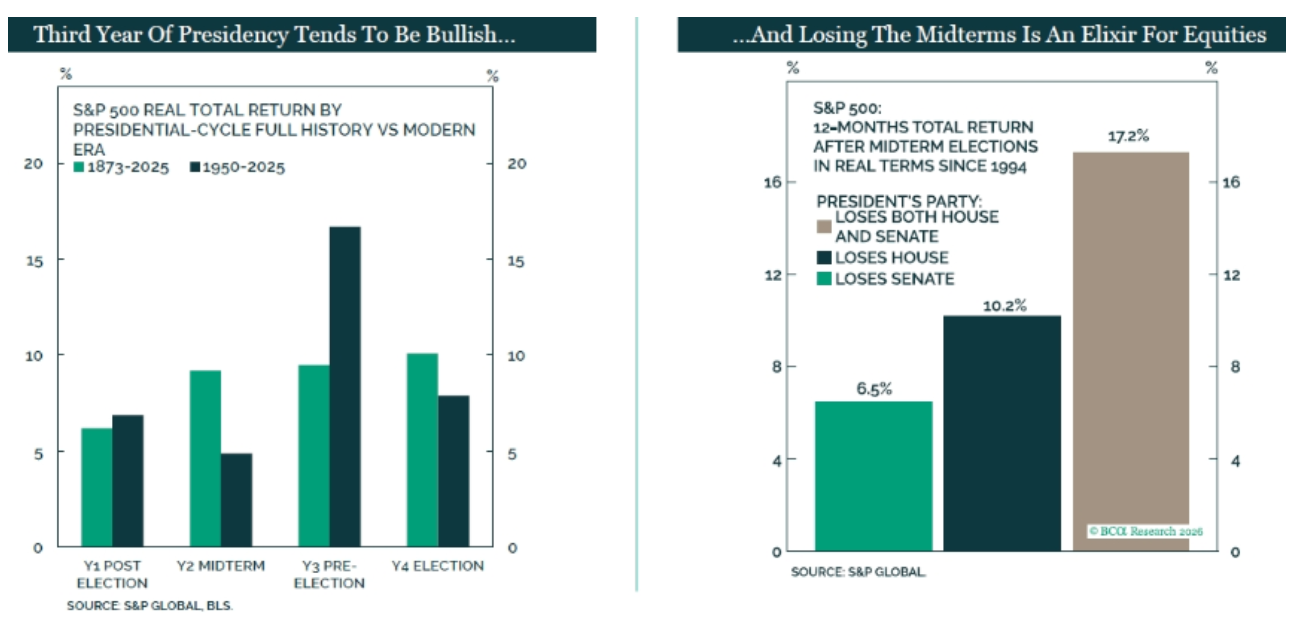
One final positive market scenario to leave you with which has nothing to do with interest rates, but is timely! It appears increasingly likely that both the House and Senate could flip from Republicans to Democrats in the upcoming U.S. Midterm election. (To be clear, the positive aspect has nothing to do with your view on either party!) While a major upheaval of the current political order (or disorder…) may logically feel like something that could rattle the stock market, recent history implies the exact opposite. The last two times this occurred were in 1994 (Bill Clinton) and 2006 (George W. Bush), so both parties had a turn. As you can see in the chart below, Congress flipping control to other side was clearly NOT a bad thing for markets, with the S&P 500 returning 17.2% on average one year later!
If you combine this with the above-average gains historically seen in the 3rd year of a presidential term, it should give investors more reason to be optimistic heading into the end of 2026, especially after the election results are in!
That’s all for this month, as our September newsletter has come to an end. Whether it was a “good thing” or not is up to you!
Go Leafs Go! (sorry Blue Jays, we’re moving on).