Sandra Pierce
Senior Portfolio Manager
March 16, 2026
The Bag Lady of Bay Street on the Great Wealth Transfer — and the Woman Who Holds the Purse Strings
For forty years I've been telling anyone who'd listen the same thing: the most important financial decision a woman will ever make is the one she insists on making herself.
Now the numbers are finally catching up to the sermon.
We are living through the largest redistribution of private wealth in human history. Cerulli Associates now estimates that roughly $80 trillion to $124 trillion will move between generations through 2048, flowing out of the last of the Silent Generation and retiring baby boomers and into the hands of their heirs.
And here is the part that has shaped my entire career, my TEDx talk, and frankly my life: a disproportionate share of that money is landing in women's hands — through widowhood, through divorce settlements, through inheritance, and through wealth women earned themselves.
Women outlive men. Women marry, on average, older men. And in a divorce, the wife is often the one walking away with a settlement she didn't build nor have the financial confidence to manage. That is the Great Wealth Transfer as I've lived it and watched it: capital moving into the hands of women who were never taught — or never allowed — to think of it as theirs.
This is not a billionaire story. But it helps to look at the billionaires first.
Three women, three answers to the same question
Fortune Magazine recently profiled the three women reshaping modern philanthropy, and the most striking thing about them is that none of them is doing it the way the men did.
MacKenzie Scott gave away $7 billion in 2025 alone — more than a third of all America’s megagifts — bringing her total giving past $26 billion. Her method? Write the check, then get out of the way. No application gauntlets, no strings, no press releases. Trust-based, unrestricted giving to thousands of organizations across disaster relief, education, and equity. She doesn’t put herself at the center of the story.
Melinda French Gates takes the opposite approach. Her organization, Pivotal Ventures, has pledged $2 billion to women and families since 2019, including $600 million toward women’s health — reproductive care, menopause, mental health. She picks the cause, she names the reason, and she uses her voice loudly, even — especially — when it's politically uncomfortable.
And Lauren Sánchez Bezos is finding her own footing, steering the $10 billion Bezos Earth Fund, committing to ocean conservation across the Pacific and more than $850 million to fight homelessness across all fifty states.
Here is what Fortune noticed, and what I want you to notice: none of them gives the way the men who built modern philanthropy did. No institutionalized, apolitical, name-on-the-building sameness.
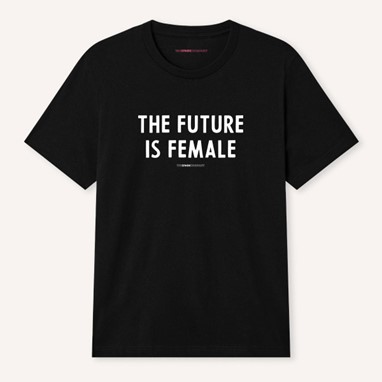
As philanthropic dollars move through women's hands, each one is deciding — on her own terms — where the money lands. That is the whole thesis of my work in one sentence:
Why this changes the world
When women control capital, the money goes somewhere different. Research and decades of giving data show women tend to direct wealth toward families, health, education, community resilience, and the social infrastructure that holds everything else up. We give relationally. We give to fix something we've lived through. We give while we're alive to see it work.
The impact of the Great Wealth Transfer isn't simply that women will have more money. It's that the decisions about that money — where it's invested, who it's given to, what gets built, what gets healed — will increasingly be made by people who were historically shut out of the room where those decisions happened.
A widow with a portfolio is not just a statistic. She's a decision-maker. A divorced woman with a settlement is not a cautionary tale. She's a force. And when millions of women move from being mentioned in a will to writing the checks, the entire direction of capital shifts.
That is the impact. That is what I mean when I say women give differently — and that it can change the world.
The average woman doesn't need billions
This is the part that matters to you. You do not need to be MacKenzie Scott to change something. You do not need $26 billion. You need intention.
The average woman makes a difference the moment she stops outsourcing her financial life. The woman who finally opens the statements herself. The one who sits in the advisor's meeting and asks the question aloud instead of glancing at her husband. The one who funds a donor-advised fund (DAF) and decides, for the first time in her life, where her generosity goes.
What you need to do
Know your money. Read the statements. Sit in the meetings. Understand the portfolio, the insurance, the estate documents.
Claim your voice. Ask questions. Demand plain answers. Hire an advisor who talks to you, not over you.
Give while living. You don't need a foundation to be a philanthropist. A recurring gift, a DAF, a cause you've researched — that counts.
Teach another woman. Your daughter, your granddaughter, your recently divorced friend. Tell her what you wish someone had told you.
This is how the average woman becomes part of the Great Wealth Transfer — not as a passive recipient, but as a woman who decides, on her own terms, where the money lands.
Fortune Magazine saw it in three billionaires. I've spent forty years seeing it in living rooms and divorce lawyers' offices and bank branches across this country. The revolution isn't coming. It's already in your bank account.