John Vidas
Portfolio Manager
September 1, 2026
……More than 2400 years ago Tucydides wrote ---- “The Strong do what they can and the weak suffer what they must.”
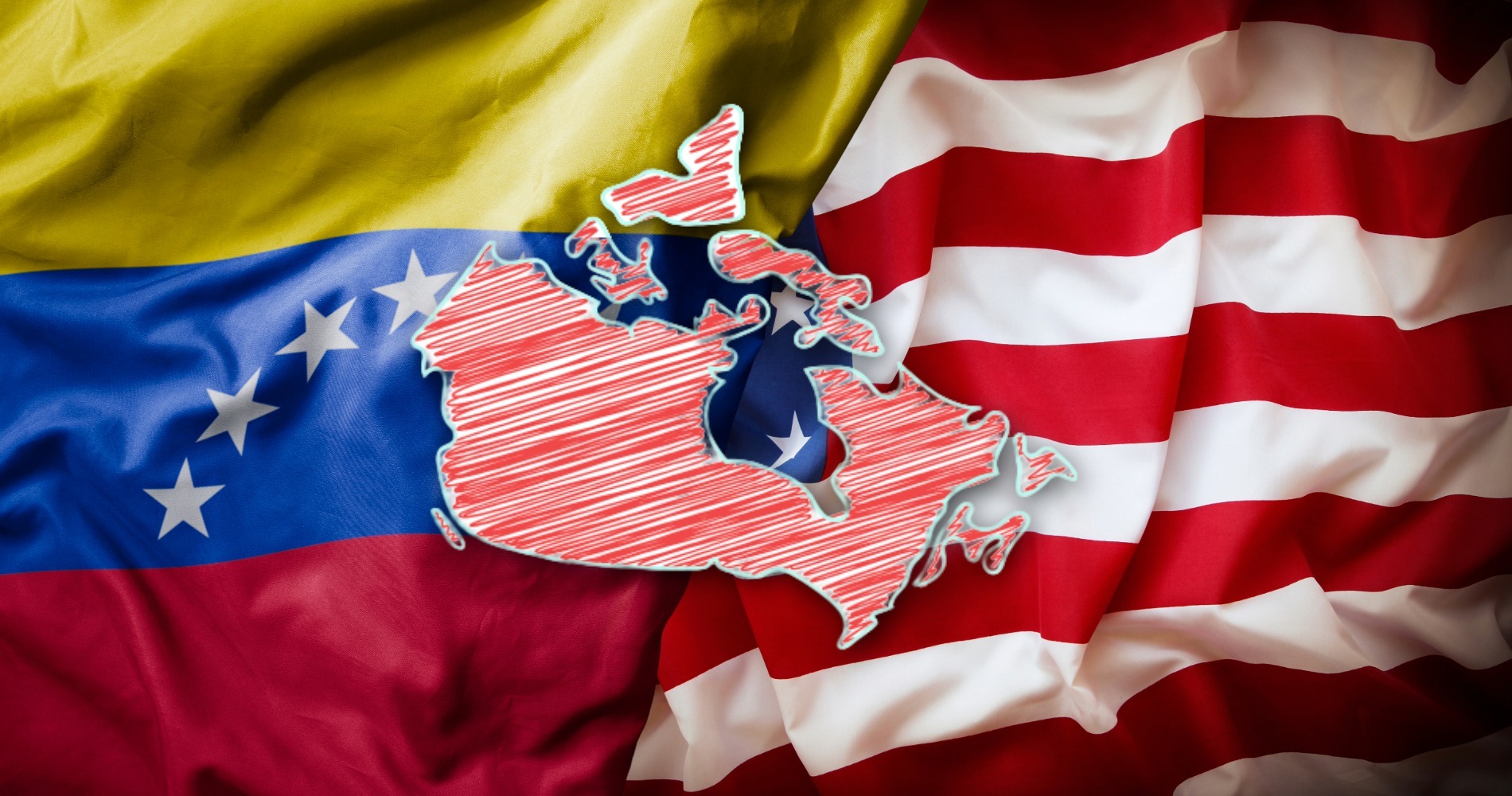
Venezuela, Canada, Greenland and the Return of Economic Power Politics
An evidence-based assessment of documented policy, economic coercion and the limits of the annexation argument
Central thesis: The evidence supports an increasingly assertive U.S. sphere-of-influence strategy in the Western Hemisphere. It does not yet prove a coordinated plan to annex Canada, permanently control Venezuela, or absorb Greenland. |
The argument in plain language
For much of the postwar period, the United States described relations with Canada, Europe and Latin America through alliances, free trade and sovereign partnership. The current administration uses a noticeably harder vocabulary: strategic geography, tariffs, resource security, financial leverage and the exclusion of rival powers.
Venezuela, Canada and Greenland are very different cases. Together they raise a legitimate question: is Washington moving toward a more explicit sphere of influence in North America and the wider Western Hemisphere?
The evidence supports the broader argument more strongly than its most dramatic version. There is substantial evidence that Washington wants greater control over strategic resources, supply chains and security relationships close to the United States. There is much less evidence of a coordinated plan to eliminate Canadian sovereignty or use Venezuelan dollarization as a secret instrument of permanent political control.
Venezuela: the strongest example
Venezuela provides the clearest evidence of this more assertive doctrine. After the January 2026 U.S. operation that captured Nicolás Maduro, senior officials described Venezuela explicitly in Western Hemisphere security terms; Secretary of State Marco Rubio argued the United States would not permit its immediate region to become a base for hostile or competing powers.
Washington then established extraordinary leverage over Venezuela's petroleum economy. A January 2026 executive order created protections for Venezuelan natural-resource revenues held in U.S. Treasury accounts. The funds remain nominally Venezuelan property, but the financial structure gives Washington significant influence over the channels through which oil revenues move. U.S. sanctions licences now shape which companies can invest and how Venezuela reconnects with international oil markets, while American policy has also sought to reduce the strategic position of Russia, Iran and China there.
This does not make Venezuela legally an American possession. It does show that Washington now holds unusual influence over the country's most important export industry and external financial relationships.
Canada: economic pressure and the “51st state” talk
Canada is the toughest case to make sense of. It's not a weak or dependent country — it's a democracy, a NATO member, one of the world's biggest economies, and one of America's oldest friends. And yet President Trump has repeatedly said Canada should become the 51st U.S. state. Back in January 2025, someone asked him if he'd use the military to make that happen. He said no — but he said he'd use “economic force” instead, and he called the U.S.-Canada border an artificial line that shouldn't really be there. Because of that comment, it's hard to look at anything the U.S. does to Canada economically without wondering if the statehood idea is part of the reason.
That economic pressure became very real in August 2026. The U.S. used an old trade law (Section 338) to slap a 50 percent tax — a tariff — on a wide range of Canadian products coming into the U.S., including many goods that used to cross the border tax-free under the two countries' free trade agreement (CUSMA). This happened right after a scheduled review of that trade agreement, where the U.S. chose not to renew it for another sixteen years. In other words, the safety net Canada had relied on for years suddenly looked a lot less certain.
The U.S. government's official reason for the tariffs is pretty ordinary, as far as trade disputes go: it says Canadian trade rules are unfair to American companies, and that the tariffs will force Canada to play fair, bring factory jobs back to the U.S., and protect American workers. That explanation can be true at the same time as the statehood pressure — a country can use tariffs to win a trade fight and to gain political leverage at once. And Canada really is vulnerable here: its economy is tightly tied to the U.S., and most of what Canada sells to other countries goes to its southern neighbor. When tariffs go up, Canadian exports drop, businesses get nervous about investing, and the government in Ottawa comes under pressure to make a deal. That part — using money to squeeze a country into compromising — is well documented. What's not proven is the bigger claim that Washington is deliberately trying to wreck Canada's economy just to make Canadians give up and vote to join the United States. Nobody has produced a document or plan showing that's the actual goal.
Canada fought back — and that's the best evidence against the annexation theory
How Canada responded tells us a lot. Prime Minister Mark Carney didn't back down — he announced Canada would match the U.S. tariffs dollar for dollar, taxing about $27.6 billion worth of American products (things like steel, aluminum, dairy, appliances, farm equipment, paper, plastics and electronics). Carney put it simply: Canada “will not hesitate to defend our interests.”
That back-and-forth — Canada pushing back hard, then both sides sitting down to negotiate — looks a lot more like a normal trade fight between two countries that need each other than a secret plan to swallow Canada whole. It also fits a bigger pattern: Canada has been working to sell more of its products to other countries besides the U.S., invest in its own mining and Arctic resources, and generally rely less on its southern neighbor — and Canadian leaders are openly connecting that effort to protecting the country's independence. There's a political lesson here too: when a bigger country talks about swallowing a smaller one, it often makes the smaller country's citizens more patriotic, not less — the opposite of what you'd want if the goal were actually to talk Canadians into becoming Americans. For pressure like this to work, the target country has to decide that giving in is cheaper than fighting back. So far, Canada looks like it's choosing to become less dependent on the U.S. over time, not to cave.
Greenland: where territory and security openly meet
Greenland strengthens the broader sphere-of-influence argument because U.S. objectives there have been stated far more directly. Trump has repeatedly said the United States needs to own or control Greenland, citing Russia, China, Arctic security and missile defense, and argued in January 2026 that the world would not be secure without “complete and total control” of the island, backed by tariff threats against resistant European countries.
Greenland and Denmark have rejected annexation or sale while negotiations continue over security and the American military presence; Greenland's government has said talks are making progress but the island is not for sale. The strategic logic holds even without annexation — Greenland's Arctic position, mineral potential and the U.S. Pituffik Space Base could secure most security benefits through agreement alone, which is precisely why the insistence on ownership is geopolitically significant.
The pattern: control without necessarily changing borders
A recognizable pattern emerges across the three cases: strategic geography, important resources, economic or financial leverage, exclusion of rival powers, greater U.S. influence. Venezuela offers petroleum and a Caribbean strategic position; Canada offers energy, critical minerals, industrial supply chains and Arctic territory; Greenland offers an exceptional Arctic and North Atlantic position. None of this proves a secret territorial-expansion plan. A more plausible reading is that Washington is pursuing a modern sphere of influence in which formal annexation may not be necessary at all — preferential access to resources, dominance of continental supply chains and financial dependence can deliver many of the benefits once associated with territorial control while formal sovereignty remains intact.
The counterargument matters
There are real reasons not to overstate the thesis. A deliberately devastated Canadian economy would also damage American manufacturers, consumers and border states, given how deeply the two economies are entangled — weakening Canada beyond the point needed for bargaining leverage could be self-defeating, and the rapid pivot from 50 percent tariffs to a negotiated deal is consistent with that constraint. Greenland presents a similar problem: the U.S. already holds extensive defense rights there and could negotiate additional access without the political costs of annexation. And in Venezuela, Washington frames its policies as restoring stability while recognizing Venezuelan ownership of its resources. These counterarguments do not erase the coercive elements of current policy, but they limit how far the evidence can responsibly be taken.
Conclusion: what can responsibly be argued
The strongest evidence does not establish a coordinated plan to annex Canada, permanently control Venezuela and absorb Greenland — but the pattern is not mere speculation either. The administration has explicitly treated the Western Hemisphere as a special American strategic space, acquired exceptional leverage over Venezuelan oil and financial flows, pursued control of Greenland, and used tariffs against Canada while President Trump has repeatedly floated statehood and named economic rather than military force as the relevant pressure. The most defensible conclusion is that the United States is pursuing a more assertive sphere-of-influence strategy in which tariffs, markets, finance, strategic resources and geographic proximity increasingly maximize American leverage — whether or not that ever becomes territorial expansion.
For Canada, the central question is therefore larger than any single tariff dispute: how does an independent middle power preserve meaningful economic and political sovereignty when its overwhelmingly larger neighbour increasingly treats economic interdependence as an instrument of geopolitical leverage?
What this means for Canada and Canadians: in practice, the leverage is economic rather than territorial, and it is already being felt in tariff-exposed sectors, investment decisions and the price of goods, not through any real threat to the border. The more durable response is the one already underway — diversifying trade, markets and supply chains so that dependence, not sovereignty, is what is actually up for negotiation.
What the same policies are costing the United States
The sphere-of-influence strategy is not cost-free for Washington. Evidence across three time horizons suggests the tariff-driven approach is generating real, and in some respects lasting, damage to the U.S. economy and its institutions — alongside the leverage it has produced abroad.
Near term (through 2028–29): The OECD lowered its U.S. growth forecast to 1.5–1.6 percent for 2025–26, roughly half the 2024 pace, citing rising trade costs from the tariffs. The effective U.S. tariff rate rose from 2.1 percent to about 11.7 percent by January 2026, with more than half of that cost now passing through to consumer prices — producing what one modeling exercise characterized as mild stagflation, with mortgage rates running roughly 60 basis points higher than they otherwise would. Underneath the economic effect is legal and fiscal whiplash: the Supreme Court struck down the IEEPA tariffs 6–3 in February 2026, and the administration has since cycled through Section 122, Section 301 and Section 232 authorities as replacements, with tariff policy changing more than fifty times in eighteen months. By July 2026 the government was refunding more in duties than it collected in a single month, and the Congressional Budget Office now projects roughly $2.0 trillion in additional deficits over 2026–2036 from lost tariff revenue and higher debt-service costs tied to the ruling.
Medium term (5 years, ~2031): Estimates of the structural damage vary widely depending on which tariffs survive ongoing litigation. The Tax Foundation's more conservative modeling of tariffs currently in place shows a 0.4 percent long-run GDP reduction and roughly 345,000 fewer full-time-equivalent jobs; Penn Wharton's modeling of the broader 2025 tariff package found long-run GDP down about 6 percent, wages down 5 percent, and a $22,000 lifetime loss for a middle-income household. Trading partners, meanwhile, are quietly reducing their exposure rather than confronting Washington directly — Canada announced a $25 billion sovereign wealth fund explicitly aimed at reducing economic dependence on the U.S., and France repatriated its full gold reserve from the New York Fed. Legal analysts tracking the litigation describe allies as taking a “wait and see” approach to any new trade commitments, since the courts have twice invalidated the administration's tariff authority.
Long term (10 years, ~2036): The dollar is not being displaced — its liquidity and Treasury market depth remain unmatched, and no viable alternative currently exists — but reserve diversification driven specifically by U.S. policy allies, rather than adversaries, is a genuinely new pattern. With Fed Chair Powell's term ending and the administration pushing for a successor committed to lower rates, one institutional analysis concluded a committed president could fundamentally alter the Fed's independence within six to eight years; given that net public debt already stands near 121 percent of GDP, a loss of confidence in the Fed's independence carries real borrowing-cost risk, comparable to the UK's 2022 gilt-market crisis. Perhaps the most durable cost is relational: several trade-law analysts argue the damage to relationships with allies and trading partners — built over decades and unwound by shifting legal justifications — will outlast any single tariff schedule, court ruling or administration.
The administration's counter-case: proponents argue the disruption buys long-term strategic independence — reduced reliance on Chinese manufacturing, reshored industrial capacity, and, on a dynamic 10-year basis, tariff revenue that could be applied against the federal debt. The wide gap between the Tax Foundation's and Penn Wharton's GDP estimates reflects genuine, unresolved disagreement among economists about how much of the damage is temporary disruption versus permanent loss — a question that will not be settled until the tariff regime itself stabilizes.
Supporting documentation and sources
White House — Rubio: “This Is Our Hemisphere” (Jan. 2026)
Administration statement describing Venezuela and the Western Hemisphere in U.S. national-security terms.
White House — Safeguarding Venezuelan Oil Revenue (Jan. 2026)
Executive order establishing the framework for Venezuelan natural-resource revenues held in U.S. Treasury accounts.
U.S. Treasury / OFAC — Venezuela sanctions and petroleum authorizations
Primary documentation on permitted petroleum transactions, investment and payment arrangements.
https://ofac.treasury.gov/faqs/topic/1581
Reuters — Trump comments on Canada and “economic force” (Jan. 2025)
Independent reporting documenting Trump's 51st-state rhetoric and reference to economic force rather than military force.
Government of Canada — Complete list of U.S. products subject to counter tariffs
Official notice detailing Canada's dollar-for-dollar countermeasures on $27.6 billion of U.S. goods, effective September 8, 2026.
Bank of Canada — The review of the Canada–United States–Mexico Agreement
Analysis of the 2026 CUSMA joint review, its possible outcomes, and the risk it poses to the economic outlook.
https://www.bankofcanada.ca/publications/mpr/mpr-2026-01-28/in-focus-2/
Blakes — U.S.–Canada Tariffs: Timeline of Key Dates and Documents
Legal timeline confirming the U.S. declined to extend CUSMA after the joint review, plus related tariff actions.
https://www.blakes.com/insights/us-canada-tariffs-timeline-of-key-dates-and-documents/
Policy Magazine — Don't Get Mad, Get Results: Closing the Canada-U.S. Trade Deal
Reporting on the August 19, 2026 announcement of progress toward a new Canada-U.S. trade deal and the postponement of Section 338 tariffs.
https://www.policymagazine.ca/dont-get-mad-get-results-closing-the-canada-u-s-trade-deal/
Government of Canada — Trade diversification / sovereignty materials
Federal policy material connecting diversified trade, strategic infrastructure and economic sovereignty.
Reuters — Greenland talks and rejection of sale (May 18, 2026)
Reporting on U.S.-Greenland negotiations and Greenland's insistence that it will not be sold.
Reuters archive — Trump comments on control of Greenland (Jan. 2026)
Documents Trump's argument that U.S. control of Greenland is required for security against Russia and China.
UK House of Commons Library — Greenland: Home rule, international relations and U.S. interest (2026)
Independent background briefing on Greenland's constitutional status, U.S. proposals and tariff pressure.
https://researchbriefings.files.parliament.uk/documents/CBP-10234/CBP-10234.pdf
OECD — Economic Outlook growth forecast (2026)
OECD forecast showing U.S. GDP growth slowing to 1.5–1.6 percent in 2025–26 due to rising trade costs from tariffs.
https://time.com/7290808/trump-tariffs-oecd-economic-forecast/
Tax Foundation — Trump Tariffs Tracker: Rates, Revenue, and Impact
General equilibrium modeling estimating a 0.4 percent long-run GDP reduction and 345,000 fewer full-time-equivalent jobs from tariffs currently in place.
https://taxfoundation.org/research/all/federal/trump-tariffs-trade-war/
Penn Wharton Budget Model — The Economic Effects of President Trump's Tariffs
Modeling projecting a 6 percent long-run GDP reduction, 5 percent wage reduction, and $22,000 lifetime loss for a middle-income household.
https://budgetmodel.wharton.upenn.edu/issues/2025/4/10/economic-effects-of-president-trumps-tariffs
Stanford SIEPR — The U.S. economy in 2026: What to watch for
Policy brief on the 2026 tariff regime, consumer price pass-through, and the effective tariff rate rising to 11.7 percent.
https://siepr.stanford.edu/publications/policy-brief/us-economy-2026-what-watch
Center for American Progress — The Trump Administration's Policies Have Hurt Growth, Jobs, and Prices
Counterfactual economic modeling finding tariff policy has produced stagflation, including higher mortgage rates.
Steptoe — US Supreme Court Strikes Down IEEPA Tariffs
Legal summary of the February 20, 2026 Supreme Court ruling (6–3) invalidating IEEPA as a basis for the tariffs.
Congressional Budget Office — Update About CBO's Projections of the Budgetary Effects of Tariffs
CBO estimate of $2.0 trillion in additional deficits over 2026–2036 resulting from the IEEPA ruling and related refunds.
https://www.cbo.gov/publication/62210
Tax Foundation — Tariff Refunds Have Wiped Out Tariff Revenue Since May
Tracking of monthly customs revenue turning negative as IEEPA refunds exceeded new collections in mid-2026.
https://taxfoundation.org/blog/tariff-refunds-wiped-out-tariff-revenue-since-may/
Fortune — 'Different from anything in the past 80 years of dollar dominance'
Reporting on Canada's $25 billion sovereign wealth fund and France's gold repatriation as U.S. allies reduce dollar exposure.
Intereconomics — Fed Independence: Safe for Now, but Under Long-Term Threat
Analysis concluding sustained presidential pressure could fundamentally alter Federal Reserve independence within six to eight years.
Reason / Volokh Conspiracy — How Trump's Tariffs Undermine US Trustworthiness and Credibility
Commentary arguing damage to relationships with allies and trading partners will outlast any single tariff schedule or administration.
Editorial note
This blog distinguishes documented government actions and statements from analytical inference. Assertions about a broader U.S. sphere-of-influence strategy are interpretations of the cited evidence; they should not be read as proof of an undisclosed annexation plan. Sources should be rechecked before publication because the policy environment is changing rapidly.
Disclaimer: This piece reflects publicly available government and institutional data as of August 2026 and is intended for informational and commentary purposes only. It is not financial, legal, or investment advice. Trade and investment figures change monthly; readers should consult the primary sources above for the most current numbers before citing them elsewhere.
This document is for informational purposes only and does not constitute investment advice, a recommendation, or an offer to buy or sell any securities.
The views expressed are those of the author as of the date of publication and are subject to change without notice.
Investing involves risk, including the possible loss of principal. Past performance is not indicative of future results.
Readers should conduct their own due diligence and consult with a qualified financial advisor before making any investment decisions.