
RBC Economics
November 18, 2026
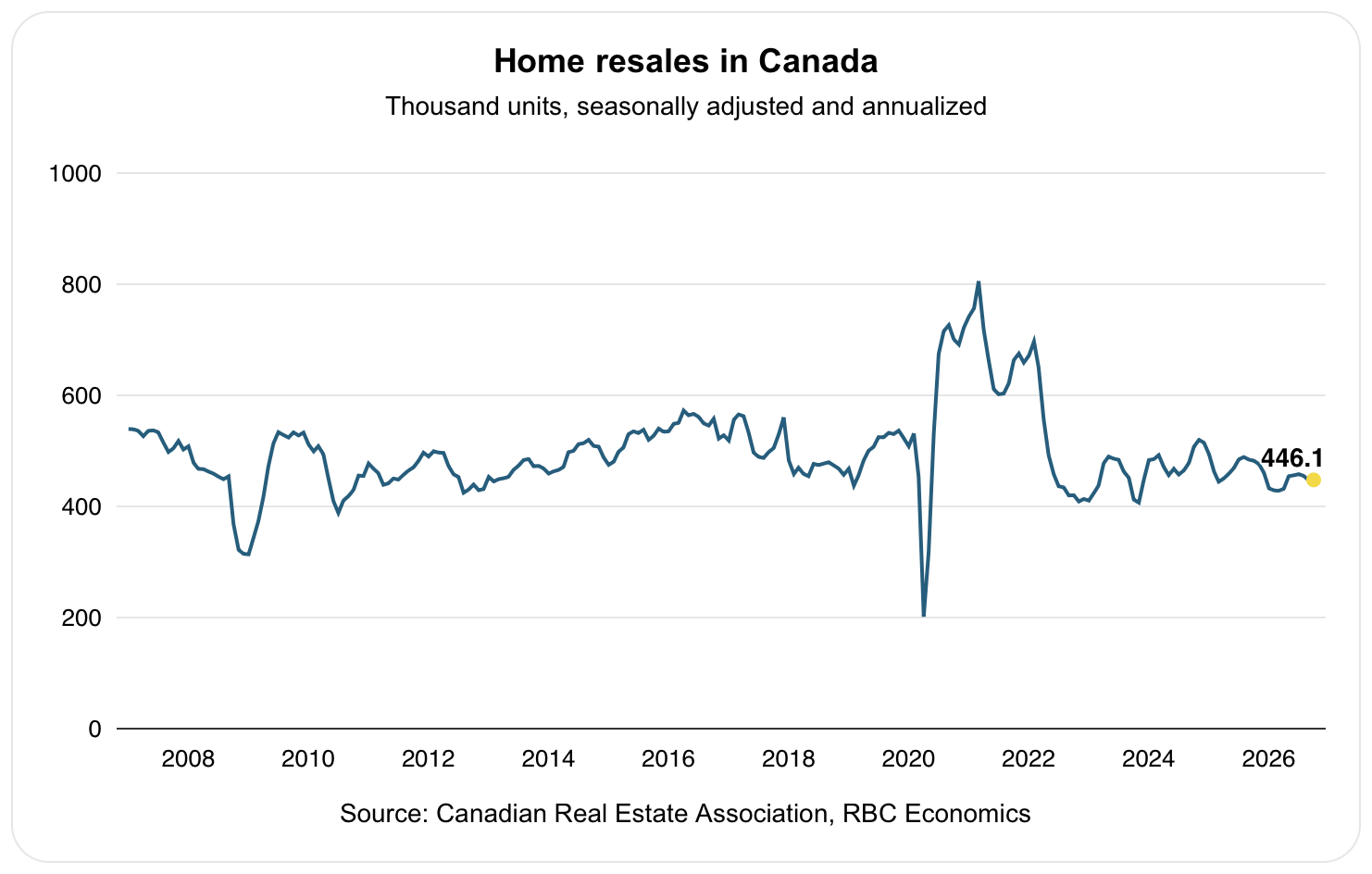
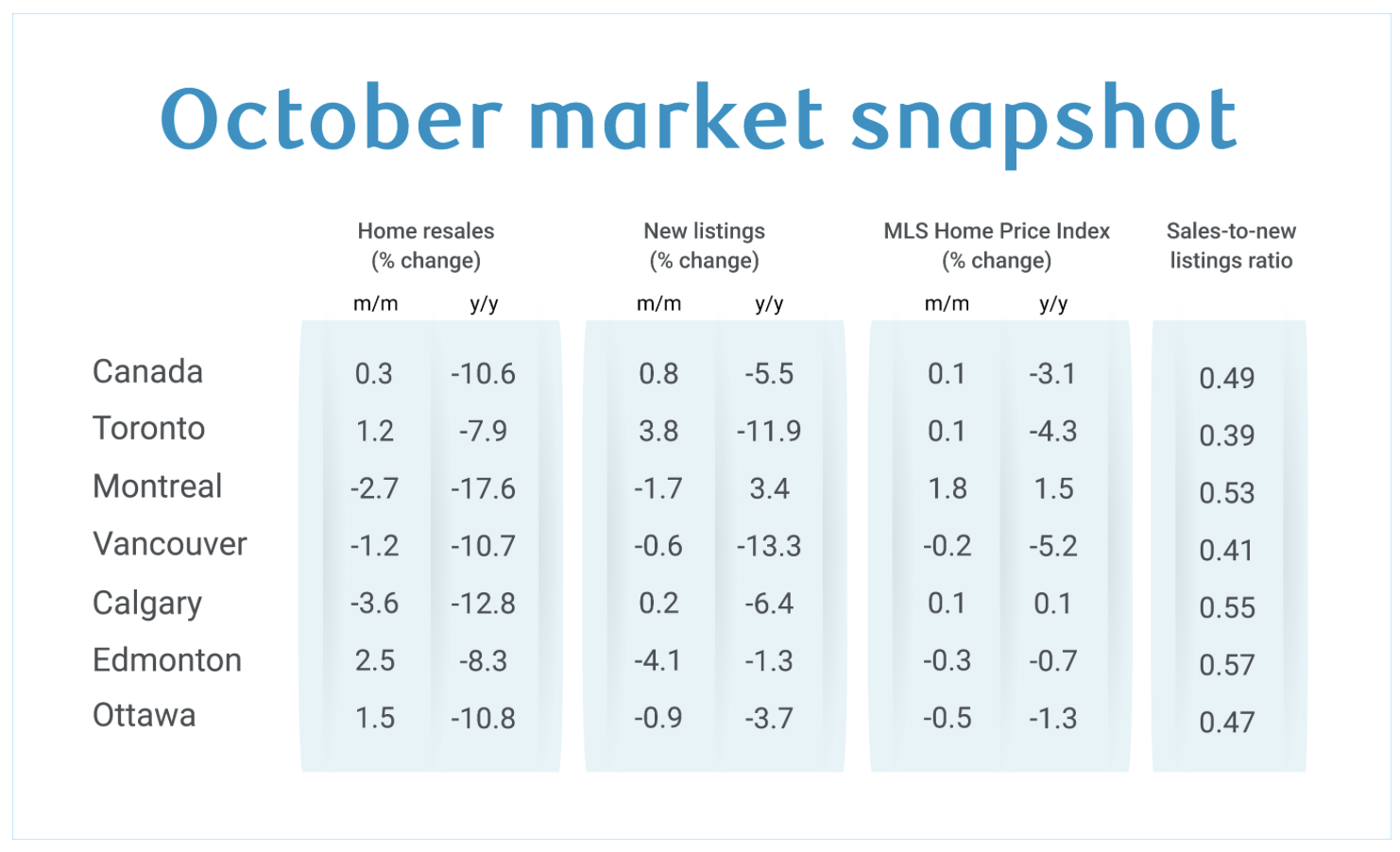
Canada’s housing market showed little momentum in October, with resales virtually unchanged (+0.3% m/m seasonally adjusted) following a soft September.
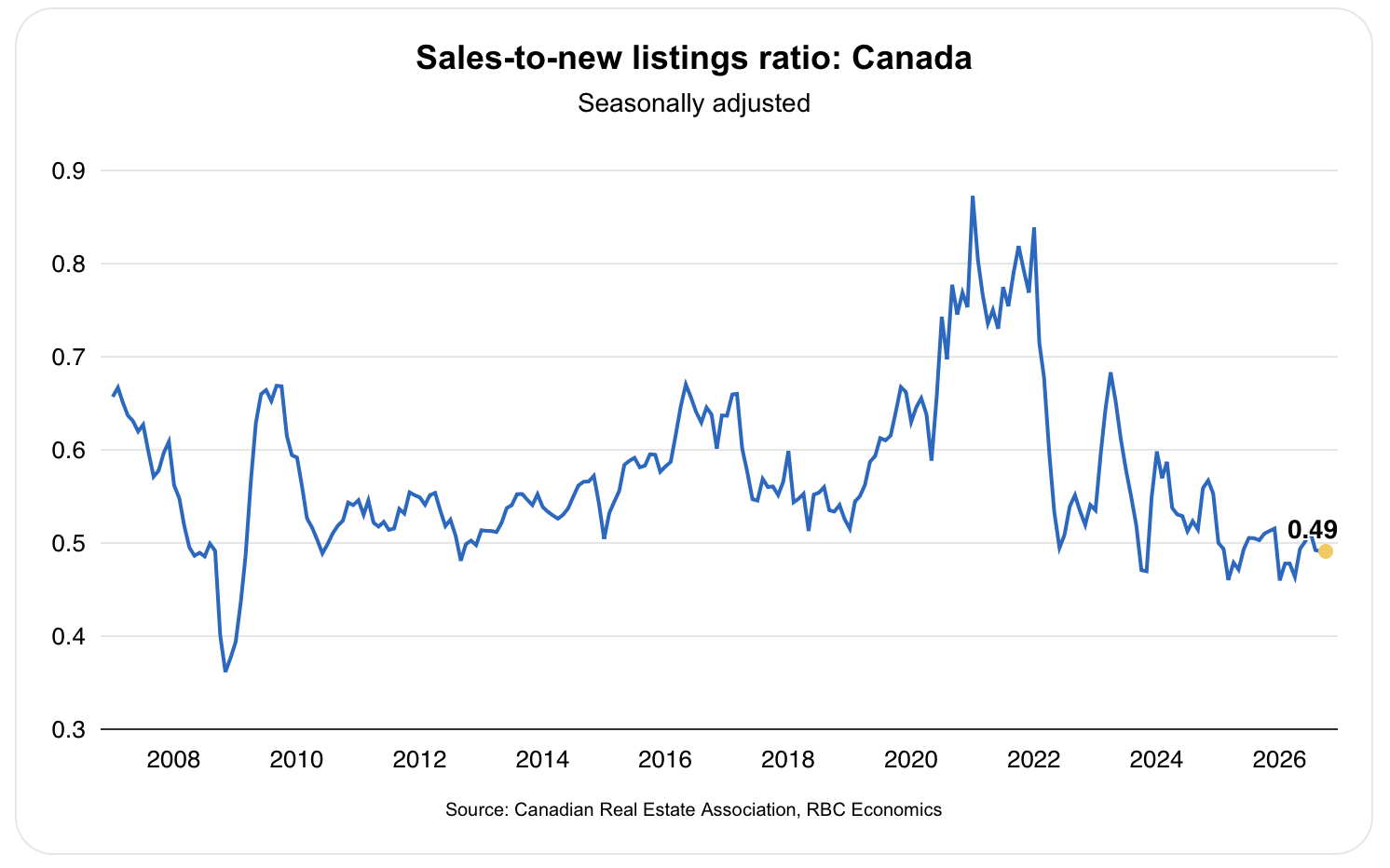
Lingering trade uncertainty and higher mortgage rates kept buyers cautious. New listings outpaced growth in sales for a third consecutive month—lifting national inventory to five months’ supply, the highest since the GST rebate on new homes took effect in April.
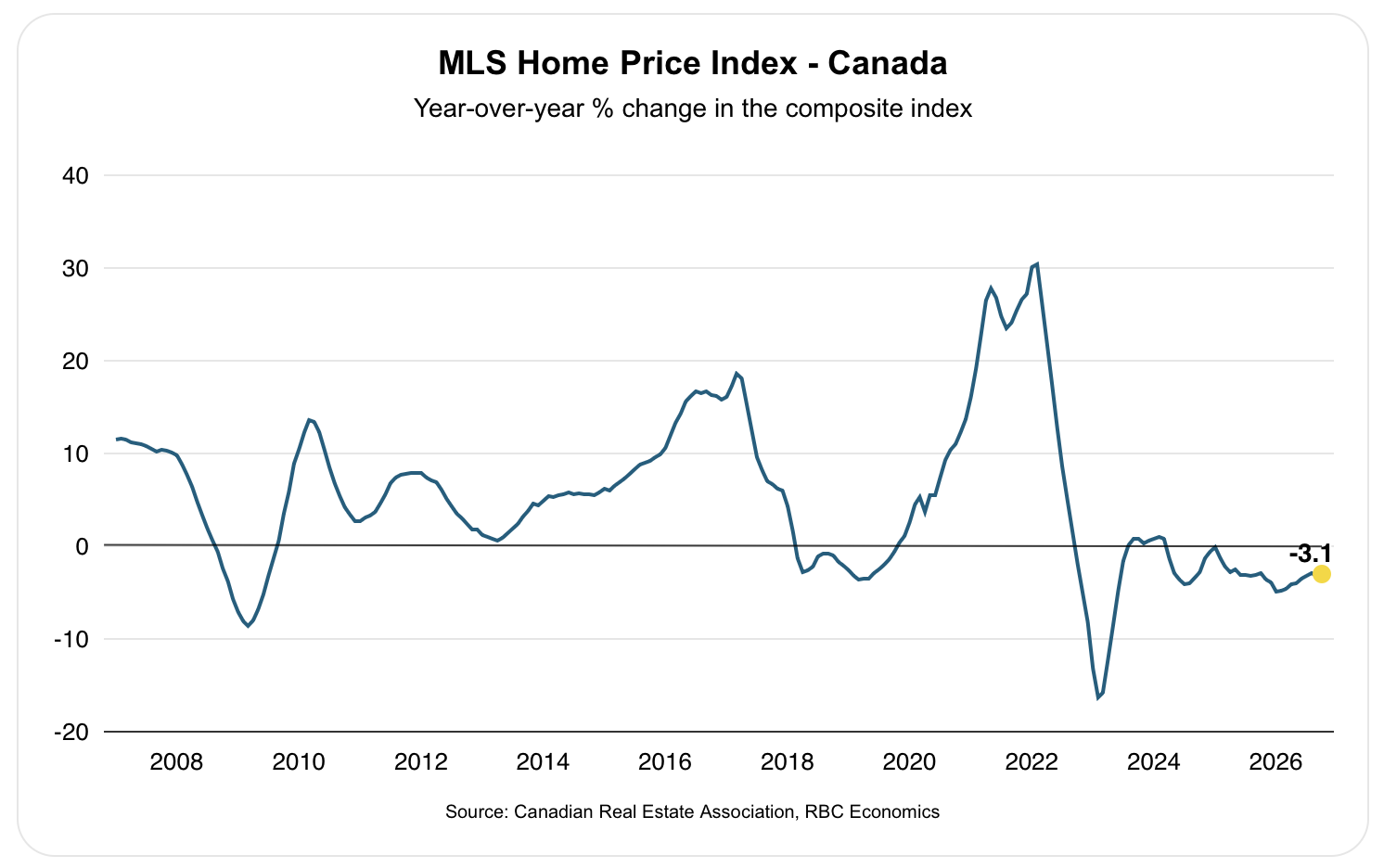
Prices were virtually unchanged (+0.1% m/m seasonally adjusted) from September and remain 3.1% below a year ago.
A late-month Bank of Canada rate hike adds to near-term headwinds, but an improving labour market and faster population growth next year should help underpin a modest recovery in housing demand next year.
Variable-rate mortgages just got more expensive
The Bank of Canada’s 25 basis point rate hike in late October raises the affordability hurdle for prospective buyers by increasing the cost of variable-rate mortgages.
Unlike fixed mortgage rates, which had already risen in anticipation of the Bank’s move, variable rates are more directly tied to the policy rate. This is significant because variable-rate mortgages had become increasingly popular as the BoC cut rates through 2024 and 2025, offering borrowers a cheaper alternative to fixed-rate loans—helping some qualify for a mortgage.
With that gap now narrowing, higher variable-rate payments are likely to discourage some prospective buyers or price others out of the market altogether—especially where affordability is already stretched.
October’s resale figures won’t fully capture the impact given the timing of the announcement, making November a better gauge of its impact on buyers.
Quebec and Saskatchewan markets lose their edge
Quebec and Saskatchewan were the main laggards as affordability pressures increasingly weighed on areas where prices have held up. Montreal resales are now down 18% from a year ago—the second largest drop of Canada’s major markets next to Halifax. Though prices still rose 1.8% m/m, rising inventory should temper future increases.
Resales rose across several Ontario markets—including Toronto (+1.2% m/m) where activity has been especially weak. Year-over-year resales are still down, but the drop is now shallower than in most other large markets.
Other regions remain a mixed bag. British Columbia is largely stagnant, with market conditions still favouring buyers for the most part. That’s kept prices on a downtrend, though at a less steep rate.
Other Prairie markets remain relatively balanced, with Winnipeg among the last to move away from seller-favouring territory. Most of the Atlantic region, on the other hand, remains relatively tight—though they too are starting to loosen.
Latest immigration plan, improving labour market to support recovery going forward
We continue to expect a gradual and uneven market recovery over the coming year.
The BoC is likely to keep nudging rates up—with 75 basis points of additional increases by the end of Q2 2027. That’s a headwind for buyers, but a stronger job market could help unlock pent-up demand as employment picks up and layoffs ease.
The latest immigration levels plan also points to modestly faster population growth next year, adding to housing demand—particularly in Ontario and B.C., where most newcomers settle. While the impact will be felt more immediately in rental markets, it should also provide some support to resale activity.
Abundant inventory should help accommodate additional demand without adding significant upward pressure to prices near-term-but will eventually add to affordability challenges down the road as the market improves. Sustaining the recovery while improving affordability will ultimately require more housing supply.
About the author:
Rachel Battaglia is an Economist at RBC, providing forecasts for the Canadian provincial economies and analyzing key trends in housing and consumer spending.
This article is intended as general information only and is not to be relied upon as constituting legal, financial or other professional advice. The reader is solely liable for any use of the information contained in this document and Royal Bank of Canada (“RBC”) nor any of its affiliates nor any of their respective directors, officers, employees or agents shall be held responsible for any direct or indirect damages arising from the use of this document by the reader. A professional advisor should be consulted regarding your specific situation. Information presented is believed to be factual and up-to-date but we do not guarantee its accuracy and it should not be regarded as a complete analysis of the subjects discussed. All expressions of opinion reflect the judgment of the authors as of the date of publication and are subject to change. No endorsement of any third parties or their advice, opinions, information, products or services is expressly given or implied by Royal Bank of Canada or any of its affiliates.
This document may contain forward-looking statements within the meaning of certain securities laws, which are subject to RBC’s caution regarding forward-looking statements. ESG (including climate) metrics, data and other information contained on this website are or may be based on assumptions, estimates and judgements. For cautionary statements relating to the information on this website, refer to the “Caution regarding forward-looking statements” and the “Important notice regarding this document” sections in our latest climate report or sustainability report, available at: https://www.rbc.com/community-social-impact/reporting-performance/index.html. Except as required by law, none of RBC nor any of its affiliates undertake to update any information in this document.