2025 Year-End Market Commentary
As we approach the end of the year, the market has delivered a crucial lesson in strategic portfolio design: the value of geographical diversification. Despite the traditional dominance of U.S. markets, the Canadian stock market (S&P/TSX Composite Index) has emerged as a surprising outperformer, outpacing both the S&P 500 and the Nasdaq.
As we approach the end of the year, the market has delivered a crucial lesson in strategic portfolio design: the value of geographical diversification. Despite the traditional dominance of U.S. markets, the Canadian stock market (S&P/TSX Composite Index) has emerged as a surprising outperformer, outpacing both the S&P 500 and the Nasdaq.

Troy Private Wealth Partners
December 30, 2025
As we approach the end of the year, the market has delivered a crucial lesson in strategic portfolio design: the value of geographical diversification. Despite the traditional dominance of U.S. markets, the Canadian stock market (S&P/TSX Composite Index) has emerged as a surprising outperformer, outpacing both the S&P 500 and the Nasdaq. This success highlights the resilience and often-overlooked strength of our domestic holdings. In this edition of our market newsletter, we explore how data-driven investing informs our strategy, examining the resilience of AI-exposed stocks, the importance of quality investments for inflation protection, and the seasonal trends that influence market behavior as we head into the new year.
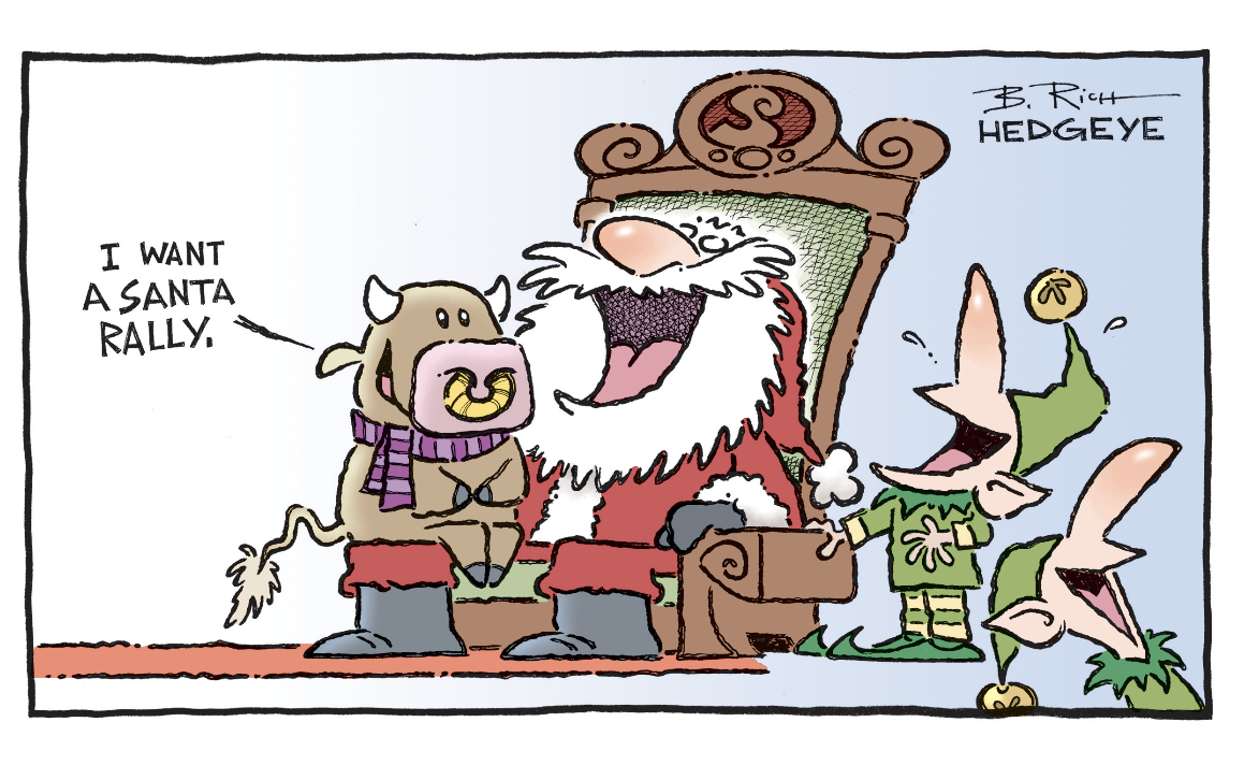
A Strong Finish and the Search for a Santa Rally: A Multi-Factor, Data-Driven View
Everyone is watching for a "Santa Claus Rally"—the historical surge in stock markets during the final trading days of December and the first two of January. Strategists point to three major factors—two behavioral and one historical—that suggest a stronger-than-average finish may be in the cards this year:
- The Institutional Catalyst (Performance Chasing): This factor is driven by institutional mandates and compensation structures. Studies on daily institutional trading activity around year-end consistently show a surge in net buying, a phenomenon known as "portfolio pumping." This is primarily motivated by two groups:
Underperforming Managers: Managers who have lagged their benchmark feel compelled to buy the year's winners to narrow the gap and reduce career risk before bonuses are calculated.
Strategic Rebalancing: To maintain a fund's stated asset allocation targets (e.g., 60% equities), year-end rebalancing requires institutional funds to buy equities that have become relatively underweight, generating predictable, systematic demand. - The Cash Catalyst (The Trillion-Dollar Fuel): According to leading analysis, there is currently a staggering amount of over $7 trillion sitting in low-risk Money Market Funds (MMFs) and other cash equivalents. As the market finishes the year strong and high interest rates on cash begin to normalize, the "fear of missing out" (FOMO) among institutional investors and high-net-worth individuals will compel that capital to move back into risk assets and high-quality equities. This massive rotation of capital could be a significant factor in fueling a robust rally.
- Historical Probability: Data confirms that the market favors a strong finish. Historically, the S&P 500 has been positive roughly 79% of the time during this specific seven-day holiday season window, showing an average gain of around 1.3%.
AI Stocks: Beyond the "Bubble" Narrative
Let's address the big question: Is AI a bubble?
When we look past the headlines and examine the financial data, we believe the answer is no.
The narrative surrounding artificial intelligence (AI) has been dominated by discussions of a potential bubble, but a closer examination reveals a more nuanced picture.
The Key Difference: Profits vs. Promises
Unlike the dot-com bubble of the late 1990s, where many companies had little to no revenue or earnings, today's AI leaders are generating substantial revenues and, in nearly all cases, enormous profits. Their valuation increases have been justified by strong earnings.
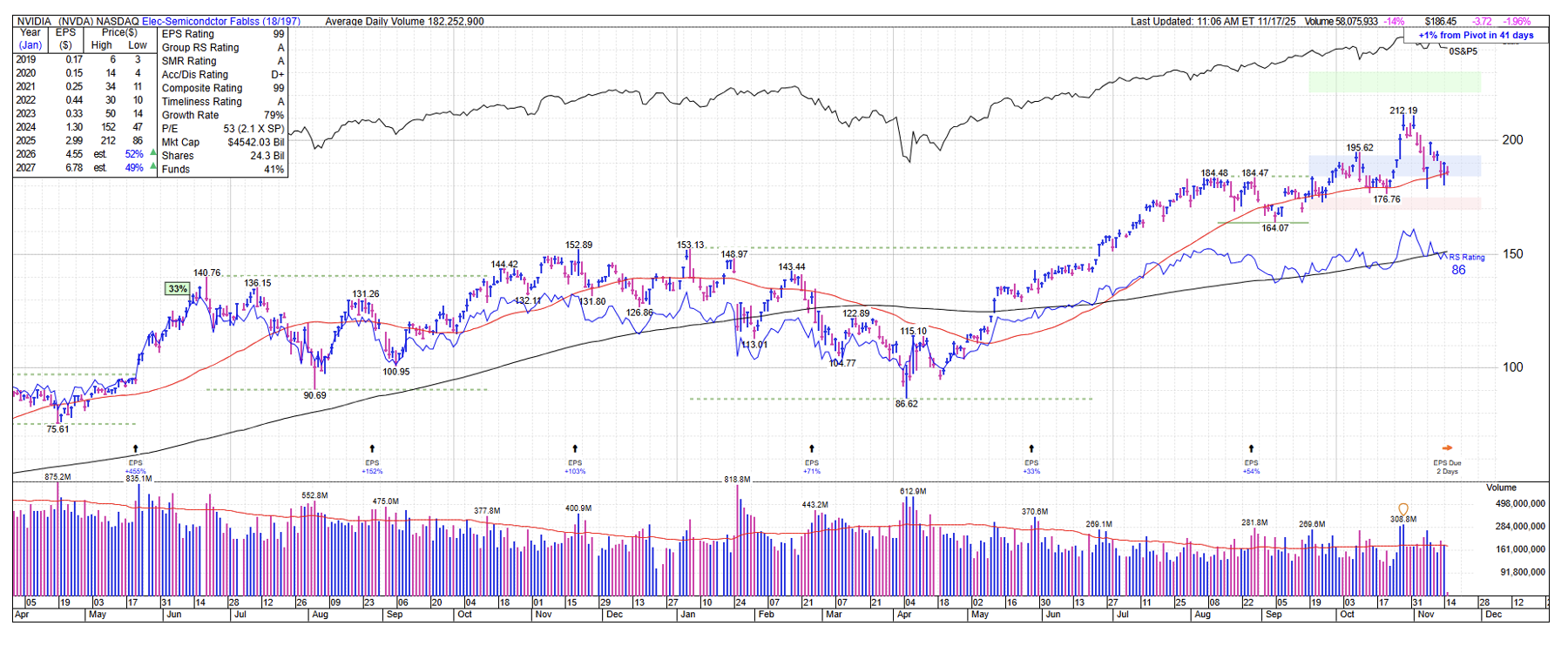
- Real Data in Action: NVIDIA, for instance, has become a cornerstone of the AI revolution. While NVDA's share price has surged over 1,000% in the last three years, its corporate earnings have grown even faster. This phenomenal earnings strength means the company's valuation increase has been fundamentally justified by its profit growth, a key sign that this is an investment boom, not a speculative bubble.
- Long-Term Transformation: The AI sector is still in its early stages, with vast untapped potential. We believe that the technology is not a fleeting trend but a fundamental shift in how businesses operate, transforming industries from healthcare to finance.
Our Approach: We remain highly selective. We avoid areas of the market where there is massive price appreciation without the earnings strength to back it. We focus on companies with a strong operating outlook, high levels of profitability, a strong balance sheet, and reasonable valuation.
Company Highlight: NVIDIA—The Core Engine of AI

NVIDIA is the world leader in accelerated computing, which starts with the most advanced processors and ends with AI factories. From chip architecture to advanced networking, NVIDIA builds the entire computing system at data cMetric enter scale to produce intelligence at scale. Companies and countries around the world are building NVIDIA-powered AI factories to process, refine, and manufacture intelligence from data. These datacenters process mountains of continuous data to train and refine AI software. NVIDIA is seen as the engine of the world’s AI infrastructure and its core business segments include: Graphics Processing Units (GPUs), Compute and Networking, AI and Software Platforms, and Automotive Solutions which focuses on autonomous vehicles.
NVIDIA is a core holding in client portfolios, and the business currently trades at a near market multiple for well above average levels of profitability and growth. NVIDIA is the most profitable business we own in the portfolio.
Profitability Analysis (Non-GAAP)
| Metric | 2023 (Actual) | 2024 (Actual) | 2025 (Projected) |
|---|---|---|---|
Gross Margin | 73.0% | 75.5% | 73.5% |
Operating Margin | 54.0% | 66.5% | 60.0% |
Profit Margin | 49.0% | 56.9% | 53.0% |
ROE (Return on Equity) | 92% | 119% | 95% |
Note on 2025 Projections: The slight compression in Operating and Profit Margins for 2025 is largely a result of the company's planned, massive increase in operating expenses (R&D, sales, and infrastructure investment) to aggressively capitalize on the long-term AI opportunity.
Ignoring the Pre-Earnings Noise: A Long-Term Perspective
Leading up to any major earnings release, you will inevitably hear "noise" about prominent hedge funds or tactical traders selling shares or initiating short positions. This is a common phenomenon driven by short-term mandates. These managers are often playing for a tiny, immediate advantage, such as profiting from a slight pre-earnings dip or hedging their risk over a two-week period. For a long-term investor focused on the secular growth of AI and NVIDIA's foundational technology, this kind of tactical movement is irrelevant. We focus on the three-year earnings power, not the three-week stock volatility. The true story is confirmed by the fundamental results, which have continuously validated the long-term thesis.
Strength in the Quarterly Report (Q3 Fiscal 2026)
The recent Q3 Fiscal 2026 earnings report, released on November 19th (Note: The fiscal year is offset, meaning Q3 FY26 is the current reporting period in late calendar 2025), was a powerful confirmation of its dominance and the underlying strength of the AI boom.
Quality Investments vs. GICs: Defending Your Purchasing Power
In an environment of persistent inflation, the primary goal of a long-term investment portfolio is to increase your long-term purchasing power.
Why Quality Equities Outweigh GICs for Long-Term Growth
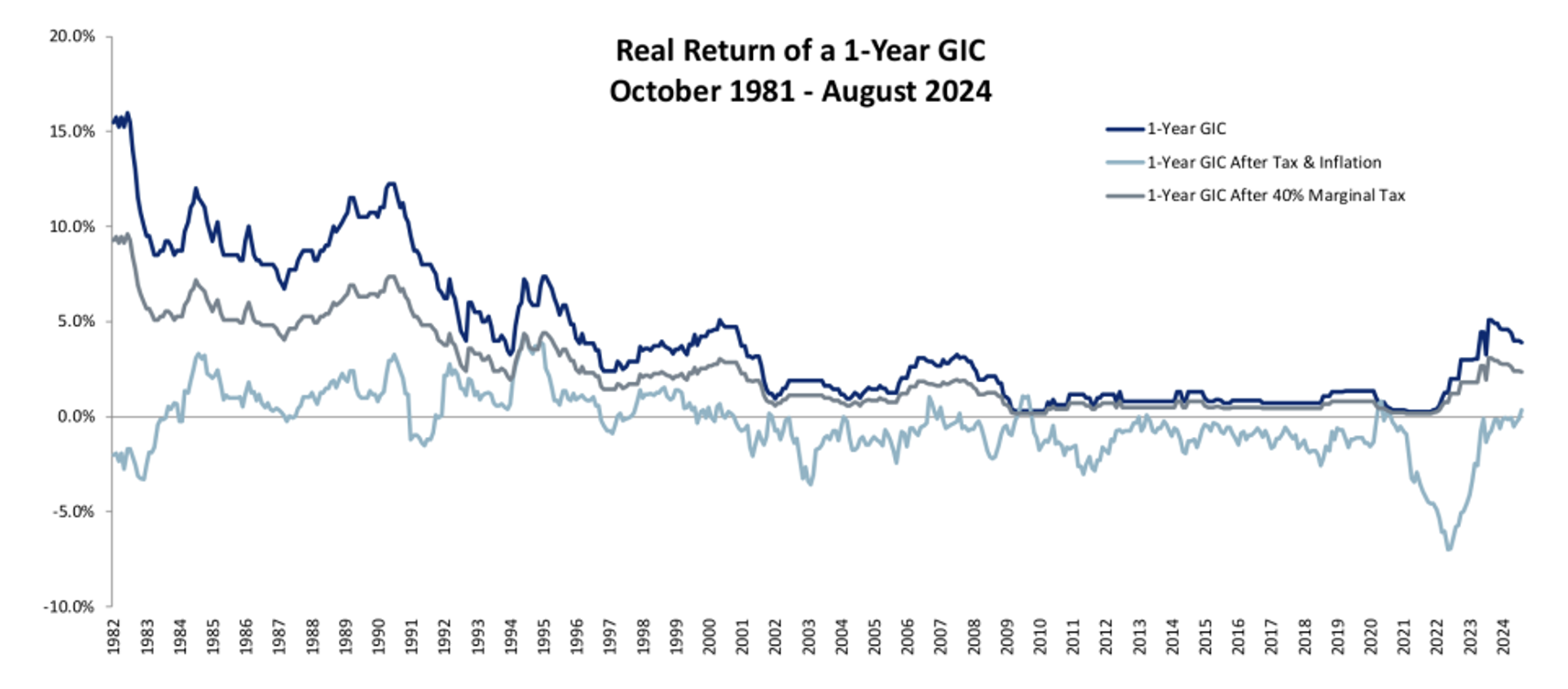
While Guaranteed Investment Certificates (GICs) offer stability and fixed returns, they may fall short in providing adequate inflation protection. GIC returns are often below the inflation rate, especially in high-inflation environments.
- The Real Return Problem: For example, if a GIC offers a 3% return while inflation is 2%, and you spend 5% of your portfolio each year in retirement, the real return is negative, which prevents your capital from sustaining your lifestyle over time. Your portfolio needs to return 7% just to break even, and GICs will not get you there!
- The Data: Historically, the real return of a 1-Year GIC (after-tax and inflation) has often been negligible or negative over the past few decades.
Our Solution: Investing in Quality Companies We prefer companies with strong pricing power and competitive advantages. These high-quality companies can successfully pass cost increases on to customers, maintaining or even increasing their profit margins during inflationary periods. This ensures their earnings and dividends grow in-line or ahead of inflation, providing a better hedge against rising costs. Historically, equities have outperformed fixed-income investments over extended periods, making them a more effective tool for wealth preservation and growth.
The Discipline of Patient Investing: Shutting Out the Noise
It is easy to get caught up in the 24/7 news cycle. Reacting to this short-term noise—fearing a downturn or chasing an overnight rally—are common pitfalls that often lead to poor decision-making.
We maintain a disciplined focus on enduring business fundamentals: a company's profitability, its competitive advantages, and the long-term trends that will drive decades of growth. Empirical analysis shows that 80-90% of long-term equity returns are driven by growth in corporate earnings and dividends—not by timing the market.
By sticking to a carefully constructed investment plan and ignoring the temptation of short-term noise, we can better capitalize on moments when the market's irrational behavior creates opportunities.
We are focused on navigating the market complexities by concentrating on long-term trends and fundamental strength to ensure your portfolio is well-positioned for the future. Please let us know if you have any questions about this update or your portfolio strategy.