Mike's Musings - July 3, 2026
Global markets enter the second half of the year with investors weighing a constructive earnings backdrop against several lingering risks. Below, I discuss geopolitics, review what drove markets through the first half of 2026, and outline the factors likely to shape returns through year-end.
Global markets enter the second half of the year with investors weighing a constructive earnings backdrop against several lingering risks. Below, I discuss geopolitics, review what drove markets through the first half of 2026, and outline the factors likely to shape returns through year-end.

Michael Wilkie
July 2, 2026
A Word from Mike
Hello,
Global markets enter the second half of the year with investors weighing a constructive earnings backdrop against several lingering risks. Below, I discuss geopolitics, review what drove markets through the first half of 2026, and outline the factors likely to shape returns through year-end.
Geopolitics: Insights from Crises
The memorandum of understanding between the U.S. and Iran has mostly held, though periodic tensions continue to test its durability. Financial markets have drawn confidence from a notable pickup in shipping through the Strait of Hormuz, which has sharply reduced downside risks to the economy. Equity markets continue to hover near record highs, bond yields have eased from conflict-driven peaks, and oil prices have retraced much of their previous rise.
While key negotiating points remain unresolved, recent events underscore the value of maintaining a long-term perspective. History shows that market reactions to geopolitical shocks tend to be temporary unless they materially impair economic growth or corporate profitability. Equally important, the global economy is influenced by a wide range of interconnected forces rather than any single event and its ability to adapt to supply chain disruptions is often underappreciated. Although the Strait remains a critical energy transit chokepoint, the economic fallout was softened by a world economy that has significantly reduced its “oil intensity” over time, as well as by inventories and the ability of businesses and consumers to adapt quickly.
More broadly, the U.S.-Iran conflict reinforces why I believe a disciplined and multi-lens approach to portfolio management is an effective way to navigate uncertainty while participating in long-term market appreciation.
Looking Back, Looking Ahead
Despite unsettling geopolitical headlines, the first half of 2026 was ultimately a strong one for markets. Global equities advanced roughly 15% in Canadian-dollar terms, supported by sustained AI-related spending and rising earnings expectations. U.S. equities posted similar gains, driven largely by the same forces. Canadian equities also performed well, returning roughly 11%, with Financials, Energy, and Industrials among the key contributors. International developed markets (+14%) participated in the rally, while emerging markets (+28%) were the standout, benefitting from strength in Asia tied to AI infrastructure.
Meanwhile, inflation uncertainty weighed on fixed income returns as yields moved higher—which pushed prices lower—with global bonds essentially flat and Canadian bonds generating modestly positive total returns.
Looking ahead, the second half begins with a more favourable economic setup than the geopolitical environment suggested just a few months ago. If flows through the Strait continue to normalize, lower fuel prices should directly benefit consumers while reduced transportation and fertilizer costs could help moderate inflation. These benefits should be especially meaningful in regions with greater dependence on imported energy, including Europe and Asia.
In the U.S., business investment in AI will likely remain a key pillar for the economy and markets, albeit one that also introduces risks as debates around AI disruption and whether companies can earn an adequate return on that outsized spending swing between optimism and caution.
In Canada, RBC Economics anticipates growth and labour market conditions to gradually improve through the second half. However, trade policy remains an important source of uncertainty. The CUSMA review process has shifted into an annual review framework rather than a straightforward 16-year extension, leaving the agreement in place but prolonging uncertainty for businesses that could dampen investment and hiring decisions.
Takeaway
The first half of the year provided another reminder that markets can remain resilient even amidst a steady stream of worrisome headlines. While that resilience is reassuring, it is worth noting that valuations across most markets are reflecting a fairly upbeat outlook, potentially leaving less room to absorb disappointments should earnings or economic growth fall short of expectations.
On balance, the current economic scenario continues to support a reasonably constructive path for markets in the quarters ahead, with diversification and a disciplined investment approach remaining the foundation for navigating an increasingly complex environment.
Highlights
U.S./Iran: After the “truce”
Markets have exhaled, and inflation fears have eased. But for governments and companies alike, the drive towards self-sufficiency remains a strategic priority.
Regional developments: Canada's headline inflation rate surges, but the underlying picture is less alarming; Momentum-driven selloff reversed by strong semiconductor earnings; Political risk elicits a British shrug and a German cry; South Korean market turbulence prompts Tech caution.
Please take some time to review the Global Insight Weekly.
Higher energy prices drove Canada’s inflation rate up 3.2% in May
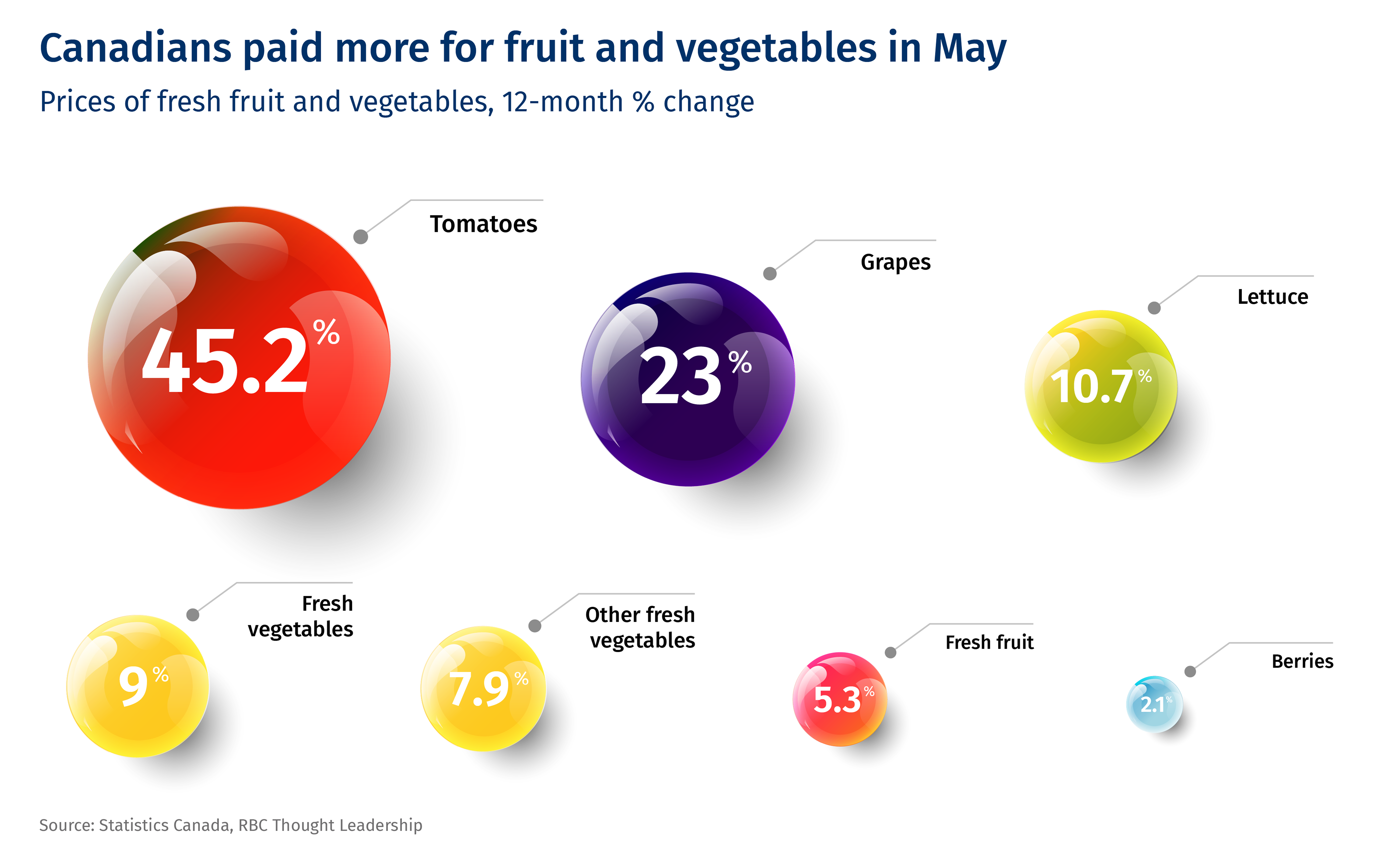
Gas prices alone increased 33.2% compared to last year amid the closure of the Strait of Hormuz. That meant consumers paid the highest prices at the pumps since June 2022, when Russia’s invasion of Ukraine created supply uncertainty. Transportation was up 9% compared to last year, with air transportation costs up 7.4%. Food prices also jumped 4.3% annually, the 16th straight month that year-over-year food inflation outpaced the headline figure, Statistics Canada said.
BoC meeting minutes highlight balancing sluggish growth with inflation risks
The Bank of Canada (BoC) held its policy rate at 2.25% on June 10 for a fifth consecutive decision, judging that unchanged borrowing costs best balanced a struggling economy against inflation risks. Governing Council agreed it should neither overreact to the oil-driven rise in consumer prices nor wait too long if those pressures spread more broadly. The decision reflected limited evidence that higher energy costs were affecting other goods and services, although officials emphasized their readiness to respond should conditions change. The economy contracted at a 0.1% annualized rate in the first quarter following another quarterly decline, with excess capacity and labour-market slack still evident. Nevertheless, policymakers did not consider the weakness sufficiently deep or widespread to constitute a recession. They attributed much of the latest contraction to volatile government spending, noting that consumer spending still increased. Officials expect growth to resume in the second quarter. Since the deliberations, crude prices have fallen roughly a quarter from their early-June peak following a tentative U.S.-Iran agreement, reducing some inflation risk.
Ottawa Sets Out Ambitious Plan to Expand Nuclear Power
Ottawa is making a renewed push to expand nuclear power in Canada, with a goal of enabling up to 10 new large reactors, a more than 50% increase from existing capacity, according to documents received by The Globe and Mail. Two would be under construction by 2035, while another five would be planned or in development by 2040. The strategy marks a shift back toward large-scale reactors after years of federal attention on small modular reactors, which are designed to be cheaper and faster to build. It gives particular emphasis to Candu technology, the Canadian-developed reactor design used at several domestic nuclear stations. The government argues that relying on Canadian technology and suppliers could improve energy security, support domestic industry and create export opportunities. Meanwhile, interest in nuclear power is top of mind globally. Ottawa also wants to double the nuclear workforce by 2050, double uranium exports by 2035 and enter at least four new international markets by 2040. No new money is attached to the strategy, so progress will depend on existing federal programs, private financing and decisions by provincial governments, which control electricity systems. Although a federal financing policy is expected by April 2027 and the federal government has the opportunity to enable the projects via a more efficient approval process and decreasing investment risk.
Ottawa and Alberta pivot to southern route for new West Coast pipeline
Ottawa and Alberta have agreed to pursue a new West Coast oil pipeline using a southern route that largely follows the existing Trans Mountain corridor from Edmonton to southern B.C., marking a shift away from Alberta's earlier preference for a northern route. The change reflects opposition from First Nations, environmental hurdles, and B.C.'s insistence that the federal North Coast tanker ban remain in place. Trans Mountain will lead planning, construction, regulatory work, Indigenous engagement and operations, while Pembina will participate under a non-binding agreement with a 10% construction-stage economic interest and potential for more once operational. The project is being framed as part of Canada's push to diversify exports amid U.S. trade tensions, with Prime Minister Carney saying Ottawa and Alberta would be "equal partners" and Indigenous communities expected to receive a meaningful ownership stake. The proposal will now go to the Major Projects Office, with consultations starting immediately and a national-interest decision expected by October 1st, alongside commitments on Pathways carbon capture, methane reductions and carbon-market reforms.
The U.S. refused to renew CUSMA by the July 1 deadline
Despite Canada and Mexico asking for a 16-year extension, the trade pact will now by reviewed annually for the next decade. If a deal is not struck by 2036, the pact will expire. U.S. President Donald Trump’s refusal to renew CUSMA in its current form came as no surprise. But little changes in the near term, as tariff carve outs for Canadian and Mexican goods that comply with CUSMA remain in place. Negotiations are expected to continue all summer.
Prospects of new U.S. tariffs are sending shipping rates higher
Retailers are placing wholesale orders for holiday decorations to furniture early amid concerns the U.S. will impose levies of at least 10% on dozens of countries—including Canada—later this month. The frenzy has pushed global container shipment fees 80% higher in the past 30 days—their highest level since April 2022, at the peak of pandemic-related supply chain issues. North America rates are even higher at 120%. Analysts expect end customers to bear the brunt of the higher costs.
U.S. job growth slowed sharply in June
Nonfarm payrolls increased 57,000, falling short of the 110,000 increase economists expected. Gains from the prior two months were also revised lower. Some economists said the bigger-than-expected slowdown was likely a delayed response to the Middle East conflict, which raised gas prices and boosted inflation. While jobs growth slowed, the unemployment rate dropped to 4.2% from 4.3% in May due to 720,000 leaving the labour force, pushing the rate to its lowest level in more than five years.
Charts of the day
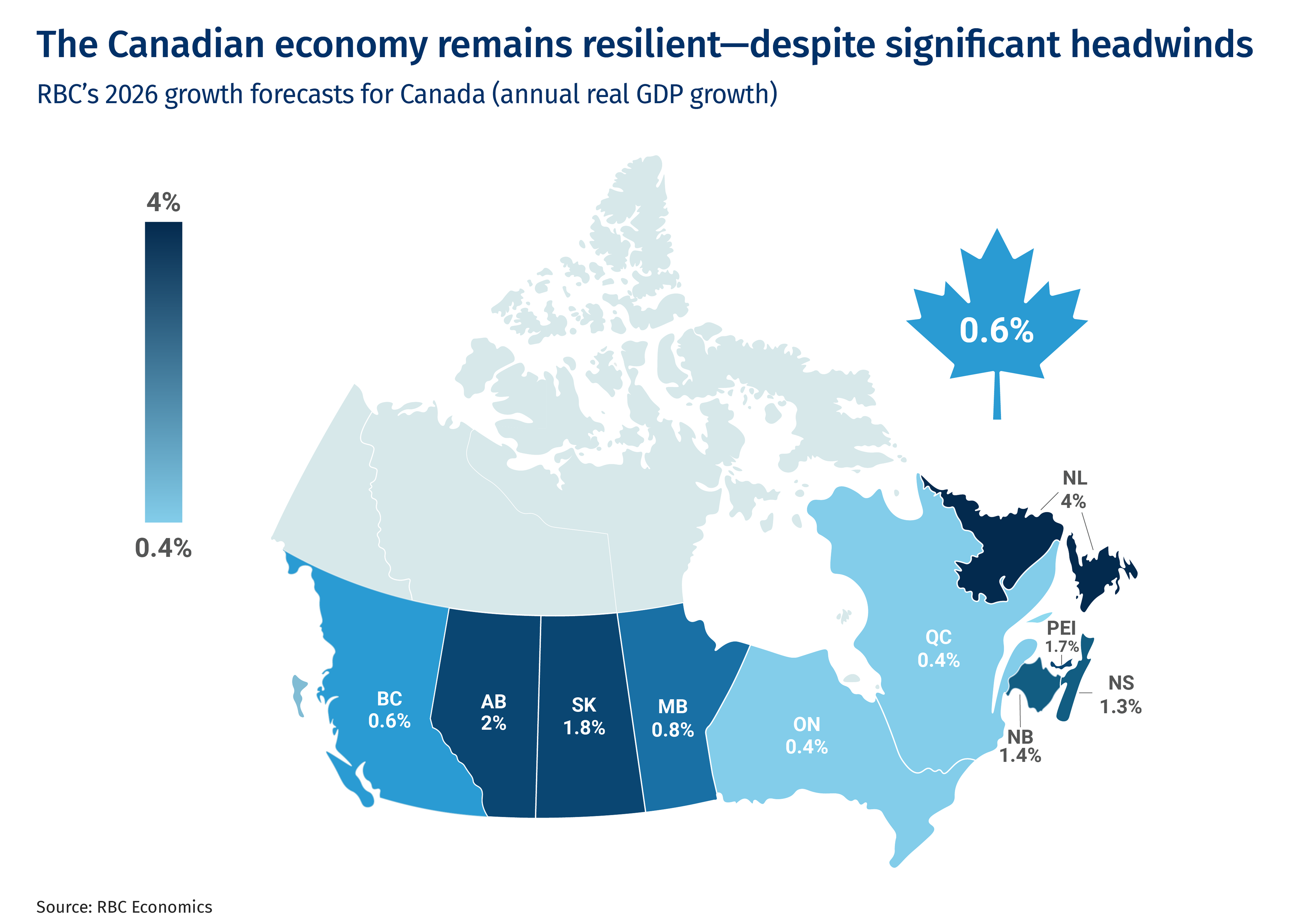
RBC Economics: The Canadian economy is bruised, not broken
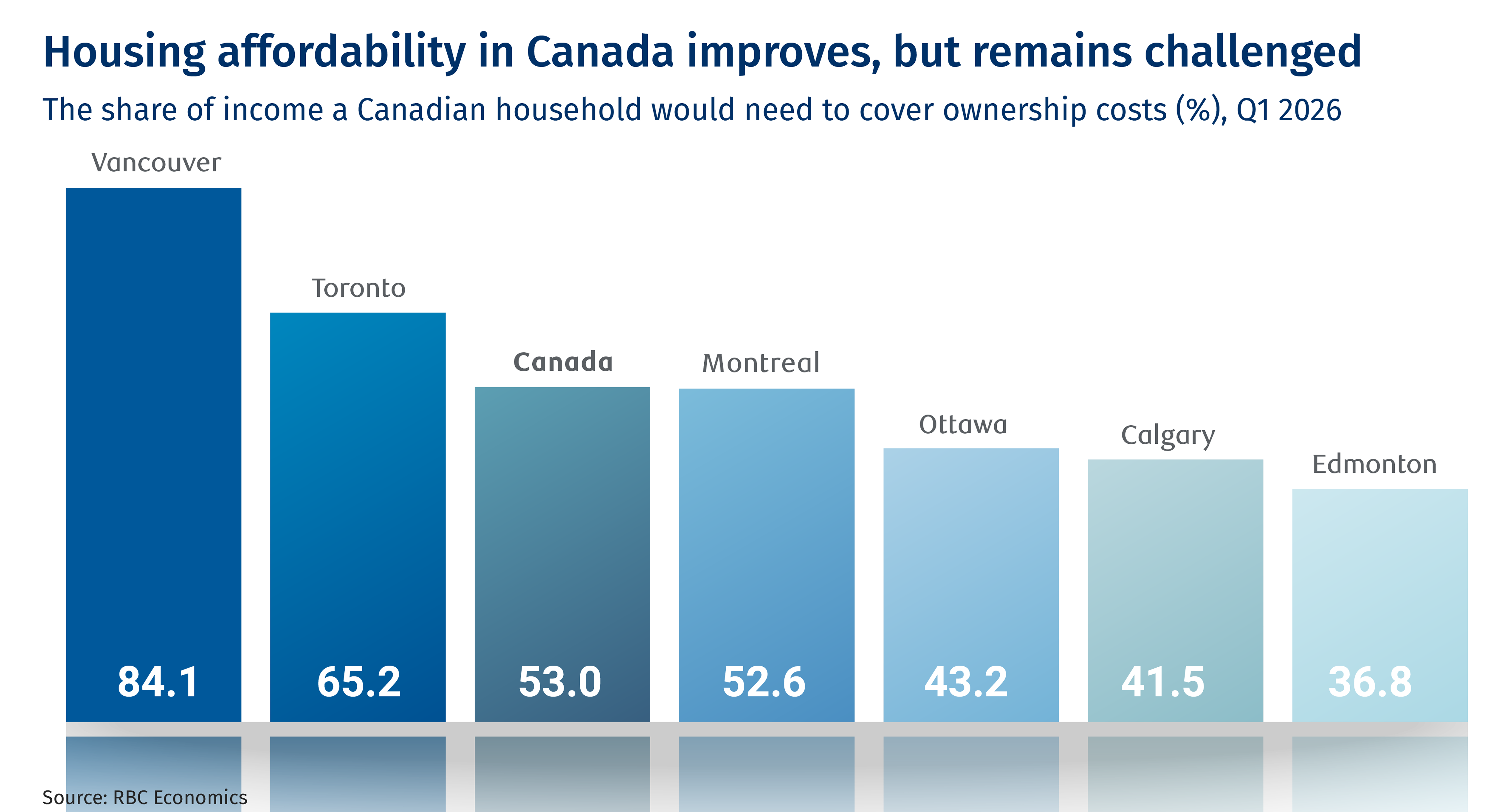
Improving housing affordability continues in most Canadian major markets
Interesting tidbits
- Michael J. Fox and Christine Sinclair get a promotion. The actor and soccer star have been promoted to companions within the Order of Canada, the highest rank and a category that is capped at 180 living members. Rideau Hall cited Fox for his “powerful global advocacy and unflinching honesty about Parkinson’s” and Sinclair as “one of the most influential athletes in Canadian history.” The promotions are part of 61 appointments that were picked by former governor general Mary Simon, who was succeeded by Louise Arbour last month.
- Emergency room wait times are getting worse in Canada. A new report found that one in 10 patients spent more than 14 hours waiting for care in Canadian emergency departments, a nearly 30% increase from six years earlier. Those requiring an admission to hospital sometimes had to wait even longer, with one in 10 spending more than two days in the emergency department. The latest episode of Disruptors looks at the challenges facing Canadian hospitals, and how technology may be deployed in our healthcare system.
Today's funny

Fine – I’ll take neck, you get ankles.”
REMINDER: Most of my new clients come to me via word of mouth as I don’t advertise or engage in marketing programs. Please keep my team in mind if you hear of anyone with over $1 million in investable assets who is in need of wealth management services.
This information is not investment advice and should be used only in conjunction with a discussion with your RBC Dominion Securities Inc. Investment Advisor. This will ensure that your own circumstances have been considered properly and that any action is taken based upon the latest available information. The strategies and advice in this report are provided for general guidance. Readers should consult their own Investment Advisor when planning to implement a strategy. Interest rates, market conditions, special offers, tax rulings, and other investment factors are subject to change. The information contained herein has been obtained from sources believed to be reliable at the time obtained but neither RBC Dominion Securities Inc. nor its employees, agents, or information suppliers can guarantee its accuracy or completeness. This report is not and under no circumstances is to be construed as an offer to sell or the solicitation of an offer to buy any securities. This report is furnished on the basis and understanding that neither RBC Dominion Securities Inc. nor its employees, agents, or information suppliers is to be under any responsibility or liability whatsoever in respect thereof. The inventories of RBC Dominion Securities Inc. may from time to time include securities mentioned herein.