
Michael Wilkie
July 30, 2026
A word from Mike
Hello,
Markets continue to balance ongoing policy uncertainty against a resilient economic backdrop. Below, I discuss recent geopolitical developments and early earnings season results.
Macro Volatility
Policy unpredictability remains a defining feature of the current U.S. administration, but a consistent pattern has emerged in both trade and geopolitical policy: aggressive posturing followed by de-escalation after negative market reactions. In 2025, sweeping tariff threats provoked severe market volatility before being partially rolled back. A similar sequence seems to be unfolding in the Middle East. Renewed military exchanges have driven oil prices and bond yields considerably higher, but intermittent pauses in hostilities have revived hopes that diplomatic efforts will resume. Meanwhile, new U.S. tariff proposals have resurfaced.
One risk of this recurring “escalate, de-escalate” approach is that investors may become conditioned to expect eventual policy reversals. If investors begin to look through initial announcements, market reactions could become less pronounced, reducing pressure on the U.S. administration to change course. Nevertheless, I continue to view de-escalation in the Middle East as the most likely outcome, though the path is unlikely to be smooth. While these recurrent shocks will test the economy’s resilience, underlying fundamentals remain reasonably constructive. Recent data continues to point to global growth of around 3%, somewhat slower than last year’s pace, but still a healthy environment capable of sustaining corporate earnings growth.
Earnings Face Expectations
Earnings season is well underway in the U.S., with over half of S&P 500 companies reporting Q2 results through this week. To date, U.S. companies have comfortably exceeded expectations. If the current earnings growth rate for the index holds, it would mark a seventh consecutive quarters of double-digit expansion and a second quarter exceeding 20%. Strength has also been evident outside the U.S., with Canadian and global earnings growth tracking near the upper end of their post-pandemic ranges.
In my previous “Musings”, I noted that elevated earnings optimism raised the likelihood that the typical “meet or exceed expectations” result may underwhelm, particularly among AI-related companies. That dynamic has been playing out so far. Demand for AI infrastructure remains strong, and recent results continue to provide evidence that spending is translating into tangible returns. But market reactions suggest investors are becoming increasingly selective, more willing to reward companies where AI investments are generating visible returns while applying much greater scrutiny to businesses where capital spending continues to outpace near-term profitability.
Broader Market Leadership
AI-related companies remain key contributors to earnings and Technology is still one of the top performing sectors in the U.S. this year. More recently, however, their market leadership has taken a backseat. Over the past two months, Health Care and Financials have led while eight of the eleven S&P 500 sectors have also advanced. Encouragingly, international developed market indices remain near recent highs despite this shift in leadership.
Performance has also broadened geographically. Even after a pullback from June’s record highs, emerging market equities remain the strongest-performing region, returning roughly 15% year to date at the time of writing. International developed markets have returned around 14%, followed by Canada at roughly 13%, while U.S. equities have gained roughly 12%. In my view, broader participation across sectors and regions provides a more balanced foundation for equity returns than one driven by a narrower group of companies.
Takeaway
I remain reasonably constructive on the outlook for equities and other risk assets. The economic expansion is intact, while earnings trends imply broadening strength across sectors and regions. At the same time, several risks capable of contributing to bouts of volatility continue to warrant attention, including commodity price swings, inflation uncertainty, shifts in AI-related sentiment, and evolving U.S. policymaking. Taken together, I remain committed to a balanced approach to portfolio management, prioritizing diversification across sectors, regions, and asset classes to prepare for a wide range of outcomes.
Highlights
Is Kevin Warsh a sheep in wolf’s clothing?
The Fed chair got the ‘family fight’ he wanted this week but now might have a fight with the market for which he may be unprepared. With the 30-year Treasury yield reaching a nearly two-decade high, we look at where the Fed—and Treasury yields—could go from here.
Regional developments: Canadian housing market shows cautious signs of recovery as job vacancies remain stable; Semiconductors enter bear market as investors reassess the AI investment cycle; Bank of England strikes a dovish tone and maintains interest rates at 3.75%; South Korea equity market attractive following the big correction.
Please take some time to review the Global Insight Weekly.
Canadian inflation slowed more than expected in June
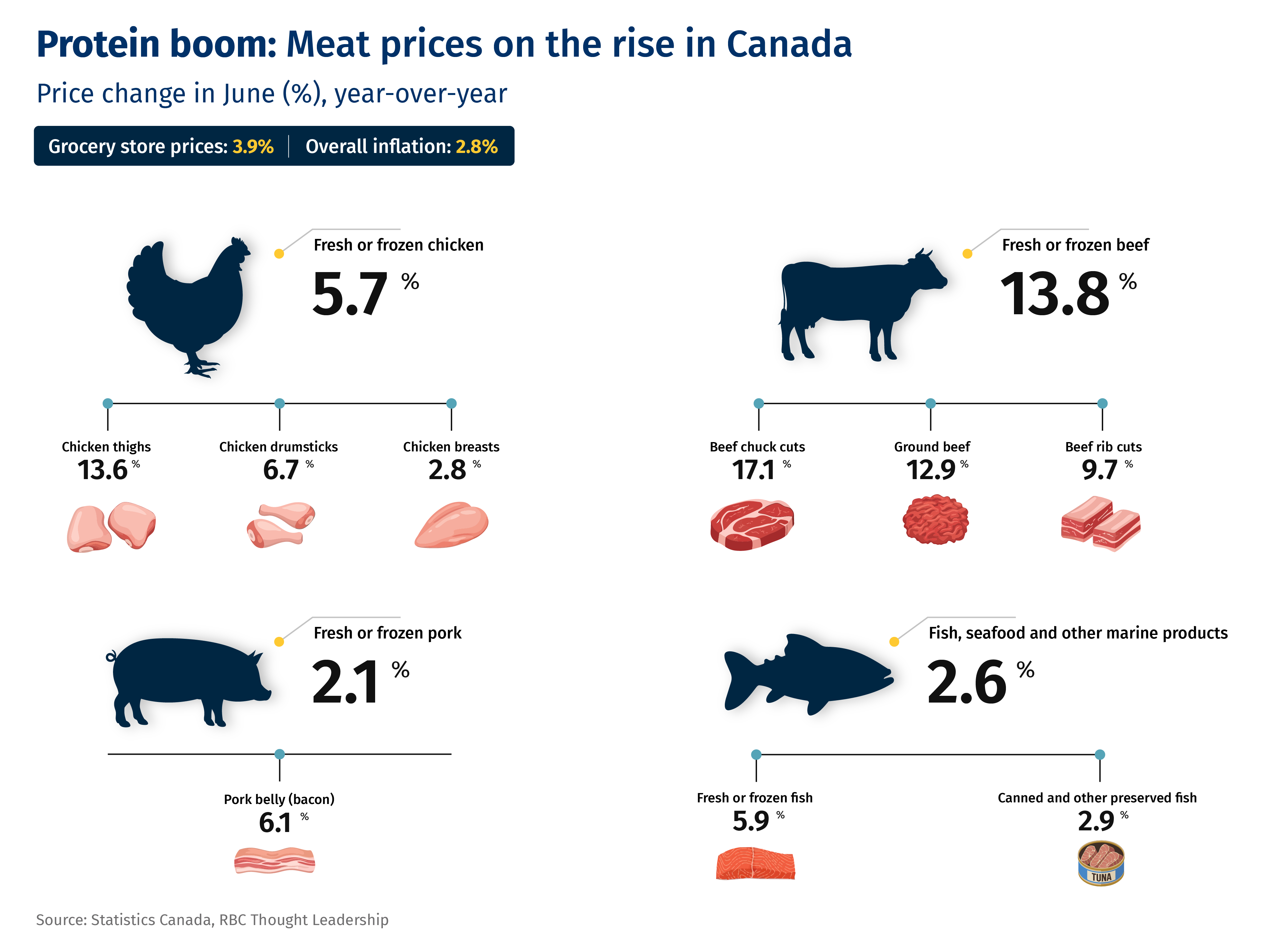
The Consumer Price Index rose 2.8% last month, down from a recent high of 3.2% in May and lower than the 2.9% expected by economists. The slowdown was thanks in part to a drop in gasoline prices amid a short-lived U.S.-Iran ceasefire, although tensions have since flared up, along with prices. Excluding gasoline, prices rose 2.2%, around the Bank of Canada's inflation target of 2%. However, grocery prices remain higher than headline inflation, rising 3.9%.
B.C.’s Ksi Lisims and Germany’s Uniper signed a long-term LNG deal
The agreement, which is over 20 years, is the first long-term liquified natural gas supply agreement between Canada and Germany. Uniper will purchase two million tonnes of LNG annually, with deliveries expected to start in 2032. Backed by the Nisga'a Nation, a consortium of Canadian producers, and an American investor, the development in northern B.C. was referred to Ottawa’s Major Projects Office for fast-tracking. The project is still awaiting regulatory approvals and final investment decisions from partners.
U.S. President Donald Trump announced 50% tariffs on a range of Canadian goods
The tariffs were described as a response to Canada’s “discriminatory treatment of American products” in three areas: motor vehicles, dairy, and alcohol. The new tariffs, which will apply to about 5% of Canadian exports to the U.S., will take effect on August 19th and cover, among other goods, wine, and hockey sticks. While the tariffs will not apply to oil, gas and critical minerals, there will be no exemptions for Canadian goods covered by the Canada-United States-Mexico Agreement.
Two major U.S. unions called to restore trade ties with Canada
The United Steelworkers and the International Association of Machinists and Aerospace Workers, representing hundreds of thousands of manufacturing workers, said U.S. President Donald Trump’s new tariffs against Canada were “unfair,” and called on the White House to reverse course. The private sector unions asked the U.S. Trade Representative to reconsider the levies and return the ties to a “stable, balanced footing.” Meanwhile, Prime Minister Mark Carney ruled out restricting Canada’s oil and gas supply to the U.S. as leverage in trade talks.
The Federal Reserve held its interest rate—but a hike may be on the horizon
This was the fifth straight decision that the U.S. central bank opted to leave rates unchanged. However, three committee members voted in favour of hiking rates, suggesting there is pressure to raise borrowing costs particularly if inflation concerns persist driven by higher gasoline prices.
U.S. economic growth has slowed, but consumers keep spending
Gross domestic product increased 1.5% annually in the second quarter, a slowdown from the 2.1% recorded in the previous quarter. The growth was driven by strong consumer spending, which increased a stronger-than-expected 3.2%, as well as a boom in business investment spurred by artificial intelligence. The data also shows that the economy has so far withstood the impacts of the Iran war, which has led to higher prices and weighed on consumer sentiment.
European natural gas prices have jumped 50% in the past month
Heat waves and concerns over energy supplies from the Strait of Hormuz have sent prices higher, even as oil prices have only risen 20% during the period. The natural gas price rally reflects a tightening global gas market and with Europe competing with Asia. Several ships carrying liquefied natural gas recently diverted to East Asian customers willing to pay higher prices. The high prices are also complicating European efforts to replenish storage levels ahead of the winter season.
Japan is emerging from decades of deflation
The country’s cabinet unveiled a US$2.3 trillion economic blueprint this week and proclaimed that the world’s fourth-biggest economy had transitioned to a “non-deflationary” state. The uptick comes as the Japanese see their investments rise, with a doubling of the stock market in the past two years and the Bank of Japan normalizing a monetary rate regime that had languished in negative territory. However, modest inflation of 1.5% feels like a severe cost of living crisis for many Japanese unaccustomed to rising prices.
Global battery demand is surging, thanks in part to AI
That growth is prompting some companies to pivot. CATL, a Chinese company and the world’s biggest maker of EV batteries, is developing new battery systems to power AI data centres and back up electricity grids. This comes as long-term forecasts for battery demand are raised. Researchers predict that global battery demand will grow 9% annually over the next 25 years, as battery storage systems are used in data centres and the broader electrification of transport and heavy industries.
Charts of the Day
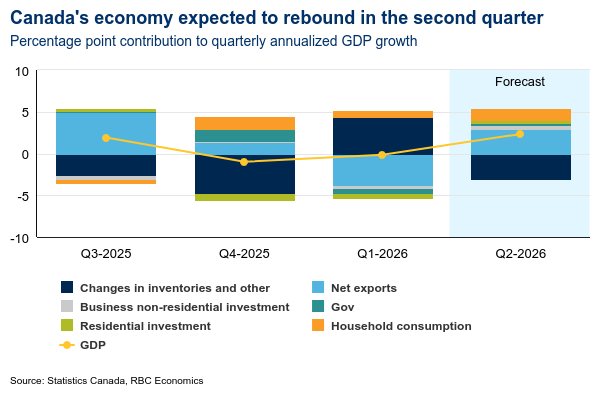
Cyclical rebound in Canada and structural strength in the U.S.
Interesting tidbits
- 5. The number of eight-ounce coffee cups that are generally safe to consume daily and may help heart health, the American Health Association says. The Canadian Heart and Stroke Foundation has also backed coffee’s cardiovascular benefits.
- 315. The height, in metres, of a proposed new hotel in Vancouver by the Holborn Group. That would make it the tallest building in Western Canada.
- 78%. The rise in copper wire theft in the first six months in Canada, compared to last year, as prices of the widely used metal jump. Arrests have also risen 32%, according to Bell, which uses the metal for telecom infrastructure.
Today’s funny
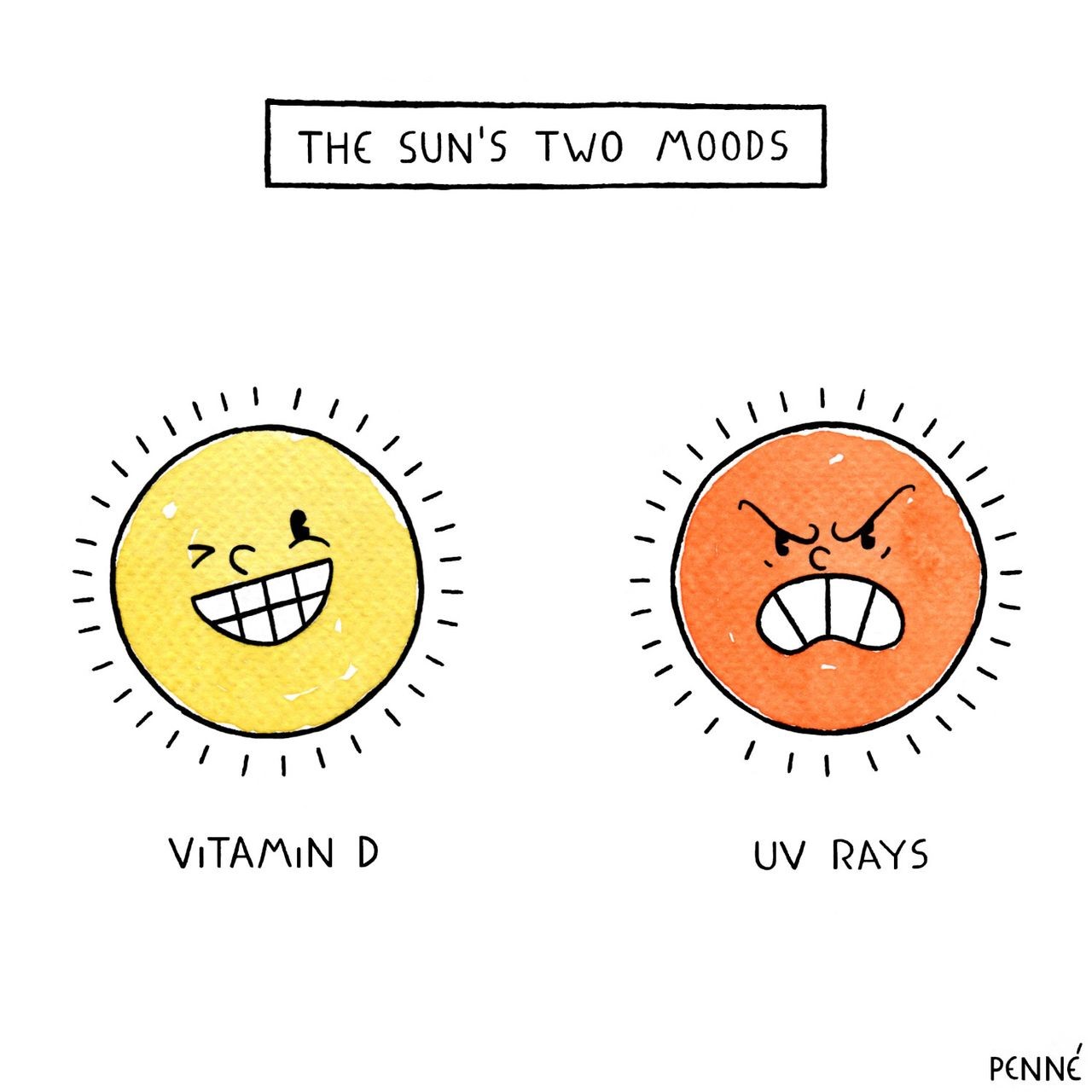
REMINDER: Most of my new clients come to me via word of mouth as I don’t advertise or engage in marketing programs. Please keep my team in mind if you hear of anyone with over $1 million in investable assets who is in need of wealth management services.
This information is not investment advice and should be used only in conjunction with a discussion with your RBC Dominion Securities Inc. Investment Advisor. This will ensure that your own circumstances have been considered properly and that any action is taken based upon the latest available information. The strategies and advice in this report are provided for general guidance. Readers should consult their own Investment Advisor when planning to implement a strategy. Interest rates, market conditions, special offers, tax rulings, and other investment factors are subject to change. The information contained herein has been obtained from sources believed to be reliable at the time obtained but neither RBC Dominion Securities Inc. nor its employees, agents, or information suppliers can guarantee its accuracy or completeness. This report is not and under no circumstances is to be construed as an offer to sell or the solicitation of an offer to buy any securities. This report is furnished on the basis and understanding that neither RBC Dominion Securities Inc. nor its employees, agents, or information suppliers is to be under any responsibility or liability whatsoever in respect thereof. The inventories of RBC Dominion Securities Inc. may from time to time include securities mentioned herein.