Mike's Musings - Oct 26, 2026
The November 3rd U.S. midterm elections will help shape the policy backdrop for the next two years. Below, I discuss the potential market implications, alongside the corporate earnings trend and monetary policy developments that I expect to remain central to the investment outlook.
The November 3rd U.S. midterm elections will help shape the policy backdrop for the next two years. Below, I discuss the potential market implications, alongside the corporate earnings trend and monetary policy developments that I expect to remain central to the investment outlook.

Michael Wilkie
October 25, 2026
A Word from Mike
Hello,
The November 3rd U.S. midterm elections will help shape the policy backdrop for the next two years. Below, I discuss the potential market implications, alongside the corporate earnings trend and monetary policy developments that I expect to remain central to the investment outlook.
Midterms Around the Corner
In a little over a week, Americans will vote to determine control of Congress for the remainder of this presidential term. Current polling numbers point to a Democratic win in the House of Representatives, though the Senate outcome appears more uncertain.
Control of Congress matters for fiscal policy. A Democratic House would likely make further tax cuts or major spending initiatives more difficult to advance, as tax and spending legislation requires approval from both chambers. Meanwhile, a Democratic majority in the Senate would give the party greater influence over presidential appointments, including those to the Supreme Court and Federal Reserve. Even with a Democratic sweep, however, an override of a presidential veto would remain unlikely, requiring two-thirds support in both chambers. President Trump would also retain considerable executive authority over foreign policy, trade, and immigration—areas that he would be inclined to focus on for the rest of his term. For Canada, a change in congressional control offers little clarity on the future direction of U.S. tariffs.
Historically, midterm elections have often been accompanied by stock market weakness in the weeks leading up to the vote, followed by stronger returns as election-related uncertainty subsides. RBC Wealth Management’s analysis shows that, since 1932, the S&P 500 has averaged a subdued 3.3% price gain during midterm years, followed by an average return of 14.0% in the subsequent calendar year. U.S. equities have already gained roughly 12.0% this year, supported by economic resilience, strong AI-related investment, and above-average corporate earnings growth. I do not expect the election outcome to fundamentally change these underlying forces. Instead, I see the ongoing third-quarter earnings season and evolving expectations for Federal Reserve interest rate policy as more consequential for the market’s direction.
Earnings Remain in Focus
Third-quarter earnings season is underway, with about 20% of S&P 500 companies having reported to date. Of those that have provided financial updates, 80% have exceeded earnings estimates, modestly ahead of the five-year average of 78%. While we are still early in the reporting season, they point to a broadly constructive trend for earnings.
Large U.S. banks set the tone with generally positive reads on consumer spending and business activity. Attention is now turning to Big Tech, whose significant weight in the U.S. equity market and outsized contribution to expected earnings growth make its results particularly important in shaping sentiment. Investors will likely scrutinize for tangible evidence that AI investments are translating into meaningful revenues and returns, that the largest tech companies can sustain their spending, and that AI-related demand remains strong enough to validate elevated profitability expectations.
Takeaway
Markets have delivered strong returns for investors this year despite a war-driven oil shock, rising interest rates, bouts of AI unease, and renewed trade tensions. These challenges remain relevant risks that I am monitoring closely, but the market’s performance also underscores the resilience of the economy and corporate earnings in recent years.
While AI-related business investment continues to provide an important source of growth, the associated spending may also contribute to inflationary and interest rate pressures, alongside the lingering effects of the U.S.-Iran war.
For investors, the key question is how these competing forces evolve. As I look beyond the midterm elections, I remain focused on the balance between resilient earnings growth and the potential for persistent inflation and higher borrowing costs.
Highlights
Middle East: Ongoing conflicts, inescapable effects
While the Q3 earnings season is capturing investors’ attention, we have one eye on the Middle East crisis as we believe it is the most underappreciated risk for equity markets and the economy.
Regional developments: Canada’s inflation rate increases; U.S. telecom sector could see a big change; UK inflation climbs as France’s yields rise and Germany courts investors; China equity enters bear market.
Please take some time to review the Global Insight Weekly.
Conservatives swept the B.C. elections
Premier David Eby’s gamble to extend the NDP’s one-seat majority with more gains in a snap poll backfired as the Conservatives secured 64 of 93 seats—its first majority in nearly a century. Eby said he will step down as leader. Premier-designate Lorne Doerkson, who took over the Conservatives leadership last month, has pledged to cut red tape, speed up forestry and mining permits, and triple natural gas production by 2035. The province is central to several Canadian energy projects being proposed to diversify from the U.S.
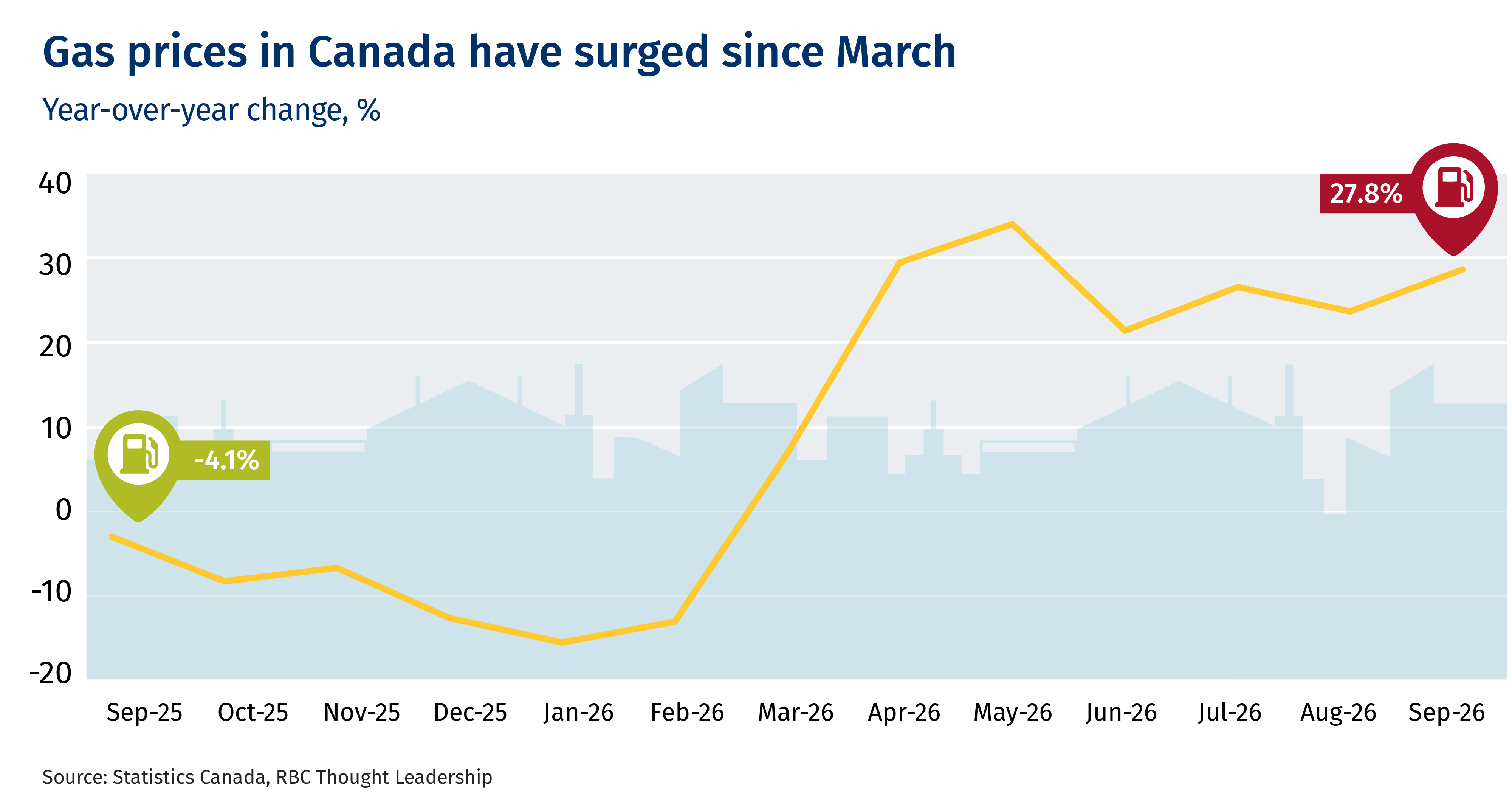
Canada’s inflation rate ticked up to 3.1% in September
The increase was driven by higher energy costs, as gas prices rose 28% annually. Food inflation eased to 2.2%, although grocery prices are up 33% since Sept. 2020. While inflation was below consensus estimates, RBC Economics said the Bank of Canada is facing “an uncomfortable balance”—the economy remains soft, and there’s a risk that energy prices will raise inflation expectations or generate broader price pressures. RBC expects the bank will leave its key rate unchanged at its decision next week.
The federal budget will be tabled on Nov. 5
Finance Minister François-Philippe Champagne will present Prime Minister Mark Carney’s second budget since taking office. The government's April economic update projected a budget deficit at $66.9 billion down from its previous estimate of $78.3 billion. Meanwhile, the federal budget watchdog lowered its economic growth forecast for this year amid new U.S. tariffs and Canadian countermeasures. The Parliamentary Budget Officer now projects real GDP growth of 0.9% this year, down from its previous estimate of 1.1%, citing "additional trade measures and ongoing uncertainty."
Canada’s debt burden has eased, but some households are under strain
While the national debt-service ratio is down from its 2023 peak, a C.D. Howe analysis showed that lower-income households, younger Canadians, and highly leveraged homeowners in Toronto and Vancouver are spending more on servicing debt. While the top 20% of earners saved about a third of their disposable income last year, those in the bottom 60% spent beyond their means. Financial distress among segments of the population represents a vulnerability for the economy, the report authors said.
Ottawa will announce new funding to train workers
The $350 million announcement is part of the government’s plan to recruit, train and hire between 80,000 and 100,000 new skilled trade workers with the nationally recognized Red Seal certification by 2030-2031. Canada currently is facing a shortage of more than 20,000 skilled trade workers per year. Part of the funding will go towards equipment for unions, colleges and other organizations that train skilled trade workers, while some will go towards helping expand or build union-run training centres.
A jump in U.S. inflation raised the odds of a Federal Reserve rate hike
The consumer price index increased 3.7% in September, up from 3.4% the month before and ahead of what economists had expected. The data release showed signs that higher energy prices have led to broader price increases, an issue that will likely remain key in the final weeks leading into the midterm elections. Markets now see a 50% chance of an October 28th interest rate hike from the Fed, up from 22% before the inflation release.
The U.S. suspended a visa program for Microsoft and other tech firms
Vice President J.D. Vance announced the suspension, which also applies to IT outsourcing companies such as Infosys and Tata, alleging widespread abuse of the visa system at the expense of American workers. The program at the centre of the suspension allows U.S. employers to help sponsor foreign workers for permanent residency. The move is the latest made by the Trump administration to crack down on various pathways to migration.
Chips and electronic exports boosted China’s economy
A 36.3% jump in exports helped the economy rise to 4.5% GDP in the third quarter ending September and remain within the 4.5-5% GDP target set by Beijing. For the first nine months of 2026, the economy expanded 4.6%. However, domestic consumption and investment remain weak, with the troubled property investment and spending on infrastructure, factories and properties falling in the first nine months of the year. The Chinese economy is navigating trade tariffs imposed by the U.S. and higher energy prices.
Oil Shipping Costs Spike… But $81 Million? Wow
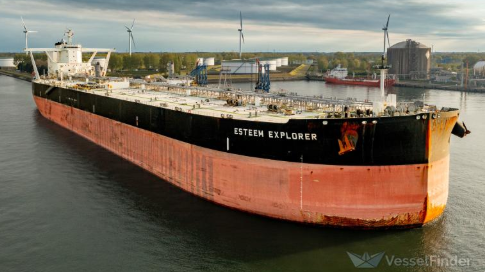
When the oil supertanker Esteem Explorer (pictured below) sails from the United States to Japan in late November, it will be loaded with about 2 million barrels of crude, the journey is expected to cost $81 million US. The same journey would have cost an average of $9.1 million US last year. To read the full Reuters article, please click here.
Charts of the day
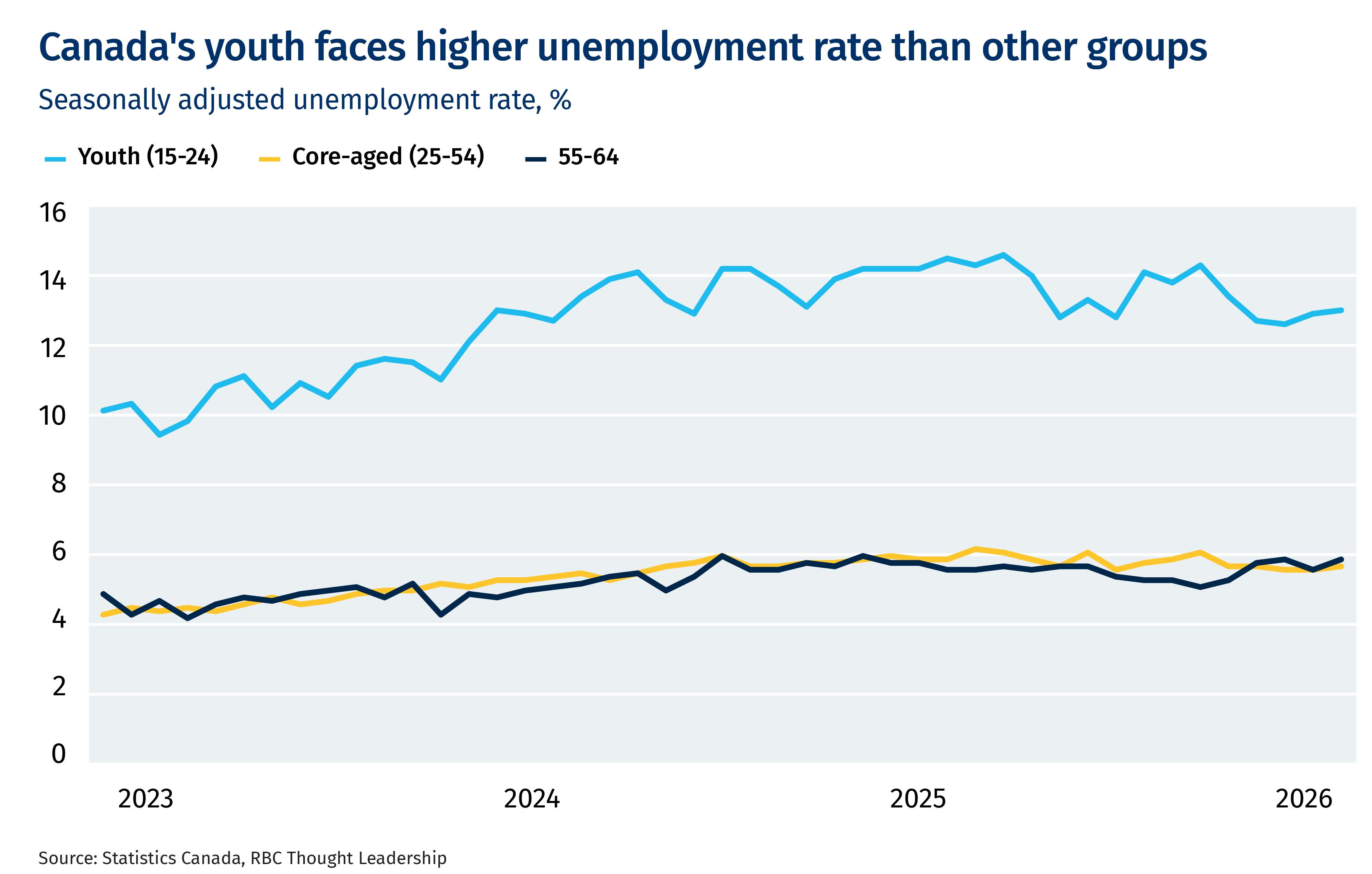
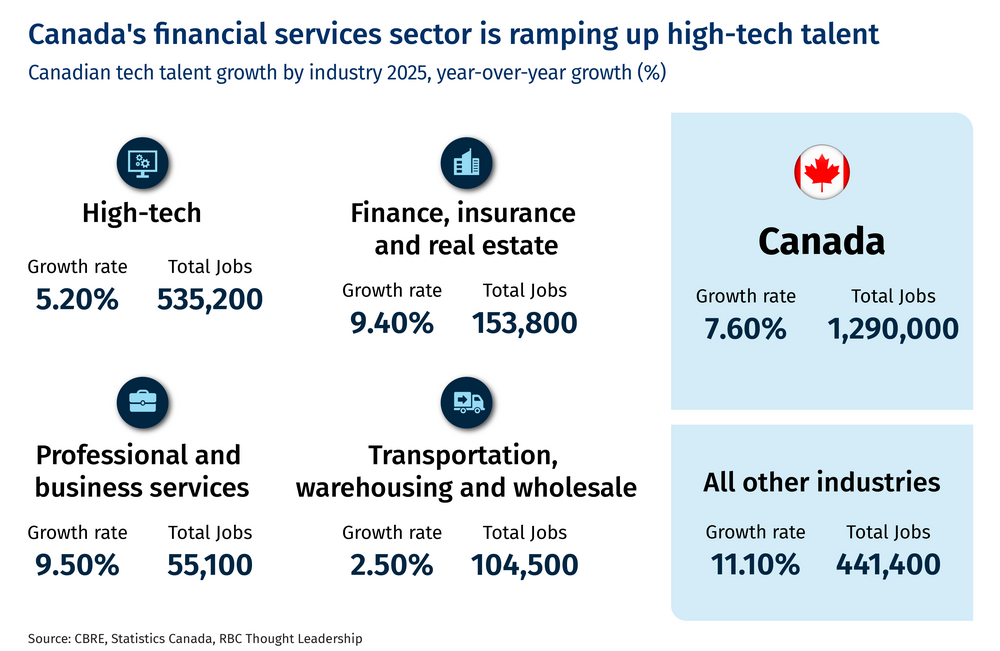
Interesting tidbits
- 100. Winnie-the-Pooh's milestone since it was first published on October 14, 1926. Though author A.A. Milne was British, the title character was inspired by a Canadian black bear sighted on a train platform in White River, Ont.
- Tesla unveiled its pricey, redesigned Roadster after years of delays. The next generation electric vehicle is expected to retail for US$200,000 and comes nine years after Tesla first revealed a prototype of the car. Tesla CEO Elon Musk said the new Roadster would accelerate from zero to 60 miles per hour in less than a second. The debut comes as some luxury automakers bet that car aficionados will buy pricey electric vehicles over traditional sports cars. Last week, Jaguar unveiled a US$130,000 EV, the first after the brand decided to go all-electric.
- 53. The number of Olympic pools Quebec’s strategic maple syrup reserve could fill. However, the industry is warning that the reserves, spread across three Quebec warehouses, could deplete by February on rising global demand.
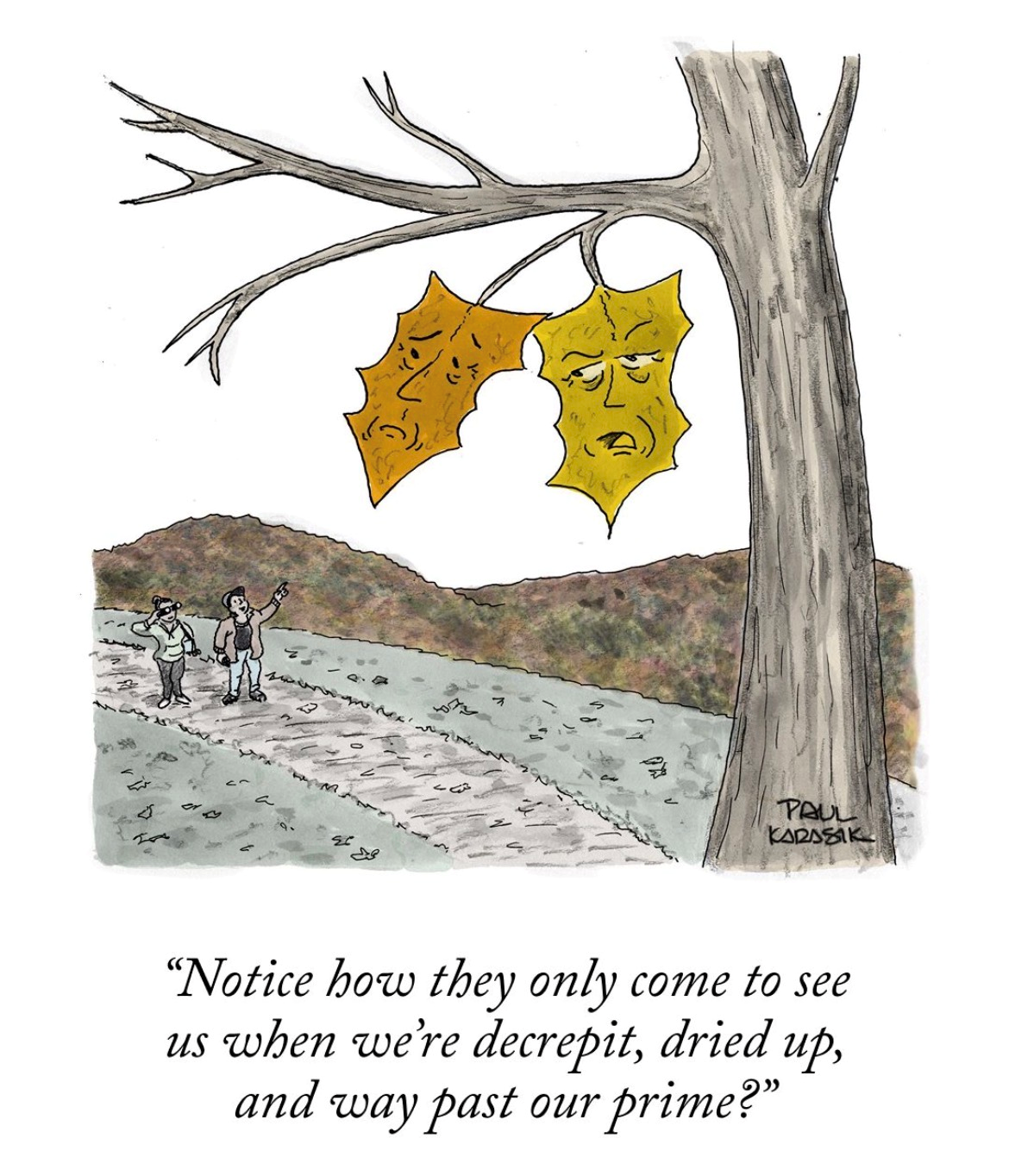
Today’s funny
REMINDER: Most of my new clients come to me via word of mouth as I don’t advertise or engage in marketing programs. Please keep my team in mind if you hear of anyone with over $1 million in investable assets who is in need of wealth management services.
This information is not investment advice and should be used only in conjunction with a discussion with your RBC Dominion Securities Inc. Investment Advisor. This will ensure that your own circumstances have been considered properly and that any action is taken based upon the latest available information. The strategies and advice in this report are provided for general guidance. Readers should consult their own Investment Advisor when planning to implement a strategy. Interest rates, market conditions, special offers, tax rulings, and other investment factors are subject to change. The information contained herein has been obtained from sources believed to be reliable at the time obtained but neither RBC Dominion Securities Inc. nor its employees, agents, or information suppliers can guarantee its accuracy or completeness. This report is not and under no circumstances is to be construed as an offer to sell or the solicitation of an offer to buy any securities. This report is furnished on the basis and understanding that neither RBC Dominion Securities Inc. nor its employees, agents, or information suppliers is to be under any responsibility or liability whatsoever in respect thereof. The inventories of RBC Dominion Securities Inc. may from time to time include securities mentioned herein.