
Michael Wilkie
September 10, 2026
Hello,
Financial markets are once again navigating a mix of familiar risks against a backdrop of resilient global growth. I discuss recent economic, geopolitical, and trade developments in more detail below.
The Big Picture: Crosscurrents
As summer comes to an end, the global economy remains on relatively firm footing. Business activity surveys continue to point to expansion, with momentum evident across both manufacturing and services. In the U.S., economic growth appears poised to accelerate meaningfully in the third quarter, with annualized real GDP growth potentially exceeding 3%, following a more modest pace of 1.5% in the previous quarter. While this resilience provides a constructive foundation for financial markets, I remain attentive to some risks that could drive intermittent bouts of volatility.
The most immediate concern is the renewed escalation in Middle East tensions, which have pushed oil prices sharply higher, with key benchmarks near or above $100 a barrel. As attacks on energy infrastructure and shipping in the region have intensified, this has raised concerns about the potential for broader disruptions to global energy supplies. A prolonged period of elevated oil prices would in turn feed into higher near-term inflation, potentially putting pressure on central banks to raise interest rates. Financial markets have already begun to reflect some of this uncertainty, with government bond yields generally moving higher this year across major markets and maturities.
Higher bond yields are not necessarily a negative in isolation. They are partly a reflection of an economy that has proven more resilient to a variety of macro shocks than many anticipated in recent years. And at current levels, bond yields also appear broadly consistent with the pace of economic growth. Nevertheless, higher borrowing costs represent a possible headwind that I am monitoring, as they can potentially restrain equity valuations and dampen growth momentum, especially in economies with elevated debt burdens.
Canada: A Calculated Tariff Response
Canada’s retaliatory, dollar-for-dollar tariffs took effect earlier this week, marking another step up in the ongoing trade clash with the U.S. As discussed in our previous letter, the longer the Canada-U.S. tariff dispute persist, the greater the risk they pose to consumer spending, business investment, and hiring decisions. Importantly, Canada’s response has been carefully structured and strategic rather than indiscriminate.
Most notably, the latest round of counter tariffs is expected to disproportionately affect politically sensitive U.S. states—including Ohio, Pennsylvania, Michigan, and Wisconsin—that are likely to play an outsized role in determining control of U.S. Congress in the upcoming November midterm elections. By concentrating tariffs on industries and products within more vulnerable Republican districts, Canada appears to be applying targeted political pressure aimed at bringing the Trump administration back to the negotiating table.
The U.S. has since responded with additional tariff threats, creating more jarring headlines, but RBC Economics continues to expect the broader economic impact to remain relatively contained. Canada’s federal government has also introduced several financial support packages for businesses and workers affected by tariffs, which should help mitigate the impact on the most exposed industries.
Given recent escalations, however, I acknowledge that the path forward remains fraught with uncertainty. I expect continued posturing and volatile headlines in the months ahead, but the depth of integration between the two economies suggests to us that a return to the negotiating table remains, in our view, the more likely outcome—even as near-term escalation risk stays elevated.
Takeaway: Pragmatic Optimism
The outlook remains relatively favourable. Economic activity is holding up well, with most indicators pointing to a pace of expansion capable of supporting solid corporate profit growth. At the same time, I believe two risks stand out as potential “speed bumps” for markets.
Renewed Middle East aggressions have nudged oil prices higher, adding to inflation uncertainty that is complicating the task for central banks as they balance price stability against the risk that higher borrowing costs could slow growth. Antagonistic policies from the Trump administration also remain a risk that markets may struggle to price efficiently.
Against this backdrop, I remain focused on disciplined portfolio management, maintaining an appropriate mix of growth and defensive exposures with asset allocation aligned with long-term targets.
Highlights
In brief | Beyond stablecoins: the tokenization story
Interest payments on stablecoins dominate policy discussions, but in our executive summary of Bridging Worlds: Tokenization connects digital and physical assets, we discuss why investors need to focus on the process, not the product.
Regional developments: Canadian housing market remains mixed, while the labour market lost jobs in August; U.S. power demand is outpacing generation and grid capacity; European Central Bank hikes, European bond yields rise; Yen strengthened on expectations of Bank of Japan rate hike.
Please take some time to review the Global Insight Weekly.
Global Insight Monthly
September 2026
I am pleased to share the latest investment strategy report from RBC Wealth Management—Global Insight, which provides our current thoughts on asset classes, the economy, and timely issues that impact investment strategy.
Full report: Global Insight
This month’s highlights:
Midterm mindset seeping into the U.S. stock market
The list of voter concerns leading up to the election is wide-ranging, with cost of living a major focus. RBC Capital Markets equity analysts seem largely unfazed by the various election outcome scenarios. We assess the state of House and Senate control and recommend investors focus on what matters more.
Global equity: Good, but not as good
Most global equity markets have moved into high ground, but the advance from here may be more moderate and prone to bouts of volatility.
Global fixed income: The long and the short of it
The market’s focus shifted sharply from short-term policy rate expectations to rising long-term bond yields as the U.S. Treasury announced a surprise move to stem the tide. We look at what the intervention may entail and the potential problems it could bring.
The Bank of Canada flagged inflation risks and tariff uncertainty
The central bank said inflation risks have grown due to the ongoing conflict in the Middle East, which so far has no end in sight. And while Governor Tiff Macklem noted that recent economic growth has put Canada on stronger footing, uncertainty on the sustainability of that rebound has also increased in the wake of new U.S. tariffs. Last Wednesday, the Bank opted to hold its interest rate at 2.25% for the seventh consecutive decision.
The Canadian economy rebounded sharply in the second quarter
A strong jump in exports and healthy domestic demand helped fuel 3.3% annualized GDP growth, the fastest rise since 2023. Statistics Canada also revised the first quarter to a gain of 0.3%, meaning the economy did not go into a technical recession. While the newest round of U.S. tariffs threatens to bring more uncertainty, RBC Economics said that the GDP data “confirms that the economy is entering this latest period of trade disruption from a stronger starting point.”
Canada likely to withstand tariff shock, though escalation risks persist
Canada’s economy appears capable of weathering the new 50% tariff the U.S. has imposed on roughly $28 billion of Canadian goods, according to economists, including some from Canada’s largest banks, who met with Finance Minister François-Philippe Champagne. While some forecasters have reduced growth estimates, recession risk wasn’t focused on as a concern, with broad agreement that the damage should remain concentrated in tariff-exposed industries. RBC Economics maintains their base case outlook for national growth, though the team acknowledges somewhat greater downside risks. The key risk is further escalation, and Ottawa is readying itself for a potentially prolonged dispute.
Canada Implements Retaliatory Tariffs
Canada moved forward with increased tariffs on a range of U.S. goods on Tuesday. The U.S. imposed 50% tariffs on nearly $20 billion worth of Canadian goods on August 22nd, after trade negotiations stumbled, which Canada responded with dollar-for-dollar counter-duties on American goods. Canada’s retaliatory tariffs of between 15% and 50% apply to a variety of American exports including motorcycles, cosmetics, and dairy products. Canada also raised tariffs on many American steel products from 25% to 50%. The U.S. has warned countries from retaliating against their own trade barriers, noting that only Canada and China had applied counter-tariffs, but have provided little detail of how or when the Trump administration plans to respond. When talks fell through in August, President Trump also announced plans to raise tariffs on Canada's auto sector to 50% from 25% on January 1st. Formal steps to implement such duties, however, have not been taken. As of last week, Prime Minister Carney noted that Canada was prepared to resume negotiations, while reiterating that competitiveness for Canadian automotive, steel, and aluminum industries are key to a durable agreement.
Canada, EU Planning Comprehensive Alliance
Canada and the European Union (EU) are planning a new relationship, with expanded collaboration ranging from trade to security, seeking to offset global power dynamics currently driven by the U.S. and China. European Commission President Ursula von der Leyen is expected to announce the plans at her state of the union address in France on September 16th. Canadian Prime Minister Mark Carney is due to attend the speech and address European lawmakers the day after. Details on implementation remain unclear, but a Canadian official familiar with the matter noted the discussions would focus on strategic capabilities regarding defense, space exploration, and scientific research. Both parties already have a trade agreement and security and defense partnership, but are reportedly seeking ways to legally deepen that relationship. According to some familiar with the matter, both are seeking avenues to get as close as possible without Canada formally joining the EU. Canada was the first non-EU nation to join the EU's $174 billion military procurement fund last year. The sides have also discussed collaborating via the Trans-Pacific Partnership. Canada and the EU are set to hold a summit in Canada in October.
Fed Chair signals rate hikes may be needed to fight inflation
In his first high-profile speech at the U.S. Federal Reserve’s annual conference, Chairman Kevin Warsh said that while inflation has cooled, underlying trends have not meaningfully improved. While he did not say a rate hike is imminent, he said inflation data “are more concerning” than trends in the U.S. job market, where the unemployment rate is low.
Charts of the day
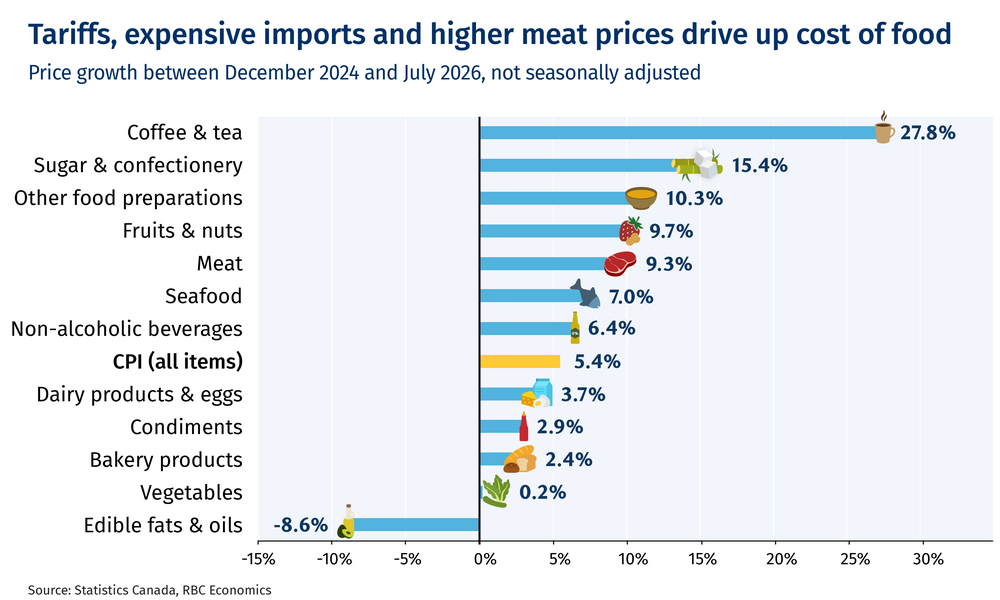
Read more: Food inflation in Canada: Six key questions about higher prices
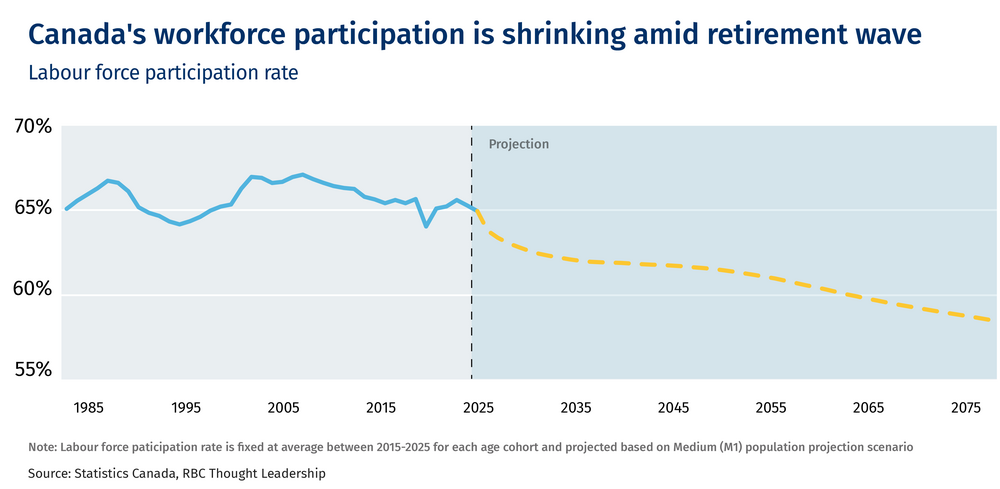
For more, read A Smarter Immigration Strategy
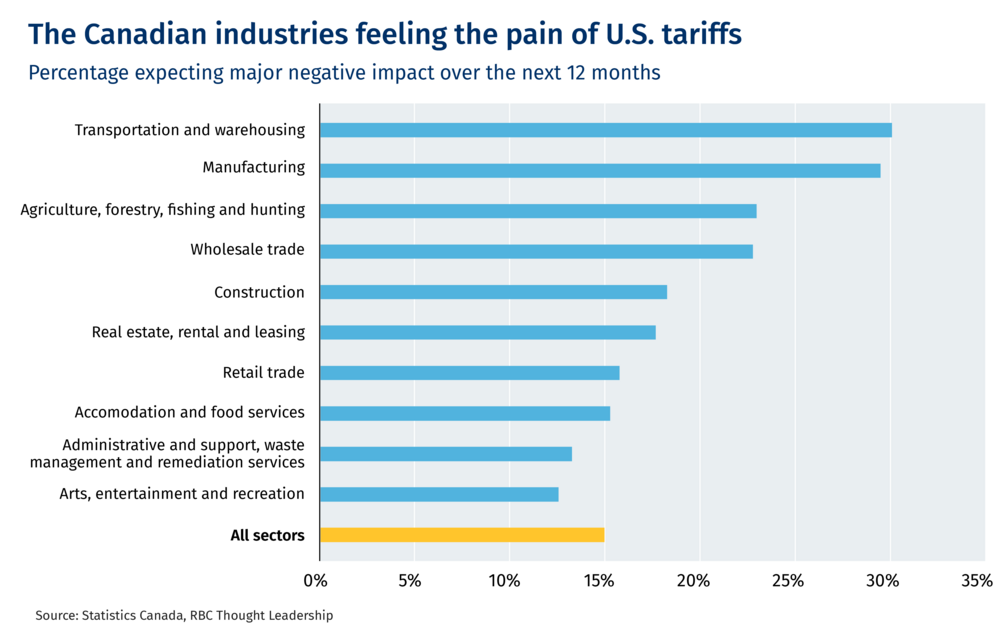
Interesting tidbits
US$499. The cost of Dyson’s new AI-powered toothbrush that comes with a built-in camera. The toothbrush will be available for purchase this month.
North America is set for an immense heatwave this fall. The combined impact of El Nino—a weather phenomenon—and marine heatwaves in the Pacific Northwest could lead to lower snowfall and drought conditions in parts of Canada and the United States, according to a U.S. National Oceanic and Atmospheric Administration (Noaa) forecast. California could see intense storms, floods and also wildfires.
(What is) 1,300. The number of people who applied for a rare vacancy to write clues for Jeopardy! It’s the show’s first public call for the quiz writer’s role in its 42-year history.
Apple debuted the Duo, its first foldable smartphone. The iPhone Duo will have a 5.4-inch screen on the outside and open like a book to display a 7.6-inch screen, one the company says is ideal for viewing content, gaming and multitasking. When unfolded, the Duo will be the thinnest iPhone ever. The unveiling marks the first product launch by newly minted CEO John Ternus. The long-awaited new device will be available for pre-order starting Oct. 16 and will retail for US$1,999.
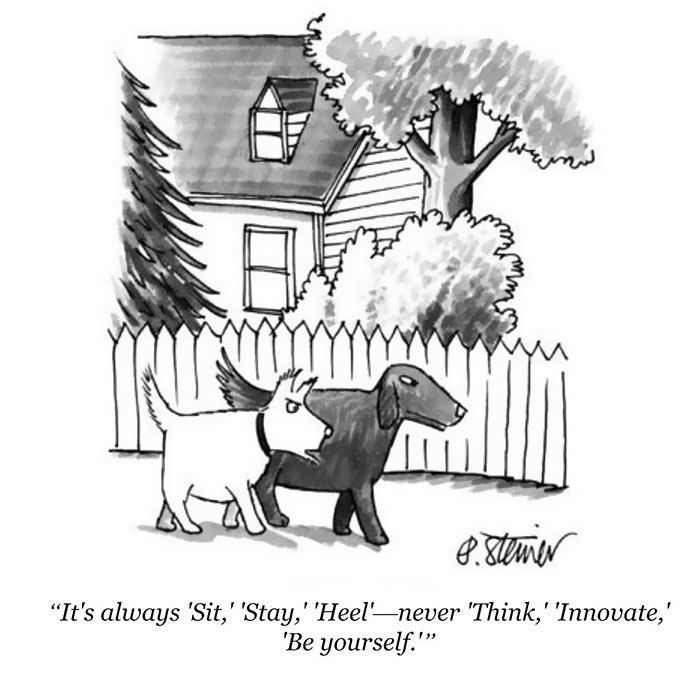
Today’s funny
REMINDER: Most of my new clients come to me via word of mouth as I don’t advertise or engage in marketing programs. Please keep my team in mind if you hear of anyone with over $1 million in investable assets who is in need of wealth management services.
This information is not investment advice and should be used only in conjunction with a discussion with your RBC Dominion Securities Inc. Investment Advisor. This will ensure that your own circumstances have been considered properly and that any action is taken based upon the latest available information. The strategies and advice in this report are provided for general guidance. Readers should consult their own Investment Advisor when planning to implement a strategy. Interest rates, market conditions, special offers, tax rulings, and other investment factors are subject to change. The information contained herein has been obtained from sources believed to be reliable at the time obtained but neither RBC Dominion Securities Inc. nor its employees, agents, or information suppliers can guarantee its accuracy or completeness. This report is not and under no circumstances is to be construed as an offer to sell or the solicitation of an offer to buy any securities. This report is furnished on the basis and understanding that neither RBC Dominion Securities Inc. nor its employees, agents, or information suppliers is to be under any responsibility or liability whatsoever in respect thereof. The inventories of RBC Dominion Securities Inc. may from time to time include securities mentioned herein.