
RBC Wealth Management
January 14, 2026
TFSA Quick Tips
Tax-free benefits
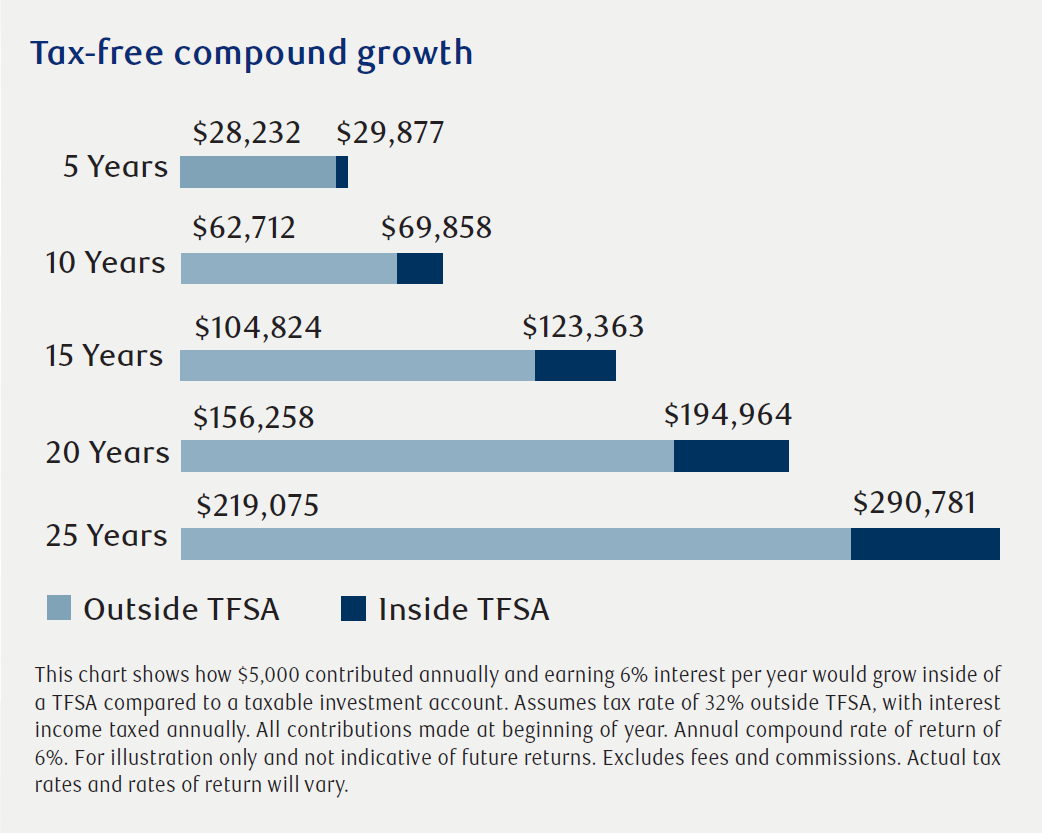
With a Tax-Free Savings Account (TFSA), you can contribute up to your contribution limit each year, earn tax-free interest, dividends and capital gains, and even make withdrawals – at any time, for any reason – without paying tax.
Opening a TFSA
Any Canadian resident who has reached the age of majority in their province can open a TFSA. The age of majority is 19 in Newfoundland and Labrador, New Brunswick, Nova Scotia, British Columbia, Northwest Territories, Yukon and Nunavut. In all other provinces, it is 18. Bear in mind that you need to have a valid social insurance number to open a TFSA. To open your TFSA, please ask us for assistance.
Making contributions
Contribution room accumulates every year starting at age 18, and can be carried forward indefinitely. You can contribute to your TFSA irrespective of your income and can continue contributing even when you're retired – it's a lifelong plan.
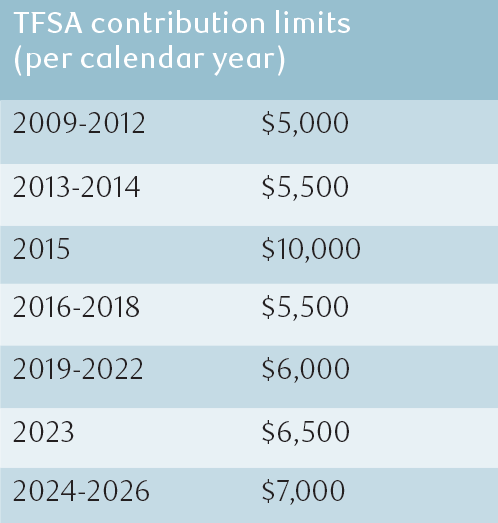
As of January 1, 2026, you can contribute an additional $7,000 to your TFSA to benefit from tax-free growth.
Making withdrawals
You can make withdrawals for any reason, and unlike a Registered Retirement Savings Plan (RRSP), you can do so tax free. Plus, the amount you withdraw is added back to your available contribution room the following calendar year. Remember that, unless you have adequate unused contribution room, you have to wait to recontributate any amounts you have withdrawn in any given year until January 1 of the following year. Otherwise, the Canada Revenue Agency may assess excess contribution penalties. In addition, any income or capital gains earned on deliberate overcontributions could be subject to 100% tax. There is no requirement to make withdrawals at or by a certain age. As a result, you can let your investment earnings continue to grow tax free.
Flexibility
You can use your TFSA to meet a wide range of financial goals, including:
- building long-term wealth through the tax-free growth of your investments;
- generating tax-free retirement income to complement your RRSP or Registered Retirement Income Fund (RRIF);
- funding major purchases;
- providing emergency funding.
Smart tips for your TFSA
- Help a child or grandchild fund their education above and beyond their Registered Education Savings Plan (RESP) and/or family trust.
- Shelter some of your taxable capital gains, dividends and interest currently being earned in a regular taxable account.
- Expand your retirement savings beyond your RRSP.
- Earn tax-free income on surplus RRIF payments you don't need immediately.
- Take advantage of family income splitting to reduce your overall tax bill by gifting amounts from your bank account to your lower-income spouse or adult children to contribute to their own TFSAs.
- In provinces and territories where it is permitted, consider naming a beneficiary on your TFSA to avoid probate.
- Consider naming your spouse as successor holder (instead of beneficiary) on your TFSA to simplify administration upon your death.
Transferring your TFSA
Consolidating your assets can help simplify your financial affairs and ensure your advisor is aware of your full financial picture. If you hold TFSA assets at another financial institution, you can transfer them to us through a "qualifying transfer," rather than by withdrawing and recontributing. A qualifying transfer can help avoid delays and adverse tax consequences, and we can help make it quick and easy.
If you would like to schedule some time to discuss the items outlined in this article, please click here to access our meeting scheduler.