
Ari Black, CFA
Investment Advisor
April 16, 2026
Five Things That Caught My Attention This Month
Tax Season Is Almost Over (But Does It Ever End?)

A few things that caught my attention this month – markets, behaviour, and a couple that say more about where things are heading than where they’ve been.
This Month:
- Most Stocks Don’t Work
- Alternatives To The Alternatives (What’s Actually Working Now)
- China 2.0
- The New Signing Bonus (Paid by Parents)
- Narrative Violation: U.S. Doctors Are Moving to Canada
1. Most Stocks Don’t Work
Those who watch baseball know there’s always a debate:
Small ball vs. home run hitting.
Move runners along, play it safe… or swing for impact.
In investing, the evidence is pretty clear: you need to hit home runs. Research from Hendrik Bessembinder shows that over the past 100 years roughly 4% of stocks have driven most long-term market wealth - coincidentally, about the same frequency as a home run in baseball.
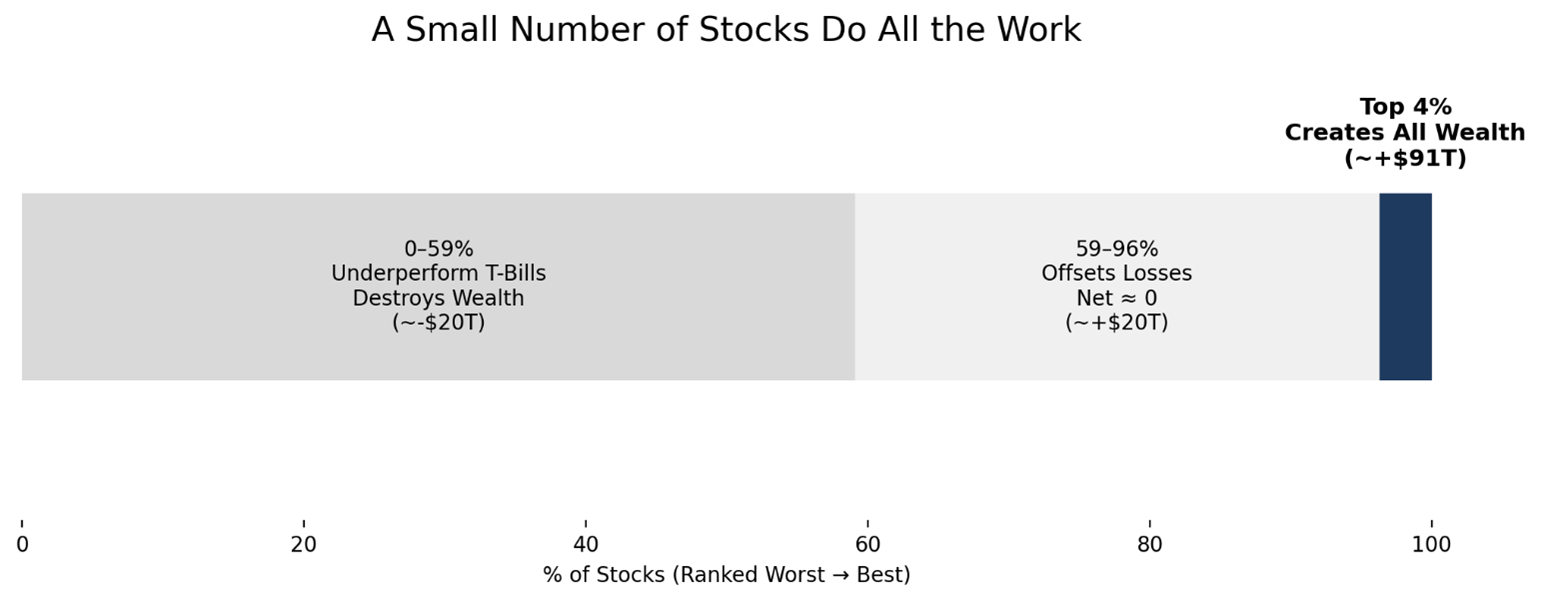
If most stocks don’t work, you can’t approach this stock by stock.
Even the winners don’t make it easy. A recent piece from Morgan Stanley shows top-performing stocks from 1985 to 2024 had on average a 72% drawdown at some point. (Nvidia would be on an updated list and move that average even lower).
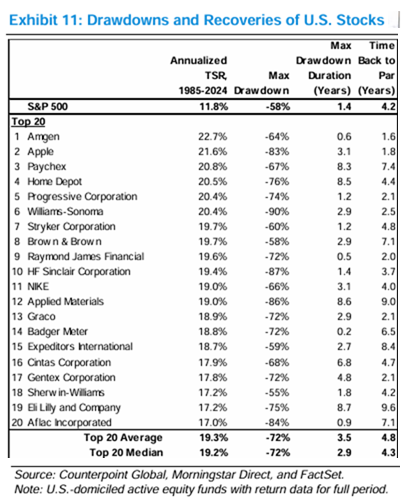
That’s why the focus has to shift from individual stocks to the overall portfolio.
·Own the index - you just need to make sure you don’t miss the winners.
·Market cap weighting matters – let the winners run, not be constantly rebalanced into weaker names.
·Tax loss harvesting adds value - if most stocks lag or cancel out, there are consistent opportunities to improve after-tax returns.
·Active can work - avoid the losers, pick the winners, but the odds are against you with 95% of funds underperforming over the past decade.
Bottom line: Portfolio construction matters more than stock picking.
2. Alternatives to the Alternatives (What’s Actually Working Now)
I was at a private debt conference this week.
The consistent message: this is a liquidity issue, not an insolvency one (at least for now). The pressure is showing up in semi-liquid structures, not necessarily in the underlying loans.
A few things that stood out:
·Clear shift toward asset-backed lending and infrastructure debt, with collateral and durability back in focus
·AI disruption fears are pushing capital toward hard assets with more predictable cash flows
·Spreads look tight, but are starting to move. Selectivity matters more than ever
·More creative areas like music royalties, litigation finance and employee stock-backed loans are getting attention, but require real due diligence
Private credit isn’t broken, but the easy version of it may be behind us.
This was a good, current piece on how asset-backed lending is becoming a bigger part of the opportunity set.

My focus has been shifting away from traditional private credit until the returns reset back to historic levels. More compelling areas today are asset-backed lending with strong collateral, as well as structured notes, which offer more attractive risk/reward in my opinion. I’ll write more on that next month. Corporate class, tax-advantaged fixed income is another area I’ve written about recently and continue to find interesting.
3. China 2.0
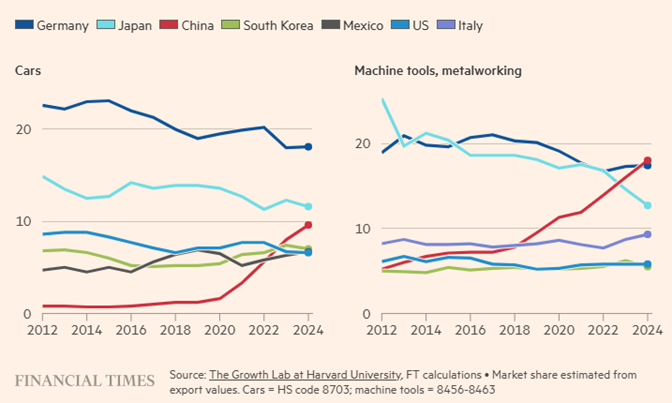
This was a great read from the Financial Times, with interactive charts (and no paywall). The first China shock was about cheap goods; this one is about advanced manufacturing, which is a much bigger deal. It’s less about flooding shelves and more about competing directly with the industrial backbone of developed economies. Europe and Japan look most exposed given their export-heavy manufacturing base, while the U.S. is trying to sidestep it through policy. The real story: China has built too much capacity and the rest of the world is now the release valve.
4. The New Signing Bonus (Paid by Parents)
Bloomberg has reported that some parents are now spending up to $50,000 on career coaching to help their kids land elite internships and entry-level roles - effectively paying a signing bonus, just not to the employee. It sounds extreme, but paired with data highlighted in The Atlantic, it starts to make more sense. Underemployment among recent graduates is running roughly 40–45% in both the U.S. and Canada, pointing less to a lack of jobs and more to a mismatch.
The bigger driver isn’t AI (though it won’t help), but a surge in bachelor’s degrees - up roughly a third since 2008, often from less selective programs with limited job market application. At this point, the safest career advice might be: skip the $150,000 education and learn how to pitch left-handed - at least the odds of getting paid are higher.
5. Narrative Violation: U.S. Doctors Are Moving to Canada
All I’ve heard my entire life is that Canadian doctors move to the U.S.
That flow might be changing, at least at the margin according to this blog post. One data point: an agency helping doctors move to Canada has seen demand spike 65%.

Closing Thoughts
Markets right now continue to reward quality, liquidity, disciplined duration, and thoughtful tax planning. They’re far less forgiving of stretched yield, illiquidity, or narratives that rely more on optimism than fundamentals.
Ari Black, CFA, HBA | Investment Advisor
RBC Dominion Securities Inc.