
Ari Black, CFA
Investment Advisor
June 28, 2026
Most physicians have accountants but are often missing:
- Asset location and tax efficiency: structuring investments across corporate and personal accounts to improve after tax outcomes
- Corporate investment strategy: Managing how investments are made inside the corporation to minimize unnecessary tax drag including the impact of passive income rules
- Cash flow and extraction planning: Determining when and how to move capital from the corporation – balancing tax deferral today with future flexibility
- Income management inside the corporation: reducing unintended passive income exposure and preserving small business deduction eligibility where possible
- Insurance as a planning tool: Using corporate-owned insurance strategically, including tax-efficient capital extraction and estate planning considerations
- Liquidity and borrowing decisions: Evaluation when it makes sense to draw from the corporation versus borrowing personally to meet cash flow needs
- Coordination with your accountant: Ensuring alignment on key items such as RDTOH, CDA balances and book value tracking – so decisions are made proactively, not at year end.
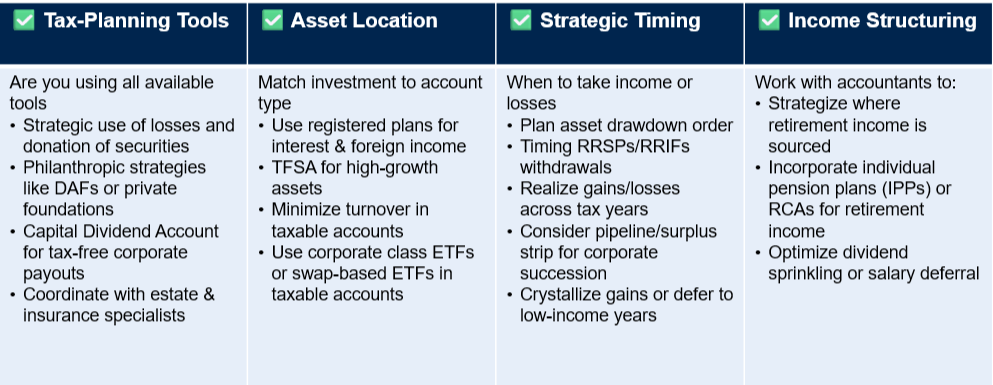
Specialized planning tools for specific situations:
- Pension Planning/IPPs: For certain physicians these can build tax-efficient retirement income greater than an RRSP
- Insurance (including IFAs): Tax-free extraction from the corporation
- Estate planning: Specialized planners ensuring there is a clear plan and coordination with your legal and tax advisors