
Janice Domaratzki
Senior Portfolio Manager
July 14, 2026
There’s a significant difference between saving money and maximizing your wealth.
It’s likely many of us grew up hearing the same simple financial advice: “save your money.” But the truth is, there’s far more to it than that.
What are you saving it for?
And how can you ensure you’re doing it in a way that feels aligned to your greater goals?
Building wealth isn't simply about putting money aside, but about intentionally deciding what that money is meant to accomplish now and in the long term.
Should it remain accessible for emergencies? Should it be invested, and if so, how much? Should it reduce taxes?
There are so many avenues your money can be directed to support your lifestyle and future goals. These questions are increasingly important as Canadians face a unique financial reality. According to Statistics Canada, household net worth remains near record highs, largely driven by rising home values and investment assets; however, many continue to report feeling financially stretched due to higher borrowing costs and the rising cost of living. In other words, having assets doesn't always translate to feeling financially secure. That’s why having a strategy is so important.
Ensuring Your Money Has a Purpose
One of the biggest misconceptions about saving is that every dollar belongs in the same place. But in working with people across industries and with vastly different financial goals, I can confidently share that the reality is the same across the board. It’s essential to have your money assigned to performing different jobs.
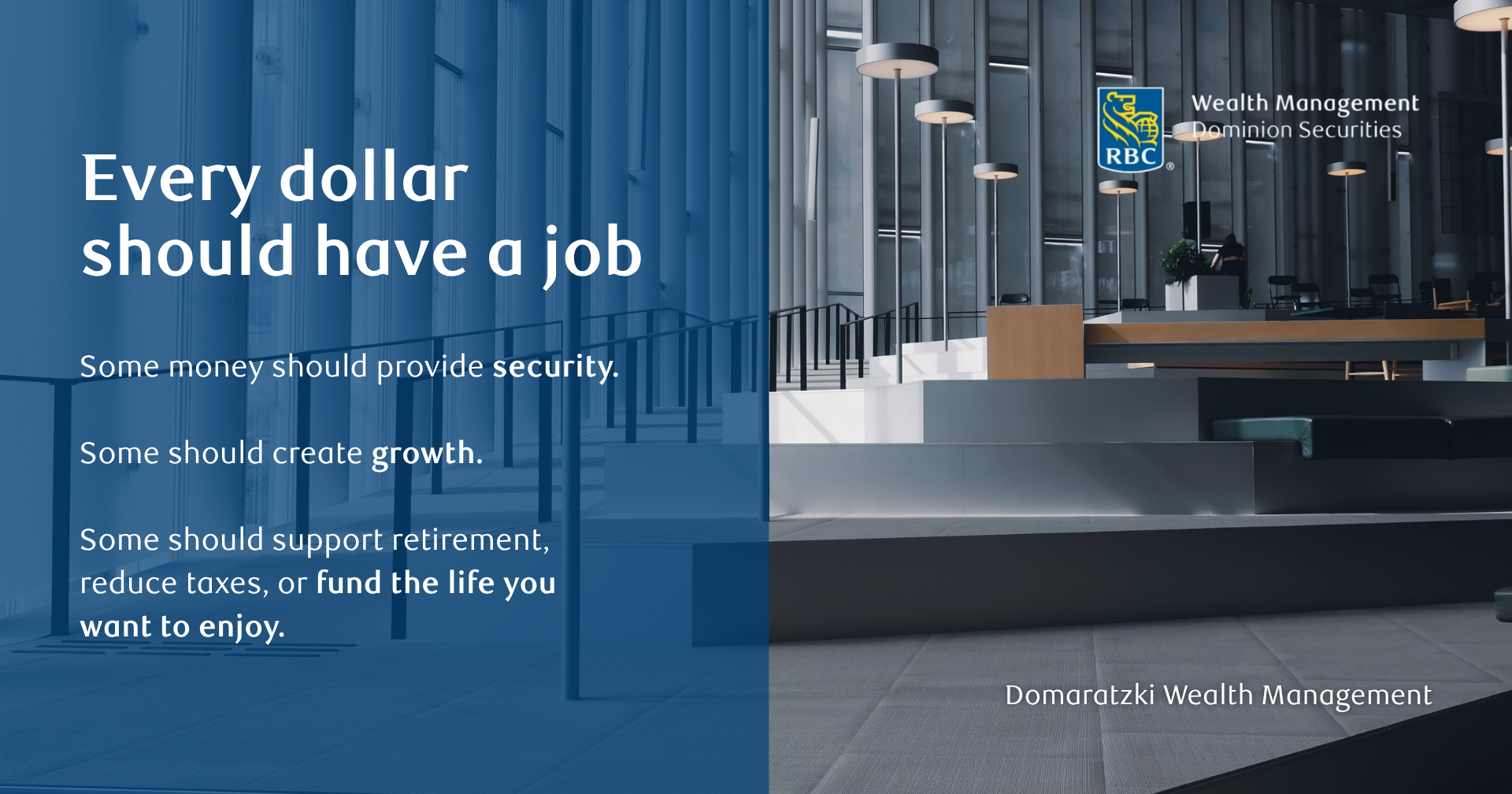
Some money should be available for emergencies, some for growth, some for retirement, to reduce taxes, etc.
But without a strategy, many people struggle to allocate that money effectively to the different areas of life it should support.
In fact, research shows that many Canadians hold significant amounts of cash in low-interest accounts, even while inflation reduces the purchasing power of those savings over time. Inflation doesn't need to be exceptionally high to have an impact. At just 2% annual inflation, the purchasing power of money declines meaningfully over the course of a decade. That isn’t to say every dollar should be invested, but rather, every dollar should have a clear purpose.
A financial plan helps determine how much cash should remain readily available while identifying opportunities for the remainder to grow over time, aligning with your goals and comfort level.
Lifestyle Creep: The Hidden Wealth Killer
You can have all the wealth you’ve ever envisioned, but without a proper plan in place on how to ensure you’re not spending more than you’re making, that money won’t be benefiting you to the fullest extent.
Also known as lifestyle creep, the gradual increase in spending that often follows income growth is pretty commonplace. Naturally, the more we make, the more abundant we feel, and for some, this can quickly look like wanting a larger home, a newer car, or a more luxurious lifestyle. And that isn’t at all to say those things aren’t still attainable, but that it’s so important to ensure that lifestyle, if you choose to have it, is sustainable long term with the right plan.
Because individually, these choices aren't necessarily problematic, but collectively, they can quietly absorb income that might otherwise have been used to build long-term wealth. In fact, a growing number of Canadians earning six-figure incomes still report feeling financially stressed, demonstrating that higher income alone doesn't automatically create financial freedom. Lifestyle often expands alongside earnings unless there is a deliberate plan in place.
One of the most effective habits of successfully wealthy individuals is that, as income increases, savings and investments come before lifestyle.
The Difference Between Wealth and Income
Income and wealth are two different things; while one creates opportunity, the other creates freedom.
For example, someone earning $300,000 annually who spends nearly all of it may ultimately have less financial flexibility than someone earning considerably less but investing consistently over many years. This is why, for many, the focus should be more on cash flow, tax efficiency, investment strategy, and long-term planning.
Because the goal here is to keep more of what you've earned working for you, and having a plan in place for where your money is being allocated is the way to do just that.
Leaning Into What's In Our Control
The summer months often remind us that life can be unpredictable, either for the good or bad. This is especially true when we’re discussing global events and market movements. But there’s also so much of it we can control, through having a thoughtful plan in place and how we choose to respond in the moment. While markets will continue to change, your financial goals remain the foundation for making confident decisions through every season.

Those who build lasting wealth rarely do so because they have found the perfect investment, but more often, they do so by developing intentional habits.
Building wealth in a way that intentionally aligns with your goals looks like:
1. Understanding where your money is going and how it’s working for you
2. Making adjustments as life changes
3. Aligning finances with priorities
Overall, it’s important to recognize that saving is important, but maximizing those savings is what creates opportunity over time, and through phases of uncertainty across the globe, it’s good to know you have a plan you can rely on.
As we move through the second half of the year, there are a few questions I’ll leave you with:
- Does the money I’m saving have a purpose?
- Am I holding onto more cash than I actually should be?
- Has my lifestyle grown as quickly as my income?
- Is my financial plan helping me build the future I want?
At Domaratzki Wealth Management, we work with clients every day to ensure their financial plans create the freedom they desire and deserve, so they can look toward the future with confidence while still enjoying life as it unfolds now.
Janice
Follow along on LinkedIn and Facebook, or reach out if you’d like to talk through your own situation or refer someone who could use support.
Janice Domaratzki, CIM │Senior Portfolio Manager & Investment Advisor, Domaratzki Wealth Management │ RBC Wealth Management │ RBC Dominion Securities Inc. │ T. 613-564-4840 │ T. 1-800-267-7680 │ 333 Preston Street, Suite 1100, Ottawa, Ontario K1S 5N4 │janice.domaratzki@rbc.com │Domaratzki Wealth Management website
RBC Wealth Management is a business segment of Royal Bank of Canada. For further information on the entities that are member companies of RBC Wealth Management, click here. The content in this publication is provided for general information only and is not intended to provide any advice or endorse/recommend the content contained in the publication.
® / ™ Trademark(s) of Royal Bank of Canada. Used under licence. © Royal Bank of Canada 2026. All rights reserved.