
Robin Gullason
Associate Portfolio Manager, Lead Strategist
August 7, 2026
Executive Summary
- Markets in Canada and the U.S. hit new all-time highs this week despite headwinds including the ongoing effective closure of Hormuz, elevated oil prices, and elevated long-term interest rates.
- Geopolitical frictions persist, trade tensions between Canada and the U.S. remain unresolved, and the U.S. political landscape continues to evolve ahead of mid-term elections though market-preferred gridlock appears most likely.
- The primary driver of market gains has been dual and interconnected: U.S. economic growth continues to outperform with low recession risk, while expected earnings have exceeded forecasts with year-over-year growth rates around 30% in Canada and the U.S..
- Markets are exceptionally effective at filtering out noise and focusing on what matters most. Earnings growth remains the long-term driving force of returns, and this is particularly valuable to remember when other news sources offer little comfort.
- While real geopolitical and trade issues warrant attention, markets tend to discount them unless they pose an imminent threat to earnings power, while many risks can be mitigated (tariffs being a prime example).
- Historically, the U.S. market posts gains 87% of the time during periods of economic expansion, a trend that appears poised to continue given current conditions.
Markets in Canada and the U.S. reached new all-time highs this week, a development that might seem almost defiant given the headwinds we're facing. The Strait of Hormuz is effectively closed, oil prices remain elevated, interest rates haven't budged downward, and geopolitical tensions continue to simmer. Trade friction between Canada and the U.S. remains unresolved. Meanwhile, the American political landscape is in flux ahead of mid-term elections, adding another layer of uncertainty to the mix. On the surface, many wonder why markets are not pulling back. Instead, they're pushing higher. So what's actually happening?
Earnings burnishing indices as geopolitical storms rage
The answer is both simple and instructive: earnings growth. While the headlines scream about closures and tensions, investors are focusing on what ultimately matters to stock returns. U.S. economic growth continues to outpace expectations, recession risk remains low, and corporate earnings have exceeded forecasts once again. We're looking at year-over-year growth in expected earnings in the 30% range across the TSX and S&P 500, a performance that's proving to be the primary engine driving market gains.
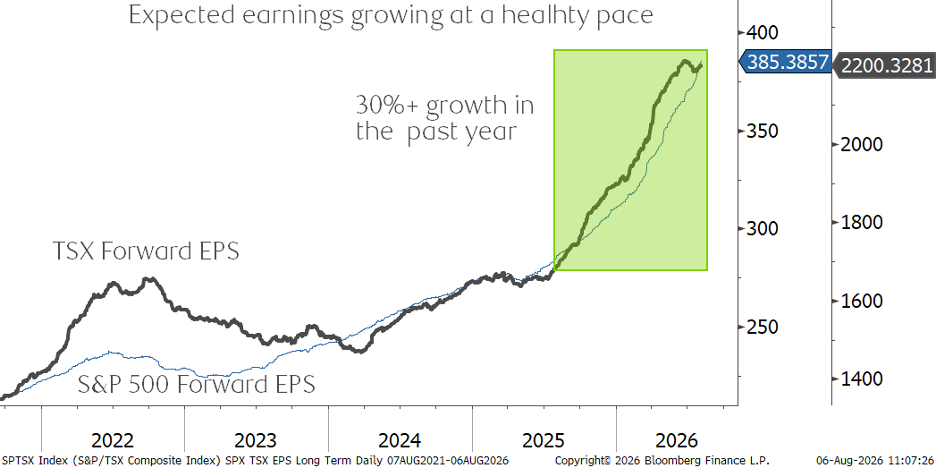
This pattern reveals something important about how markets actually function. They're remarkably efficient at filtering out noise and zeroing in on the fundamentals that drive long-term returns. It's easy to lose sight of this during earnings season when volatility spikes around every release, or when we see cable news coverage of whatever crisis dominates the cycle. In those moments, it feels like everything matters equally. But markets disagree. When the data is examined objectively, earnings growth and the economic conditions that support it take precedence over almost everything else.
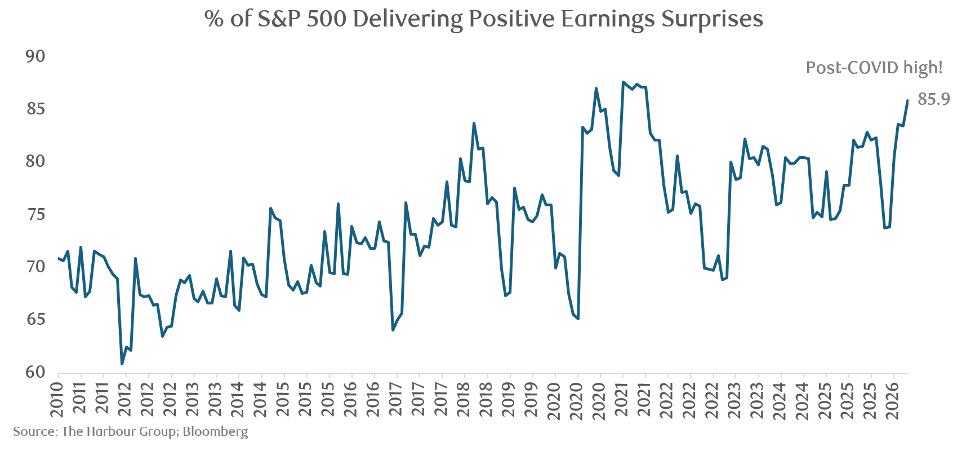
Headline issues are real, but markets only care when they change the trend of earnings
Consider what we're observing now. Yes, there are legitimate geopolitical issues at play. Yes, trade tensions are real. Yes, the political environment is uncertain. But markets are essentially asking themselves a straightforward question: will these issues materially impact corporate earnings power in the near term? For most companies, the answer so far has been no. Take tariffs as a prime example. They've been on the table as a concern for years, yet the market has assigned them a relatively low impact on the earnings power of the average company because, in many cases, they can be mitigated through price adjustments, supply chain optimization, or other strategic responses. Real threat? Yes. Existential threat? The market doesn't think so. That doesn't mean these risks are immaterial forever, but it does mean they're not the primary driver of valuations at this particular moment. Speaking of valuations, they have actually improved lately as earnings growth has eclipsed the returns of the S&P 500, mitigating what had been a legitimate criticism of markets in 2025.
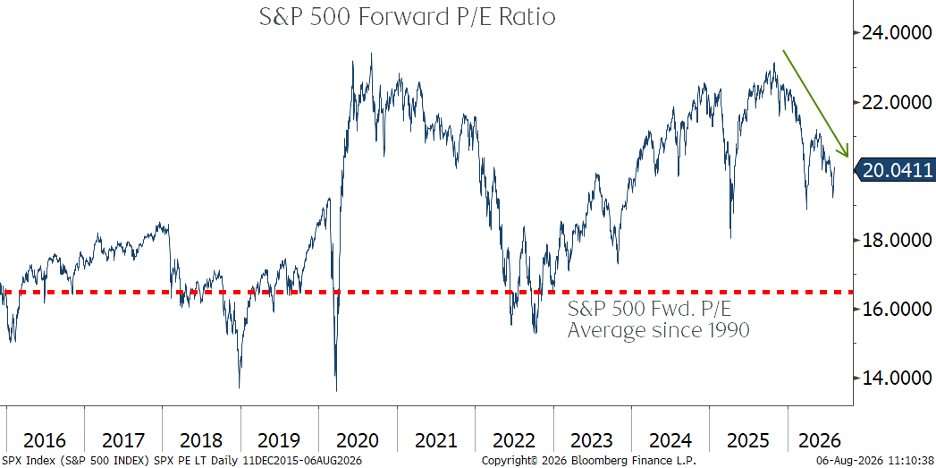
If the U.S. economy is growing, give the market the benefit of the doubt
Historically, the U.S. stock market posts gains roughly 87% of the time when the economy is expanding. We're in that scenario right now. Economic growth is solid, earnings are beating expectations, and the trend shows every sign of continuing. That's a powerful combination. The lesson here is one that's worth repeating periodically: markets are remarkably good at their core function of pricing in available information and forward expectations. When they choose to rally in the face of obvious challenges, it's often because they're pricing in a scenario that matters more than the headlines. Right now, that scenario is sustained economic growth and exceptional earnings. Until we see evidence that changes materially, there's no particular reason to expect that calculus to shift.
The Harbour Group - 416-842-2300
Putting you first, every time, to help you navigate the complexities of managing your wealth. All of our team members, all of our resources, all of our collective insight: ALL FOR ONE: YOU™.
The information contained herein has been obtained from sources believed to be reliable at the time obtained but neither RBC Dominion Securities Inc. nor its employees, agents, or information suppliers can guarantee its accuracy or completeness. This report is not and under no circumstances is to be construed as an offer to sell or the solicitation of an offer to buy any securities. This report is furnished on the basis and understanding that neither RBC Dominion Securities Inc. nor its employees, agents, or information suppliers is to be under any responsibility or liability whatsoever in respect thereof. The inventories of RBC Dominion Securities Inc. may from time to time include securities mentioned herein. RBC Dominion Securities Inc. and its affiliates may have an investment banking or other relationship with some or all of the issuers mentioned herein and may trade in any of the securities mentioned herein either for their own account or the accounts of their customers. RBC Dominion Securities Inc. and its affiliates also may issue options on securities mentioned herein and may trade in options issued by others. Accordingly, RBC Dominion Securities Inc. or its affiliates may at any time have a long or short position in any such security or option thereon. Mutual funds are sold by RBC Dominion Securities Inc. There may be commissions, trailing commissions, management fees and expenses associated with mutual fund investments. Read the prospectus before investing. Mutual funds are not guaranteed, their values change frequently and past performance may not be repeated. RBC Dominion Securities Inc.* and Royal Bank of Canada are separate corporate entities which are affiliated. *Member CIPF. ®Registered Trademark of Royal Bank of Canada. Used under licence. RBC Dominion Securities is a registered trademark of Royal Bank of Canada. Used under licence. ©Copyright 2019. All rights reserved.