
Robin Gullason
Associate Portfolio Manager & Lead Strategist
July 17, 2026
Executive Summary
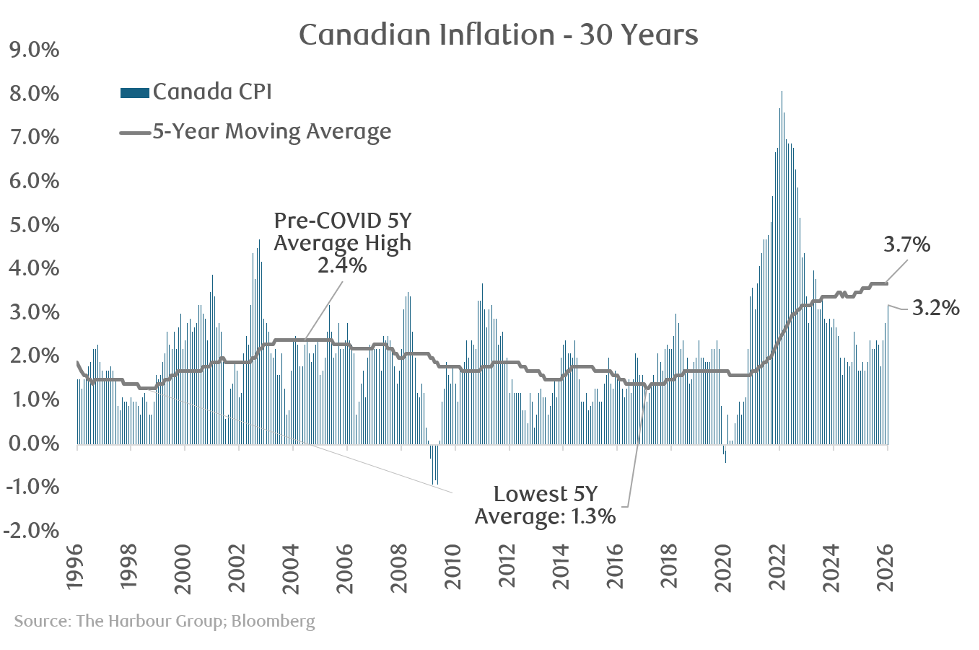
- After decades of relative stability, inflation has inflected higher post-COVID.
- The recent jump in oil prices and U.S. tariffs are the latest factors to keep prices rising at a faster pace.
- Rate of return after inflation has always been important, and this is doubly true when inflation is running above target.
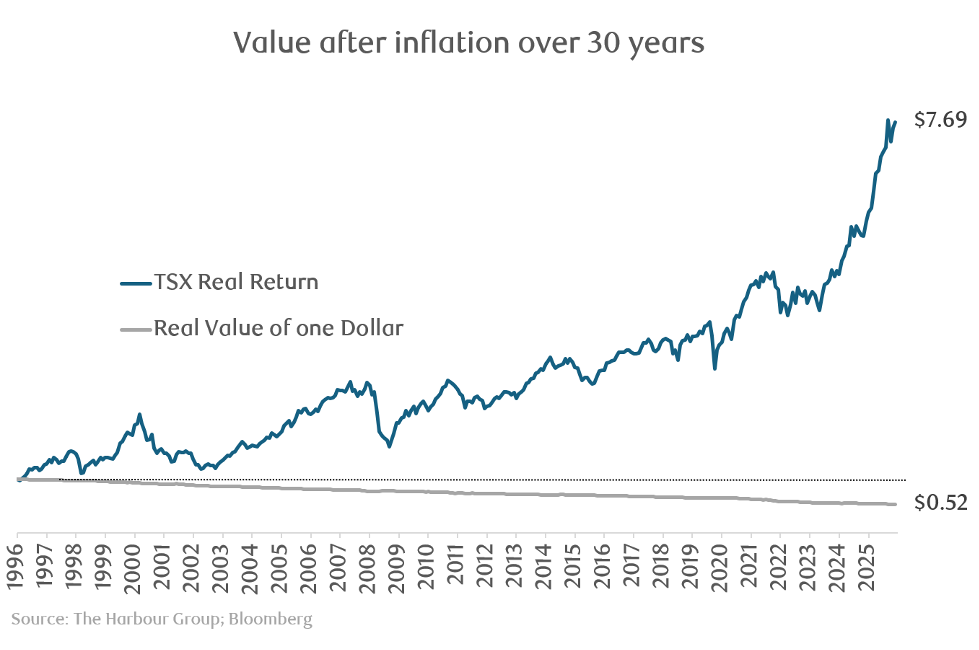
- Over the past 30 years, the value of a dollar has been cut in half but Canadian stocks have jumped over 7x in value after accounting for inflation.
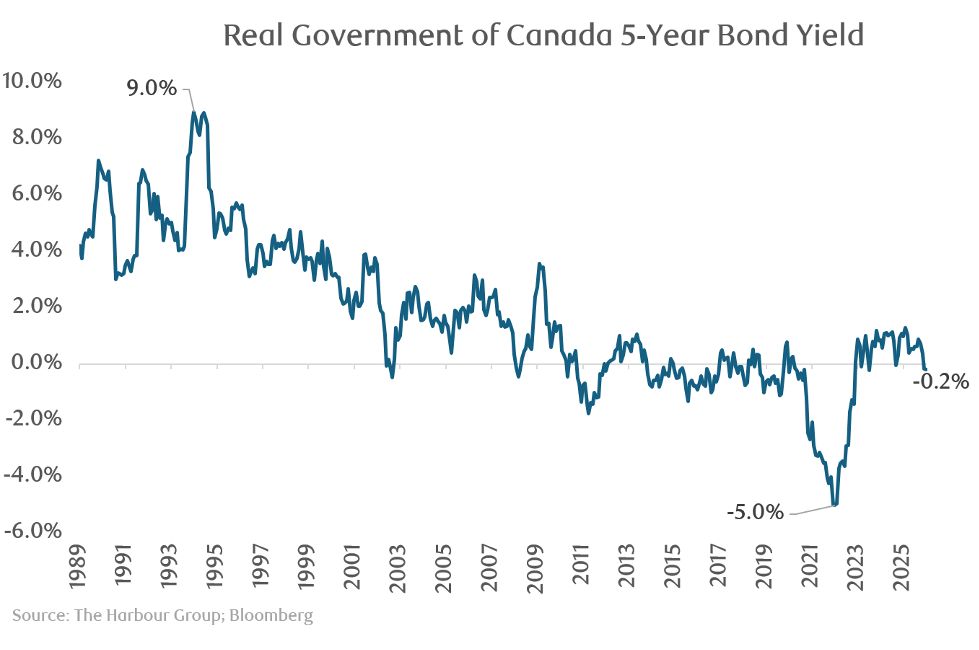
- Bond yields are higher today, but they have largely just moved up with inflation. The “real” yield remains near zero and that is before the prohibitive taxation applied to interest income.
- If current inflation trends persist, equities will be key to earning a positive real return in order to maintain purchasing power and grow wealth over the long term.
Inflation has been higher for longer than expected
For decades, inflation remained relatively stable and predictable, allowing investors and savers to plan with confidence in a low-price-growth environment. As anyone who has been to a grocery store can attest, his period of calm has ended. Since the COVID-19 pandemic, inflation has inflected higher, marking a significant departure from the stability seen since the late 1990s. What began as transitory supply chain disruptions has evolved into a more persistent challenge, with recent developments including elevated oil prices and U.S. tariffs continuing to push prices upward at rates that exceed historical averages and central bank targets. We need to be prepared in case the factors driving elevated inflation today are not temporary anomalies but reflect deeper changes in global economics, geopolitical tensions, and trade dynamics.
The Real Return Imperative
In any economic environment, the distinction between returns before inflation (“nominal”) and after (“real”) matter. However, when inflation runs persistently above target levels, this distinction becomes doubly important. A nominal return that looks reasonable in isolation can represent actual wealth erosion once inflation is subtracted. This concept of real returns has always been central to sound investing, but it takes on heightened importance when prices are rising faster than they have in recent decades.
Three Decades of Evidence
The case for holding stocks becomes remarkably clear when examining the past 30 years of Canadian market history. Over this period, the purchasing power of a single dollar has been cut in half, declining by approximately 48 percent. This erosion affects anyone who has maintained significant cash positions or relied on effectively no-yield savings vehicles like chequing accounts. This represents a substantial and largely invisible loss that compounds year after year, the impact of which is only obvious once it is too late.
By contrast, the returns from Canadian equities as measured by the TSX tell a dramatically different story. A dollar invested in Canadian stocks over the same 30-year period has grown to more than seven times its original value, even after adjusting for inflation. This inflation-adjusted sevenfold increase reflects the power of compound returns, reinvested dividends, and the underlying growth of Canadian businesses navigating multiple economic cycles. The gap between these two outcomes is not merely substantial, but transformational for personal wealth and retirement security. The uninvested dollar has lost half its value while the invested dollar has multiplied sevenfold in real terms.
Yields are higher, but bonds are still a return “of” capital proposition
Consider the current state of the bond market. Government yield levels have risen substantially from historic COVID lows, and in absolute are clearly more attractive. However, these higher yields have largely moved in lockstep with inflation itself. When the inflation adjustment is made, the real yield on bonds remains near zero, offering minimal return over and above rising prices. Adding further pressure is the punitive taxation applied to interest income, which is taxed at full marginal rates that can breach 50%. These two factors in combination suggest that while high quality bonds remain essential for their stability and liquidity, we don’t expect them to contribute meaningfully to after tax and inflation returns in the near term.
Positioning for Persistent Inflation
If current inflation trends persist, the path to earning a positive real return becomes increasingly clear. Stocks offer the growth potential necessary to overcome persistent inflation while building genuine wealth, despite frequent bouts of volatility. Bonds, despite today’s higher yields, fail to adequately compensate for inflation and cash positions silently erode year after year. The 30-year historical record demonstrates that equities have provided the returns necessary to maintain purchasing power and accumulate real wealth. For investors seeking to preserve capital in real terms and grow wealth over the long term, equity exposure is not optional but essential.
The Harbour Group - 416-842-2300
Putting you first, every time, to help you navigate the complexities of managing your wealth. All of our team members, all of our resources, all of our collective insight: ALL FOR ONE: YOU™.
The information contained herein has been obtained from sources believed to be reliable at the time obtained but neither RBC Dominion Securities Inc. nor its employees, agents, or information suppliers can guarantee its accuracy or completeness. This report is not and under no circumstances is to be construed as an offer to sell or the solicitation of an offer to buy any securities. This report is furnished on the basis and understanding that neither RBC Dominion Securities Inc. nor its employees, agents, or information suppliers is to be under any responsibility or liability whatsoever in respect thereof. The inventories of RBC Dominion Securities Inc. may from time to time include securities mentioned herein. RBC Dominion Securities Inc. and its affiliates may have an investment banking or other relationship with some or all of the issuers mentioned herein and may trade in any of the securities mentioned herein either for their own account or the accounts of their customers. RBC Dominion Securities Inc. and its affiliates also may issue options on securities mentioned herein and may trade in options issued by others. Accordingly, RBC Dominion Securities Inc. or its affiliates may at any time have a long or short position in any such security or option thereon. Mutual funds are sold by RBC Dominion Securities Inc. There may be commissions, trailing commissions, management fees and expenses associated with mutual fund investments. Read the prospectus before investing. Mutual funds are not guaranteed, their values change frequently and past performance may not be repeated. RBC Dominion Securities Inc.* and Royal Bank of Canada are separate corporate entities which are affiliated. *Member CIPF. ®Registered Trademark of Royal Bank of Canada. Used under licence. RBC Dominion Securities is a registered trademark of Royal Bank of Canada. Used under licence. ©Copyright 2019. All rights reserved.